
Why Bitcoin Is Underperforming the Stock Market in 2026

Share news:
 CryptoRank
Share news:
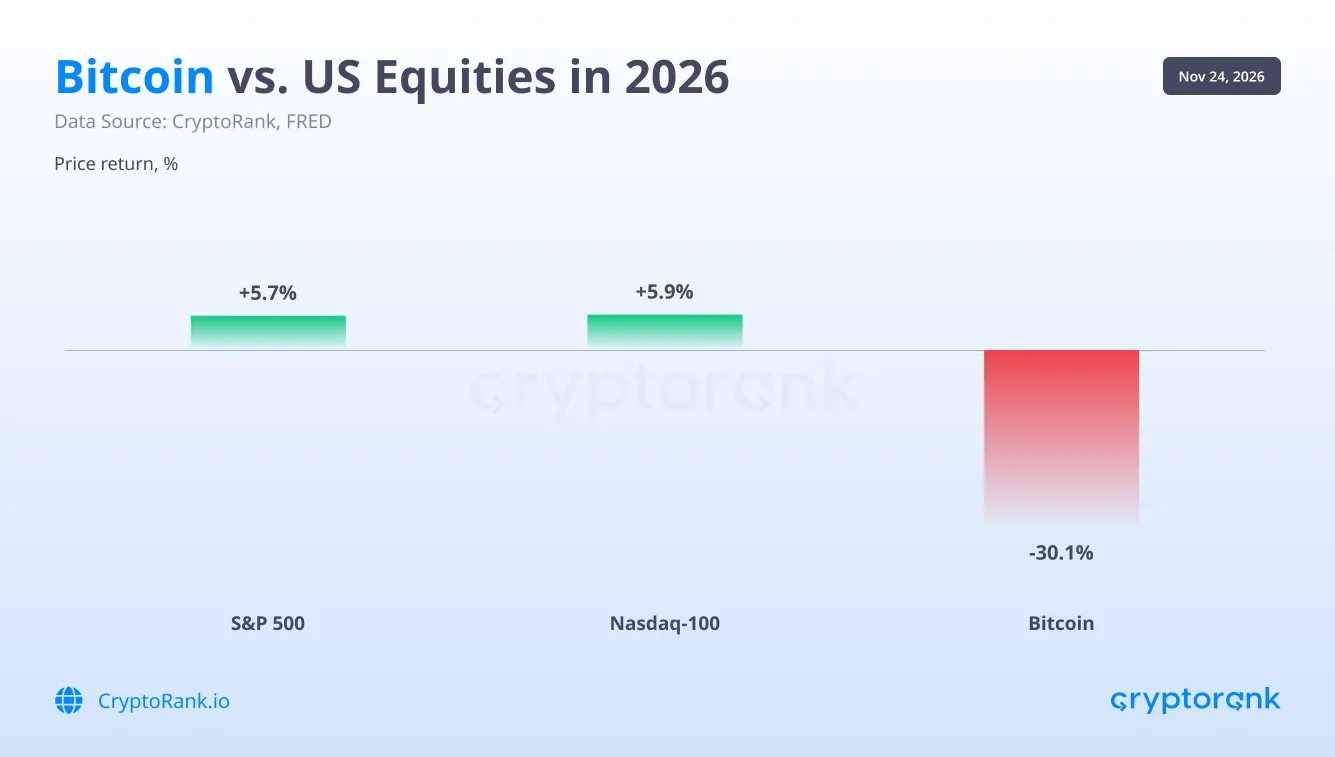
By November 23, Bitcoin had lost around 30% in 2026, while both the S&P 500 and Nasdaq-100 gained above 5% year-to-date. In this article, we examine how Fed policy, equity market performance and changes in Bitcoin demand help explain this divergence.
How Bitcoin Performs Across Fed Rate Cycles
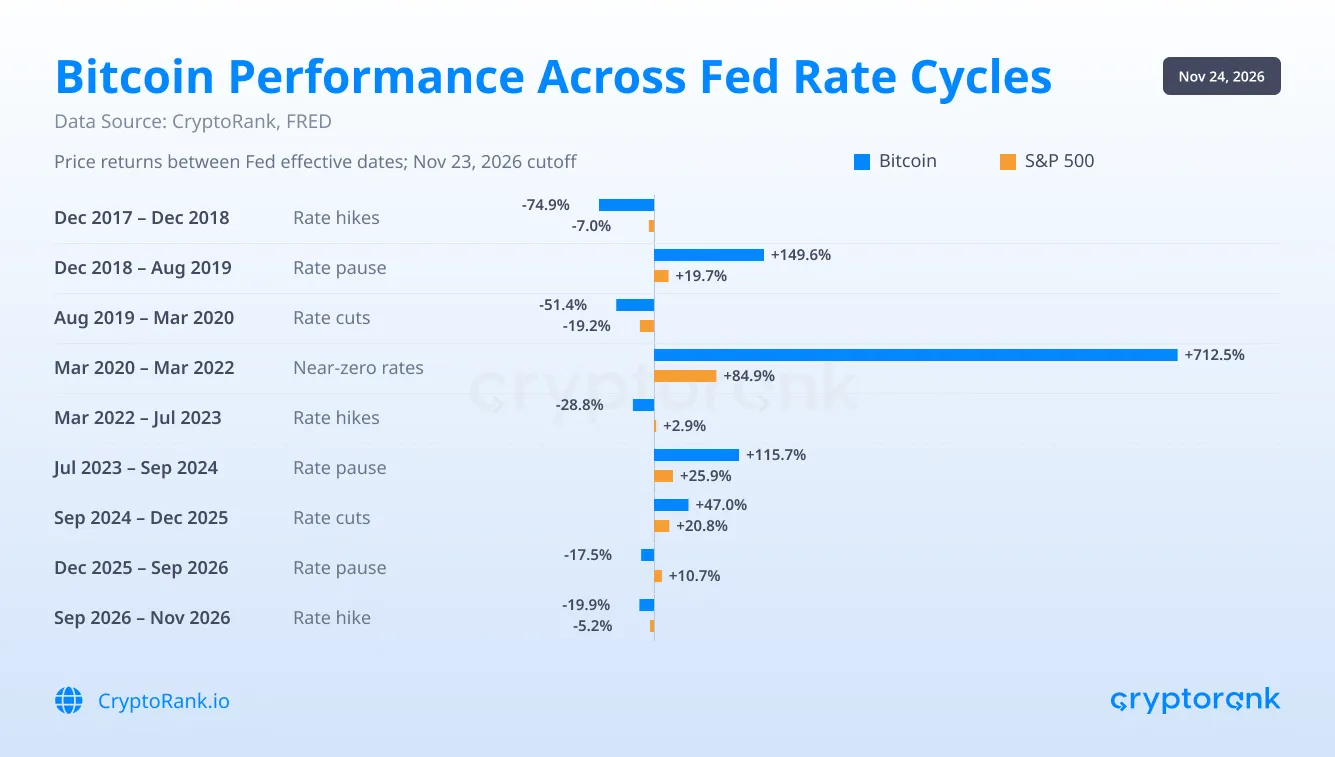
Higher interest rates increase the appeal of interest-bearing assets and can reduce demand for speculative investments. Since the Fed resumed tightening in September 2026, Bitcoin has fallen considerably more than the S&P 500. However, past rate cycles show that the direction of monetary policy alone is a poor predictor of Bitcoin’s returns.
The contrast between the 2022–2023 tightening cycle and the subsequent rate pause is particularly revealing. Bitcoin underperformed equities during the former but more than doubled during the latter. The recovery coincided with growing expectations of US spot Bitcoin ETF approval and their launch in January 2024.
The more recent pause, from December 2025 to September 2026, produced the opposite outcome: Bitcoin declined while equities advanced. The composition of Bitcoin demand also changed. Coinbase Institutional estimates that corporate treasuries bought about $14.5 billion of BTC in the first half of 2026, against nearly $5 billion in net ETF outflows. From August through October 23, corporate purchases totaled just $1.5 billion, while ETFs attracted $6.4 billion. With corporate buying slowing, Bitcoin became more reliant on ETF inflows, leaving demand vulnerable to a reversal in fund flows.
Is Bitcoin Really a Leveraged Nasdaq?
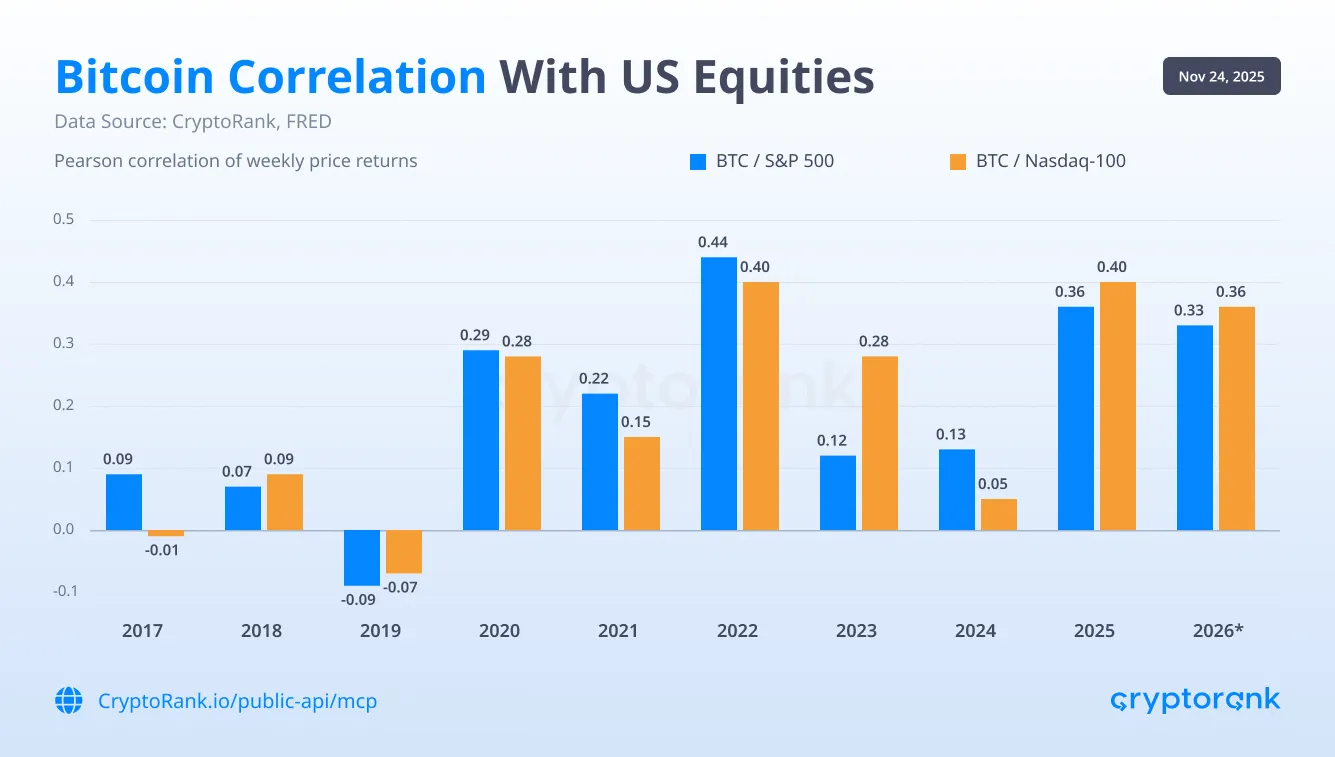
Before 2020, Bitcoin’s weekly returns showed little consistent correlation with major US stock indices. Both relationships have been positive in every year since.
The correlations were relatively strong in 2022, when monetary tightening put pressure on risk assets, but weakened considerably in 2024. In 2026, correlations remained moderate, around 0.3–0.4 through November 20, indicating that Bitcoin and equities sometimes move in parallel.
Bitcoin’s Own Demand Problem
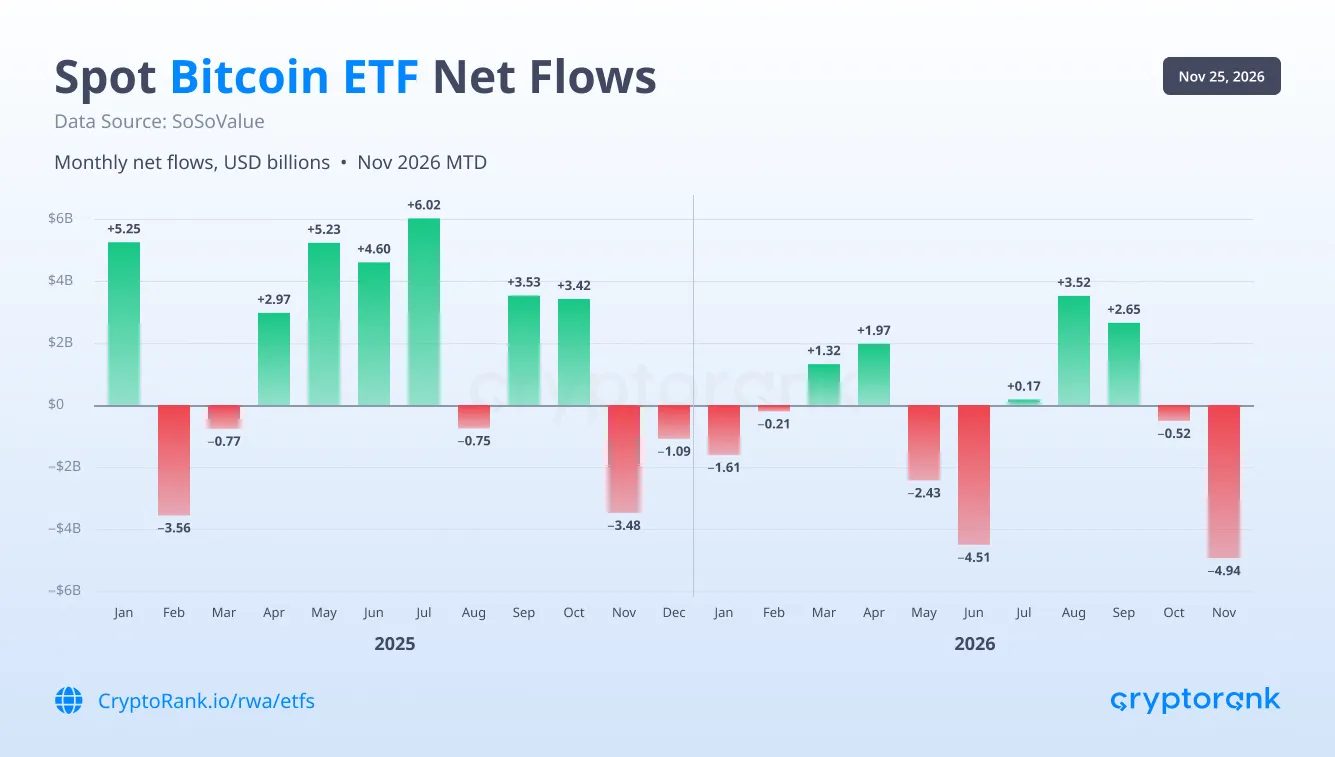
US spot Bitcoin ETFs went from net inflows in September to net outflows in October, with withdrawals accelerating to $4.94 billion in November to date. The reversal came after corporate buying had slowed, weakening another major source of Bitcoin demand.
ETF outflows can also be a response to declining prices. They are evidence of weaker demand through this channel, not proof that ETFs alone caused the broader decline.
 The stock market, meanwhile, has had support from corporate earnings growth. NVIDIA reported $107.6 billion in quarterly data center revenue in November, up 110% year over year, illustrating the scale of demand for AI infrastructure. Earnings growth extended beyond technology: FactSet recorded 27% year-over-year earnings growth for the Magnificent Seven in Q3, compared with blended growth of 32.6% for the other 493 S&P 500 companies. Unlike equities, Bitcoin has no underlying corporate earnings to support valuations when buying demand weakens.
Altcoin Underperformance and the Limits of Diversification
Most major altcoins in the comparison have lost more than Bitcoin in 2026, with many recording losses of more than 40%. Chainlink is an exception, but a portfolio spread across these major assets would still have been exposed to the broader crypto downturn.
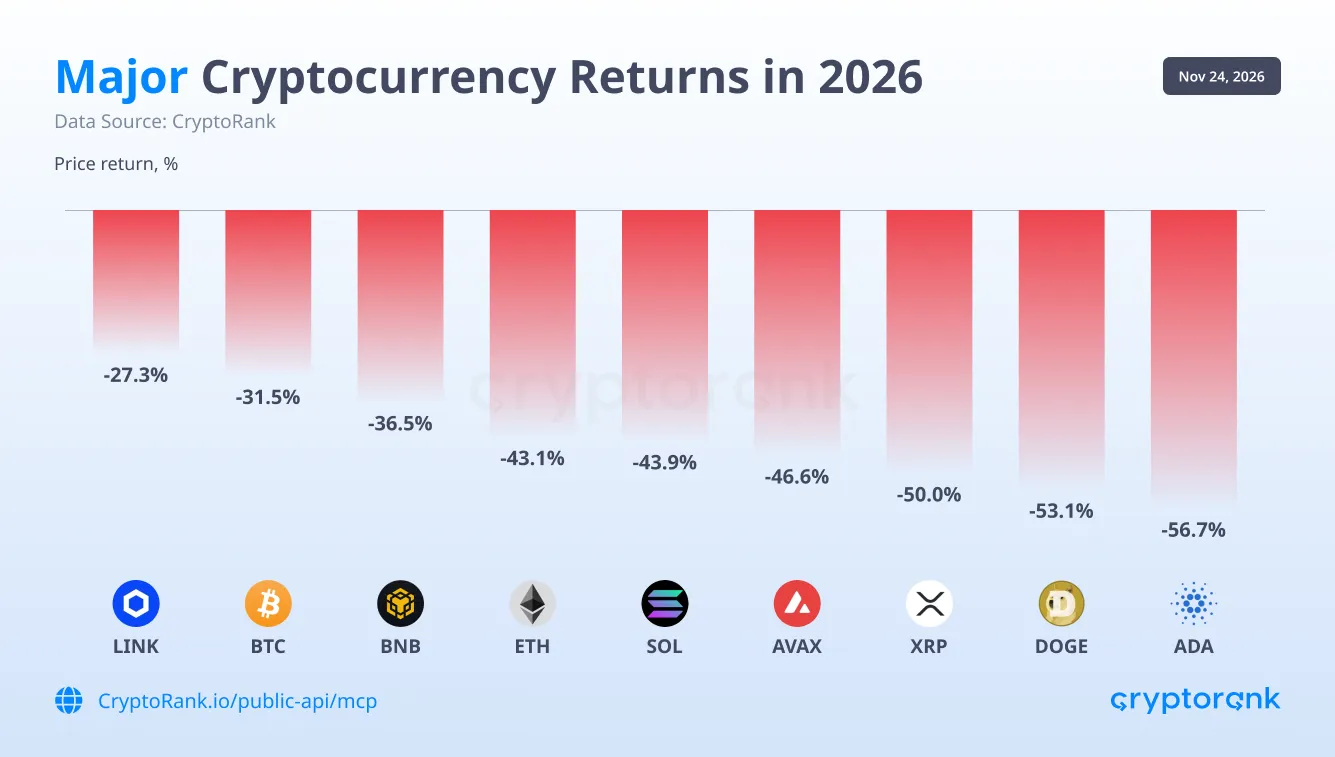
When crypto assets respond to the same deterioration in market sentiment, holding several tokens may do little to reduce portfolio risk. Thinner liquidity can make smaller assets particularly sensitive to selling pressure.
What Could Reverse Bitcoin’s Underperformance?
A recovery in equities or a shift toward easier Fed policy could reduce pressure on Bitcoin, but neither would directly replace the buying that has weakened this year. The launch of spot ETFs in 2024 and corporate accumulation in early 2026 show how new sources of demand can support Bitcoin even when monetary conditions are restrictive.
The more relevant indicators now are whether ETF flows turn sustainably positive and whether corporate treasuries resume meaningful purchases. If both remain weak, Bitcoin could continue to lag equities even as stock market sentiment improves. For investors holding multiple cryptocurrencies, the widespread altcoin losses in 2026 also illustrate why diversification across asset classes matters more than simply increasing the number of tokens in a portfolio.
In This Insight
Coins


Read More

Ethereum in 2026: Where Did Things Go Wrong?
CryptoRankIn This Insight
Coins
Share news: