SpaceX Moon Crash: Falcon 9 Upper Stage to Hit Moon Aug. 5
Share:
On Aug. 5 at about 6:35 UTC a discarded SpaceX Falcon 9 upper stage (catalog 2025-010D), launched Jan. 15, 2025 to carry Firefly’s Blue Ghost and ispace’s Resilience, is expected to hit the Moon at roughly 5,400 mph (8,700 kph), releasing energy comparable to several tons of TNT and potentially forming a crater up to about 90 feet wide while lofting material up to 100 km; NASA’s LRO and South Korea’s Danuri will image the site before and after impact. The event has no direct impact on crypto markets, DeFi, token launches or CEX operations, but it highlights growing debris and security risks for future lunar and space infrastructure that could affect space-based blockchain custody, node deployment and adoption unless operators improve tracking and disposal.
Predictions Markets
See what traders are focused on

A discarded SpaceX Falcon 9 upper stage is expected to crash into the moon on Wednesday, Aug. 5, giving astronomers a rare chance to watch a known object strike the lunar surface. Tracking estimates place the impact at about 6:35 a.m. UTC near Einstein Crater, close to the moon’s sunlit edge as seen from Earth.
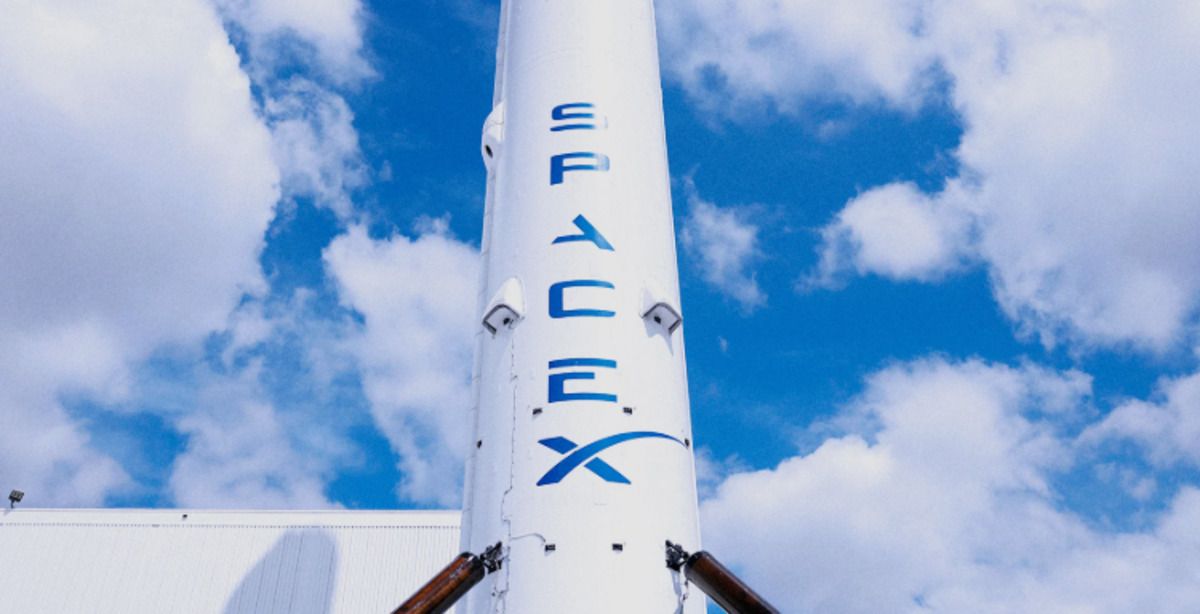
Despite the popular “SpaceX moon crash” search term, the object is not an active rocket or spacecraft carrying people. It is the Falcon 9’s spent second stage, cataloged as 2025-010D, which has remained in a wide orbit around the Earth-moon system since January 2025.
SpaceX used the rocket to launch Firefly Aerospace’s Blue Ghost lander and ispace’s Resilience lander on Jan. 15, 2025. Blue Ghost later completed a successful commercial moon landing, while Resilience failed during its landing attempt.
What Will Happen During the SpaceX Moon Crash?The roughly 40-foot-long rocket stage will hit the moon at about 5,400 mph, or 8,700 kph. Because the moon has almost no atmosphere, nothing will slow or burn up the hardware before it reaches the ground. However, the collision poses no threat to Earth or anyone on its surface.
Scientists expect the impact to release energy comparable to several tons of TNT. Current estimates suggest it could form a crater as wide as 90 feet and about 16 feet deep, although researchers will need spacecraft images to confirm the final size.
Meanwhile, computer models indicate the collision could send a broad curtain of lunar material 15 to 20 kilometers above the surface. A narrower central plume may reach 75 to 100 kilometers, while dust could spread more than 180 kilometers from the impact point. Those figures remain projections, and the actual result will depend on the rocket stage’s final angle and orientation.
Will the Impact Be Visible From Earth?The initial flash will last less than a second and will probably be too faint for people to see without specialized equipment. Still, the dust plume may remain visible through powerful telescopes for several minutes.
Observers in eastern parts of the United States and Canada, along with much of South America, should have the most favorable viewing positions. Even there, bright sunlight on the lunar surface and weather conditions could make the event difficult to record.
NASA’s Lunar Reconnaissance Orbiter and South Korea’s Danuri spacecraft are expected to collect images before and after the collision. Researchers can compare those observations to measure the crater, track displaced material and test models of how artificial objects behave when they hit the moon.
More broadly, the SpaceX moon crash highlights a growing issue as governments and private companies send more hardware beyond Earth. This impact presents little immediate danger, but scientists say future rocket debris could threaten lunar spacecraft, equipment or crewed bases unless operators improve tracking and disposal plans.


Read More

KOSPI’s 41% Crash Explained: Why South Korean Stocks Fall Hardest