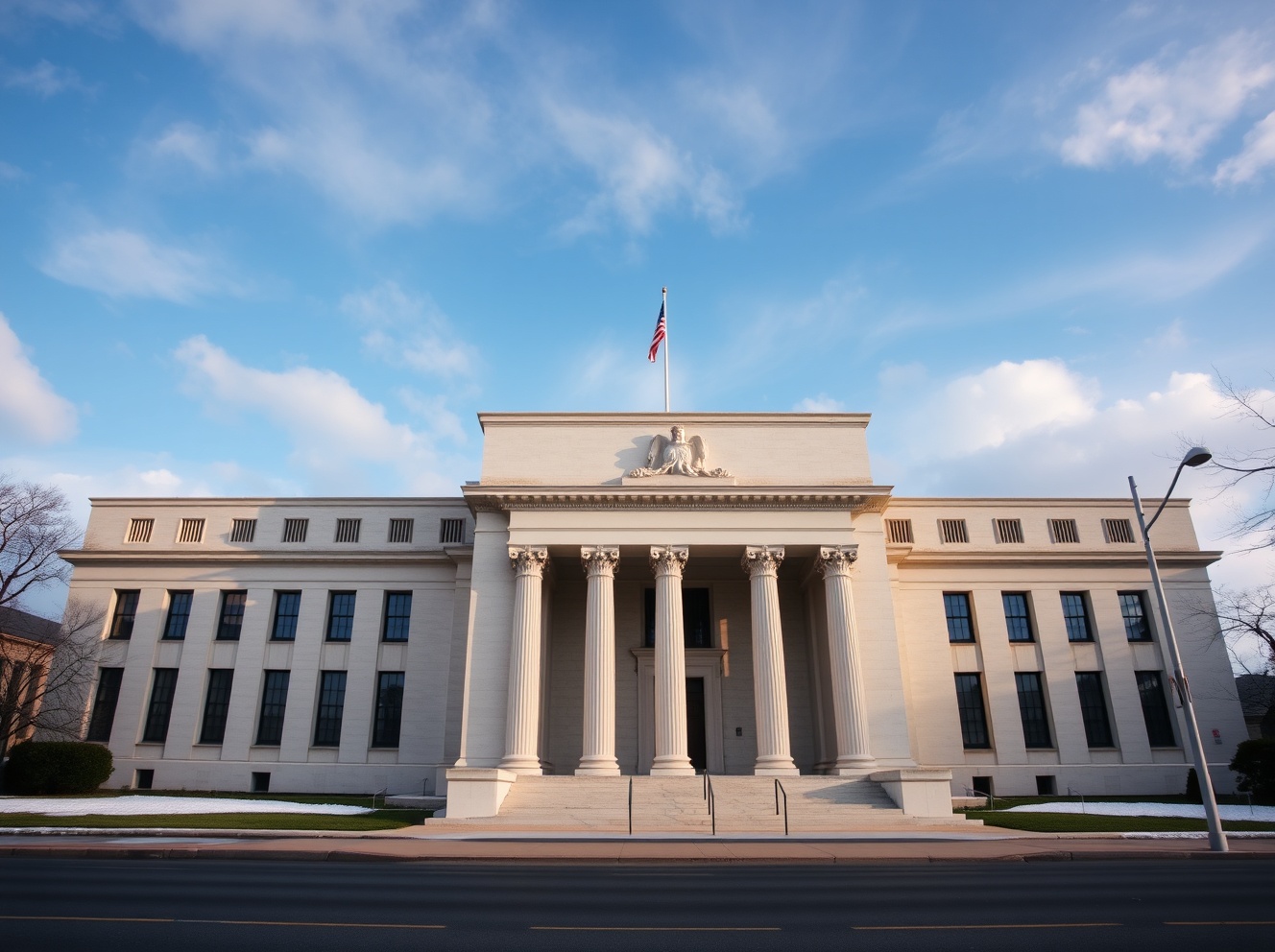
Federal Reserve Holds Rates Firm Amid Stubborn Oil-Driven Inflation Risks – Deutsche Bank Warns

Share:
Mar 2025 — Deutsche Bank: Federal Reserve holds interest rates firm as oil-driven inflation (gasoline and heating oil resilience in Q1 2025) keeps headline inflation elevated and complicates policy normalization; Market indicators (Treasury yield curve, inflation breakevens, oil futures) imply persistent price pressures and a slower path to rate cuts, potentially extending restrictive policy into 2026; Crypto impact: tighter liquidity and higher rates likely weigh on risk assets — negative pressure on Bitcoin/altcoin prices, reduced DeFi/CEX volumes and fundraising, and downside risk for token performance and adoption.
Predictions Markets
See what traders are focused on

BitcoinWorld
Federal Reserve Holds Rates Firm Amid Stubborn Oil-Driven Inflation Risks – Deutsche Bank Warns
WASHINGTON, D.C. – March 2025: The Federal Reserve maintains its current interest rate stance, according to a detailed analysis from Deutsche Bank, as persistent inflation risks driven by volatile global oil markets complicate the central bank’s path toward policy normalization. This cautious approach reflects deep concerns about energy price stability and its broader economic implications.
Federal Reserve Navigates Complex Inflation Landscape
Deutsche Bank’s latest research highlights the Federal Reserve’s delicate balancing act. The central bank continues to prioritize inflation containment while acknowledging growing economic uncertainties. Energy prices, particularly crude oil, have emerged as a significant wildcard in monetary policy calculations. Consequently, policymakers exercise considerable restraint before implementing any rate adjustments.
Recent data from the Bureau of Labor Statistics shows energy components contributing substantially to headline inflation figures. For instance, gasoline and heating oil prices demonstrated unexpected resilience through the first quarter of 2025. This trend directly impacts consumer spending patterns and business operating costs across multiple sectors. Therefore, the Fed’s current posture emphasizes vigilance over premature policy shifts.
The Oil Price Conundrum
Global oil markets face simultaneous pressures from geopolitical tensions, production decisions by OPEC+ nations, and evolving demand patterns. Deutsche Bank analysts note that supply constraints in key regions, combined with stronger-than-anticipated industrial consumption, create a challenging environment for price stability. These factors collectively influence the Fed’s inflation outlook and policy timeline.
Historical comparisons reveal instructive patterns. The following table illustrates how energy-driven inflation episodes have previously affected Federal Reserve policy cycles:
| Period | Oil Price Shock | Fed Policy Response | Inflation Peak |
|---|---|---|---|
| 2007-2008 | $147/barrel | Aggressive rate cuts post-crisis | 5.6% |
| 2011-2012 | Arab Spring disruptions | Extended zero-rate period | 3.9% |
| 2022-2023 | Ukraine conflict | Rapid hiking cycle | 9.1% |
Deutsche Bank’s Monetary Policy Analysis
Deutsche Bank economists provide a nuanced examination of current conditions. Their models incorporate multiple variables, including:
- Core inflation persistence excluding food and energy
- Wage growth trends and labor market tightness
- Global energy supply dynamics and inventory levels
- Financial market expectations for future rate paths
The analysis suggests that premature rate cuts could risk reigniting inflationary pressures, particularly if energy costs experience another upward spike. Conversely, maintaining restrictive policy for too long might unnecessarily constrain economic growth. This creates what economists term a ‘policy dilemma’ with significant consequences for markets and Main Street alike.
Transmission Mechanisms and Economic Impact
Higher energy prices affect the economy through several channels. First, they increase direct costs for consumers and businesses. Second, they influence production costs across manufacturing and transportation sectors. Third, they affect inflation expectations, which can become self-fulfilling. The Federal Reserve monitors all these transmission mechanisms closely through its regional banking network and economic surveys.
Recent Federal Open Market Committee (FOMC) statements consistently reference ‘balanced risks’ and ‘data dependence.’ This language reflects genuine uncertainty about how energy markets will evolve in coming quarters. Market participants now anticipate a more gradual policy adjustment timeline than previously projected at the end of 2024.
Global Context and Comparative Central Banking
The Federal Reserve’s situation mirrors challenges faced by other major central banks. The European Central Bank (ECB) similarly confronts energy-driven inflation, particularly given Europe’s historical dependence on imported natural gas. Meanwhile, the Bank of England balances domestic price pressures against growth concerns. This global synchronization of policy challenges creates interconnected financial market dynamics.
International energy agency reports indicate that global oil demand continues to grow, albeit at a moderating pace. Simultaneously, investment in traditional fossil fuel extraction has lagged behind requirements for stable supply. This fundamental supply-demand imbalance underpins Deutsche Bank’s assessment of ongoing inflation risks. Consequently, monetary policymakers worldwide adopt similarly cautious stances.
Expert Perspectives on Policy Trajectory
Former Federal Reserve economists and independent analysts generally support the current wait-and-see approach. They emphasize that monetary policy operates with considerable lags—typically six to eighteen months for full effect. Therefore, decisions made today will influence economic conditions well into 2026. This long transmission horizon necessitates particular caution when inflation drivers remain unpredictable.
Financial market indicators provide additional context. Treasury yield curves, inflation breakeven rates, and oil futures markets all suggest expectations of persistent, though not accelerating, price pressures. These market-based signals inform the Fed’s deliberations alongside traditional economic data. The convergence of these indicators supports the current policy stability.
Conclusion
The Federal Reserve’s decision to maintain current interest rates reflects prudent risk management amid ongoing oil-driven inflation concerns. Deutsche Bank’s analysis underscores the complexity of today’s monetary policy environment, where traditional models confront unusual supply-side constraints. As energy markets continue to evolve, the central bank’s data-dependent approach will likely persist, prioritizing inflation containment while monitoring economic growth indicators. This balanced strategy aims to achieve sustainable price stability without triggering unnecessary economic disruption.
FAQs
Q1: Why is the Federal Reserve concerned specifically about oil-driven inflation?
Oil price increases directly raise costs for transportation, manufacturing, and heating. These costs then ripple through the entire economy, affecting prices for goods and services far beyond the energy sector. Unlike some other inflation drivers, oil prices can spike rapidly due to geopolitical events, making them particularly challenging for monetary policy.
Q2: How does Deutsche Bank’s analysis differ from other financial institutions?
Deutsche Bank emphasizes the structural aspects of current energy market dynamics, particularly the underinvestment in traditional extraction relative to demand. Their analysis incorporates longer-term supply constraints rather than focusing solely on temporary geopolitical disruptions.
Q3: What would trigger the Federal Reserve to change its current rate stance?
Clear evidence that core inflation (excluding food and energy) is sustainably returning to the 2% target, combined with stable or declining energy prices, would likely prompt consideration of policy adjustment. Conversely, another significant oil price spike might necessitate further restraint.
Q4: How do oil prices affect everyday consumers beyond just gasoline costs?
Higher energy costs increase production and transportation expenses for virtually all goods. This translates to higher prices for food, consumer products, and services. Additionally, heating and electricity costs directly impact household budgets, particularly in certain regions and seasons.
Q5: What historical precedent exists for the current situation?
The 1970s experienced severe oil-driven inflation, though today’s economy has greater diversification and different policy frameworks. More recently, the 2022 inflation surge following Russia’s invasion of Ukraine demonstrated how quickly energy markets can disrupt price stability, informing current Fed caution.
This post Federal Reserve Holds Rates Firm Amid Stubborn Oil-Driven Inflation Risks – Deutsche Bank Warns first appeared on BitcoinWorld.


Read More

US Dollar Index Gains Momentum as Fed Independence Takes Center Stage: BNY