The US just blacklisted the Iranian maritime scheme forcing commercial ships to pay Bitcoin tolls for safe passage
Share:
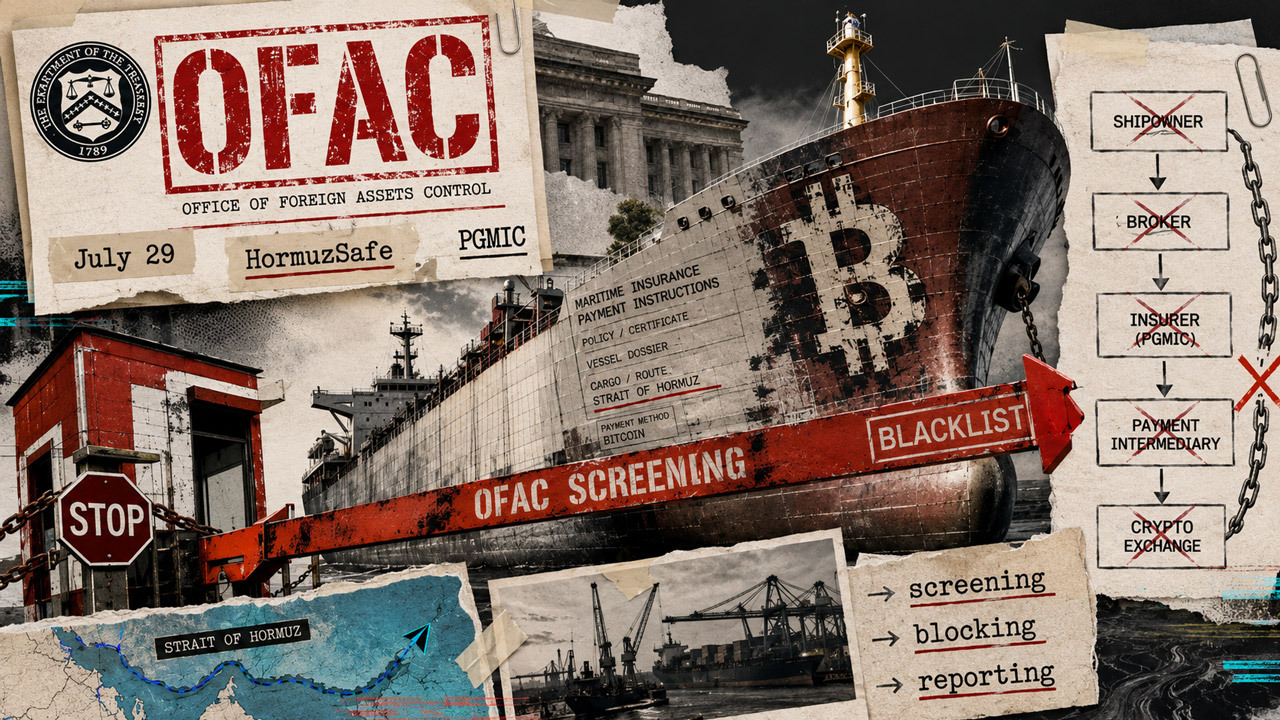
On July 29 the U.S. Treasury's OFAC added HormuzSafe Marine Services Authority and Persian Gulf Marine Insurance Company to the Specially Designated Nationals list under Executive Order 13902, blocking them and applying secondary sanctions after alleging they forced ships to buy insurance and that HormuzSafe accepts Bitcoin and other digital assets to evade sanctions. The action also named eight petroleum-sector companies and eight vessels and heightens compliance obligations for crypto and maritime counterparties, invoking OFAC rules such as the 50 Percent Rule and a 10-business-day reporting requirement. The designation raises regulatory and enforcement risk for crypto-enabled sanctions-evasion schemes and could chill adoption and cross-border payments in the maritime insurance sector.
Predictions Markets
See what traders are focused on

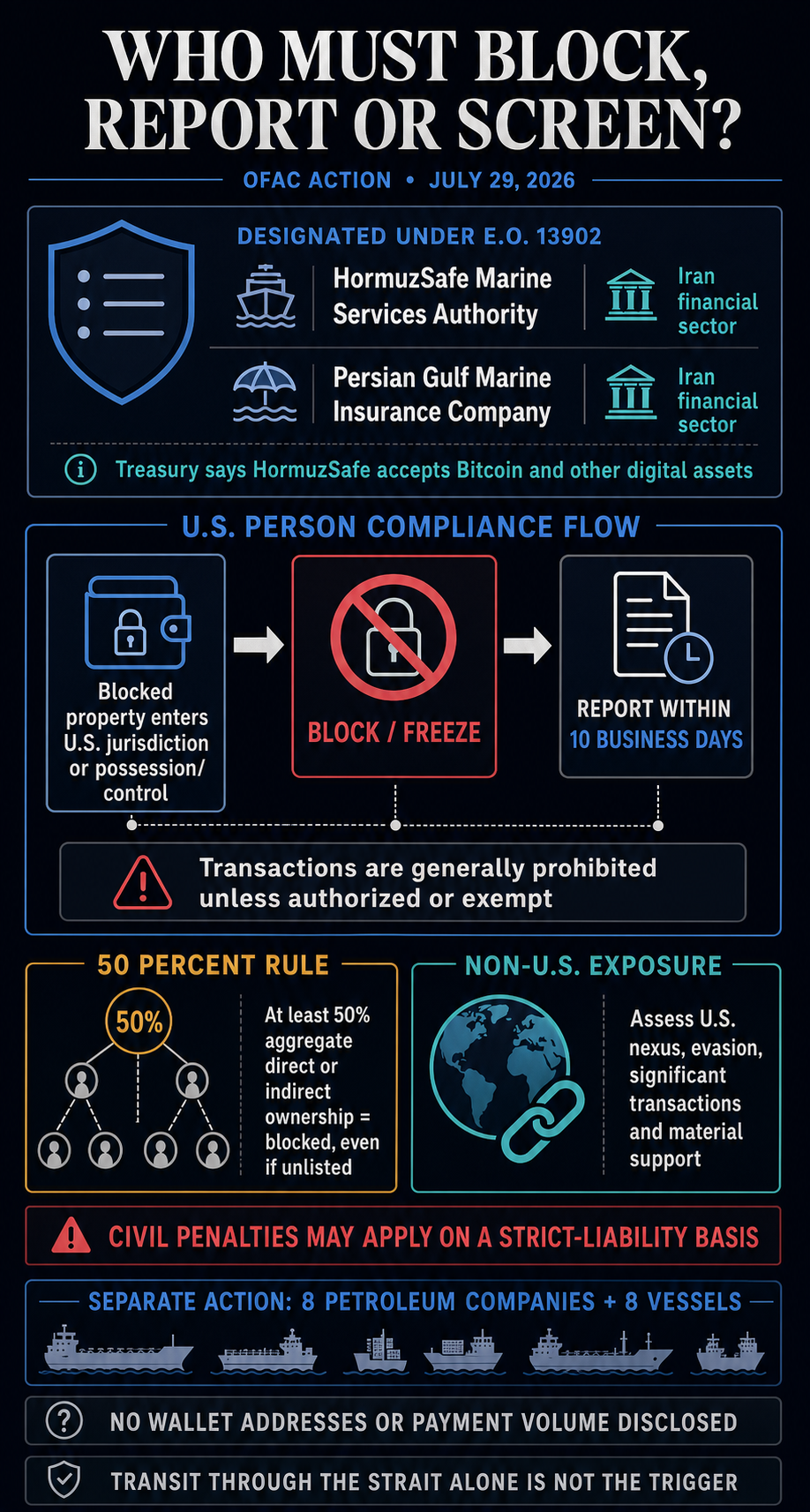
The U.S. Office of Foreign Assets Control added two Iranian maritime insurance firms to its Specially Designated Nationals list on July 29, designating HormuzSafe Marine Services Authority and Persian Gulf Marine Insurance Company as blocked counterparties for U.S. persons and for transactions within or transiting the United States.
The OFAC notice lists both Iranian maritime insurance firms under Executive Order 13902 for operating in Iran’s financial sector and says each is subject to secondary sanctions. HormuzSafe had previously been described as a Bitcoin-settled insurance proposal. The designation adds two named entities to an existing sanctions-risk framework.
The Treasury Department alleged that HormuzSafe and PGMIC support an Islamic Revolutionary Guard Corps-backed scheme that forces commercial vessels to buy purported insurance for passage through the Strait of Hormuz. Treasury also said HormuzSafe accepts Bitcoin and other digital assets to bypass Western sanctions. Neither July 29 page identifies wallet addresses or payment volume.

A separate shadow-fleet component of the same action designated eight companies for operating in Iran’s petroleum sector and identified eight vessels as blocked property linked to them. Those companies and vessels form a different group from the two insurance firms.
The compliance split
OFAC rules cover U.S. citizens and permanent residents wherever they are located, people and entities in the United States, and U.S.-incorporated companies and their foreign branches. Iran sanctions can also cover foreign entities owned or controlled by U.S. persons.
Property of HormuzSafe, PGMIC or another blocked person that enters the United States or a U.S. person’s possession or control must be frozen. U.S.-person transactions, and transactions within or transiting the United States, involving blocked property are generally prohibited unless authorized or exempt. OFAC explains that blocking freezes the property rather than transferring or returning it.
An initial block must be reported to OFAC within 10 business days. The same deadline applies when the rules require rejection of a transaction that does not involve blockable property, according to reporting guidance.
The duty to identify blocked entities extends beyond exact-name matching. Under the 50 Percent Rule, an unlisted entity is blocked when one or more blocked persons own at least 50% of it, directly or indirectly and individually or in the aggregate. OFAC recommends ownership due diligence on transaction parties and account relationships. Its insurance guidance separately recommends risk-based screening across policy issuance, renewal, amendments, claims and payments.
OFAC may impose civil penalties for sanctions violations on a strict-liability basis, meaning a person subject to U.S. jurisdiction can face civil liability without knowing a transaction was prohibited. Treasury’s strict-liability statement expressly concerns civil enforcement.
Foreign counterparties face a different exposure analysis. OFAC bars non-U.S. persons from causing or conspiring to cause U.S. sanctions violations or engaging in evasion. Its sector guidance says Executive Order 13902 can reach people who knowingly engage in certain significant sector-related transactions, people who materially support designated persons, and foreign financial institutions that knowingly facilitate significant transactions for them.
Separate Hormuz guidance warns that safe-passage payments or services can create significant sanctions exposure for non-U.S. actors. The applicable response therefore depends on the counterparty, ownership, conduct, jurisdiction and any U.S. nexus. Transit through the strait alone is not the trigger described in the July 29 action.

The post The US just blacklisted the Iranian maritime scheme forcing commercial ships to pay Bitcoin tolls for safe passage appeared first on CryptoSlate.


Read More

Why a sudden 5,500 BTC drop in leveraged short positions failed to deliver the bullish confirmation Bitcoin traders wanted