Kospi Plunges 10% as Chip Rout Deepens on China DUV Threat and New ETF Rules
Share:
South Korea's Kospi plunged 10% in a single session, wiping about $150 billion as semiconductor leaders Samsung and SK Hynix fell roughly 12% and 14% amid reports China is accelerating DUV lithography production that threatens Korean suppliers. New restrictions on leveraged and inverse ETFs—limiting daily rebalancing and raising collateral—triggered forced liquidations, amplified regional contagion across tech indexes and heighten downside risks for risk assets including crypto, DeFi and CEX liquidity and adoption.
Predictions Markets
See what traders are focused on

BitcoinWorld
Kospi Plunges 10% as Chip Rout Deepens on China DUV Threat and New ETF Rules
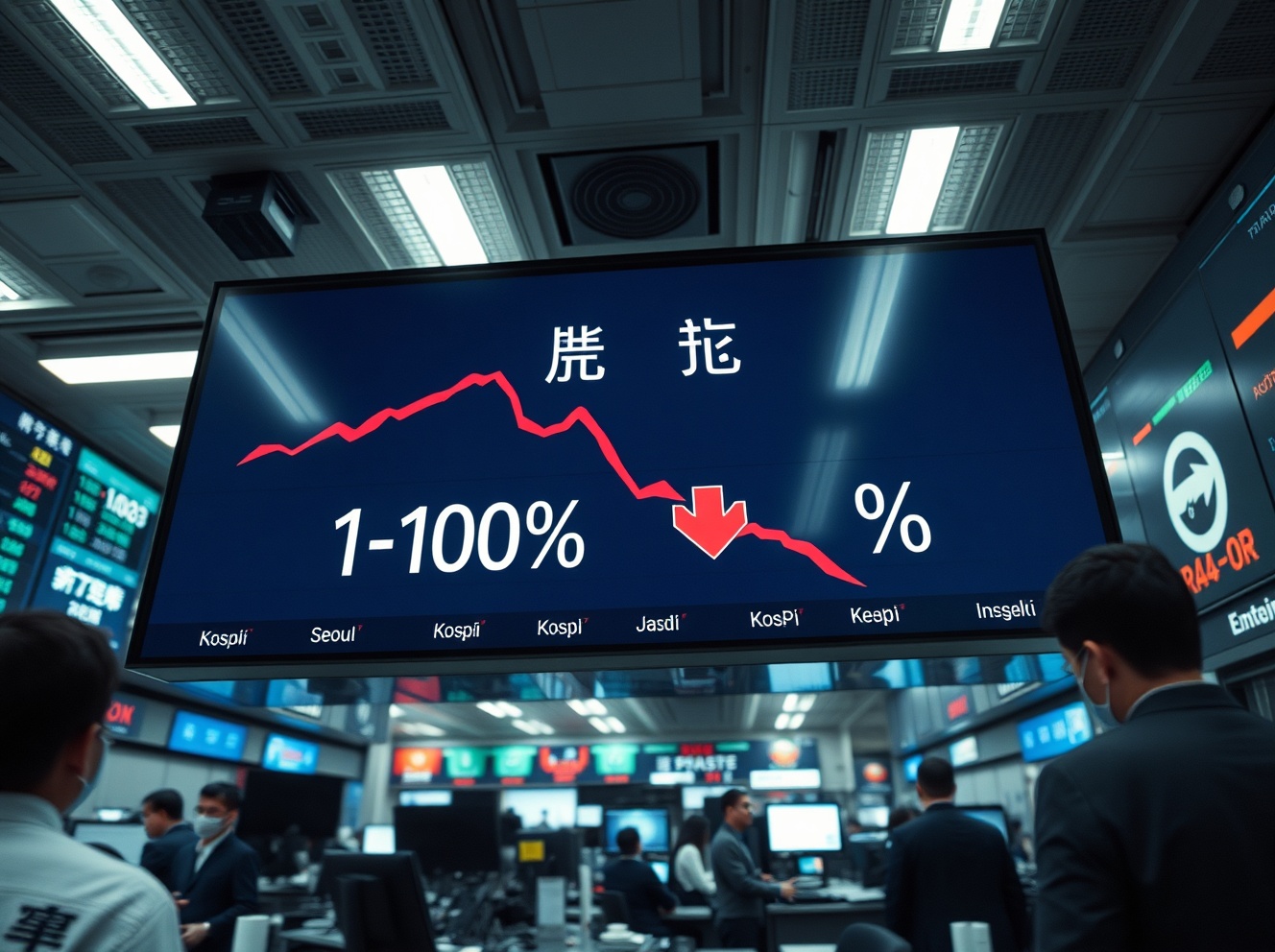
South Korea’s benchmark Kospi index crashed 10% in a single trading session as of the latest close, driven by a severe sell-off in semiconductor stocks. The rout was triggered by escalating competition from China’s domestic deep ultraviolet (DUV) lithography equipment and new regulatory constraints on Korean exchange-traded funds (ETFs), compounding fears of a prolonged downturn in the global chip market.
Semiconductor stocks lead the collapse
The Kospi’s 10% drop marks its steepest single-day decline in years, with heavyweight chipmakers such as Samsung Electronics and SK Hynix bearing the brunt of the sell-off. Samsung shares fell more than 12%, while SK Hynix lost over 14%, as investors priced in a sharper-than-expected slowdown in memory chip demand. The losses wiped out approximately $150 billion in market capitalization from the index.
Analysts attribute the panic to reports that Chinese semiconductor manufacturers are accelerating production of DUV lithography tools, which are critical for making advanced chips. This development threatens to erode the technological edge and pricing power of South Korean chipmakers, which have long dominated the global memory chip market.
New ETF regulations add pressure
Compounding the market turmoil, South Korea’s financial regulator announced stricter rules for leveraged and inverse ETFs, effective immediately. The new regulations limit the daily rebalancing frequency of these products and impose higher collateral requirements on ETF issuers. The move is intended to curb speculative trading but has triggered a wave of forced liquidations, amplifying the broader market decline.
The Kospi’s plunge also reflects a broader risk-off sentiment across Asian markets, as investors reassess exposure to the semiconductor sector. The Philadelphia Semiconductor Index fell 5% overnight, while Japan’s Nikkei 225 dropped 4.5%, underscoring the regional contagion.
Why this matters for global investors
The Kospi’s collapse signals that the semiconductor industry, a bellwether for global technology demand, is facing structural headwinds beyond the typical cyclical downturn. China’s push for self-sufficiency in chip-making equipment, combined with tighter financial regulations in South Korea, could reshape supply chains and investment flows for years to come. For retail investors, the volatility highlights the risks of concentrated exposure to single-country and single-sector ETFs.
Conclusion
The Kospi’s 10% crash, fueled by China’s DUV competition and new Korean ETF regulations, represents a critical juncture for Asia’s semiconductor sector. With chip stocks leading the decline and regulatory changes amplifying market stress, investors should brace for continued volatility. The coming weeks will be pivotal in determining whether this is a temporary correction or the start of a deeper structural shift in the global chip landscape.
FAQs
Q1: Why did the Kospi drop 10%?
A: The index fell sharply due to a sell-off in semiconductor stocks, driven by China’s progress in domestic DUV lithography equipment and new South Korean regulations on leveraged ETFs that triggered forced liquidations.
Q2: What are the new ETF regulations in South Korea?
A: The financial regulator imposed stricter daily rebalancing limits and higher collateral requirements on leveraged and inverse ETFs, aimed at curbing speculative trading but which amplified market declines.
Q3: How does China’s DUV competition affect South Korean chipmakers?
A: China’s ability to produce advanced DUV tools reduces its reliance on imports and threatens the market share and pricing power of South Korean firms like Samsung and SK Hynix, leading to investor concern about future earnings.
This post Kospi Plunges 10% as Chip Rout Deepens on China DUV Threat and New ETF Rules first appeared on BitcoinWorld.

Read More

South Korea Consumer Sentiment Index Edges Up to 106.8 in July