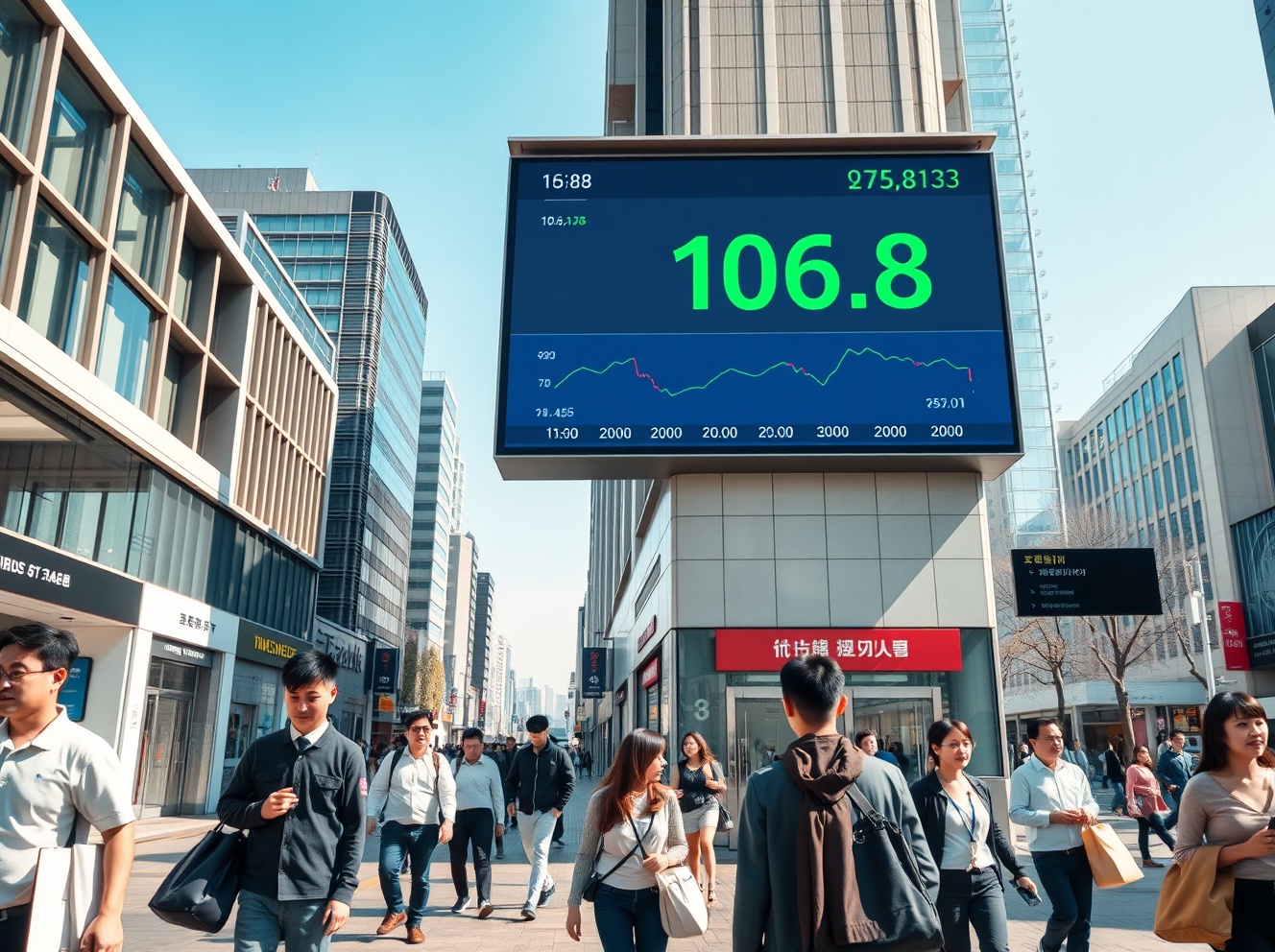
South Korea Consumer Sentiment Index Edges Up to 106.8 in July
Share:
South Korea’s Consumer Sentiment Index rose to 106.8 in July from a revised 106.6 in June, based on a Bank of Korea monthly survey of about 2,500 households, and has held in a narrow 105–108 range since March. The steady above-100 reading suggests stable household income and spending that could modestly support domestic crypto adoption, retail token purchases and DeFi/NFT activity and provide reassurance to markets, though external risks like trade tensions and commodity shocks could still weigh on outcomes.
Predictions Markets
See what traders are focused on

BitcoinWorld
South Korea Consumer Sentiment Index Edges Up to 106.8 in July
South Korea’s Consumer Sentiment Index (CSI) rose to 106.8 in July, according to the latest survey data, up slightly from a revised 106.6 in June. The marginal increase suggests that household confidence in the country’s economic outlook remains stable, even as global and domestic headwinds persist.
Understanding the Consumer Sentiment Index
The CSI is a key economic indicator compiled by the Bank of Korea, based on a monthly survey of approximately 2,500 households. It measures consumer attitudes toward current and future economic conditions, including employment, income, and spending. A reading above 100 indicates that optimists outnumber pessimists; July’s figure continues a trend of cautious optimism that has held for much of 2024.
Context and Implications for the Economy
The July reading, while modestly higher, reflects a steady recovery in consumer sentiment following a period of uncertainty driven by inflation concerns and global interest rate policies. Analysts note that the index has remained in a narrow range between 105 and 108 since March, indicating that consumers are neither overly exuberant nor deeply pessimistic. This stability may support sustained domestic consumption, a critical driver for South Korea’s export-dependent economy.
What This Means for Households and Markets
For South Korean households, the stable sentiment index suggests that expectations for income and employment remain positive, which could encourage continued spending on durable goods and services. For financial markets, the data provides reassurance that consumer demand is not deteriorating, potentially supporting corporate earnings in the retail and service sectors. However, the index does not capture risks from external factors such as global trade tensions or commodity price shocks, which could influence future readings.
Conclusion
The July CSI increase to 106.8 confirms a steady, if unspectacular, level of consumer confidence in South Korea. While the gain is small, it reinforces the view that the domestic economy is on a stable footing. Policymakers and investors will watch future months for any shift in trajectory as the country navigates global economic uncertainties.
FAQs
Q1: What does the Consumer Sentiment Index measure?
The CSI measures how South Korean households feel about current and future economic conditions, including employment, income, and spending. It is based on a monthly survey by the Bank of Korea.
Q2: Why is a reading above 100 significant?
A reading above 100 means that more consumers are optimistic than pessimistic about the economy. The July reading of 106.8 indicates a moderately positive outlook.
Q3: How does the CSI affect the broader economy?
Consumer sentiment influences spending behavior. Higher confidence typically leads to increased consumption, which supports economic growth. The stable CSI suggests households are likely to maintain their current spending patterns.
This post South Korea Consumer Sentiment Index Edges Up to 106.8 in July first appeared on BitcoinWorld.
Predictions Markets
See what traders are focused on
Share:
Predictions Markets
See what traders are focused on
Share:
Read More

Dollar Edges Higher as Markets Eye Fed’s Next Move This Week