No Fork Required: Bitcoin’s First Quantum-Safe Transaction Just Happened
Share:
On Aug 27, 2026 the Starknet Foundation demonstrated the first post-quantum-resistant Bitcoin mainnet transaction, a milestone that required no soft or hard forks and was mined via MARA's Slipstream. The technique, developed by StarkWare researcher Avihu Levy, uses computationally expensive signature grinding — generating millions of candidates over hours to avoid exposing vulnerable key material in the mempool — offering a practical security upgrade for crypto funds and institutional Bitcoin adoption against future quantum threats.
Predictions Markets
See what traders are focused on

Bitcoin Magazine
No Fork Required: Bitcoin’s First Quantum-Safe Transaction Just Happened
Should fund managers dealing in Bitcoin be worried about the threat of quantum computing?
The short answer is yes — but there’s time to prepare and solutions are already being found.
One of them? Post-quantum Bitcoin transactions on the mainnet. And the first one happened this week thanks to the Starknet Foundation.
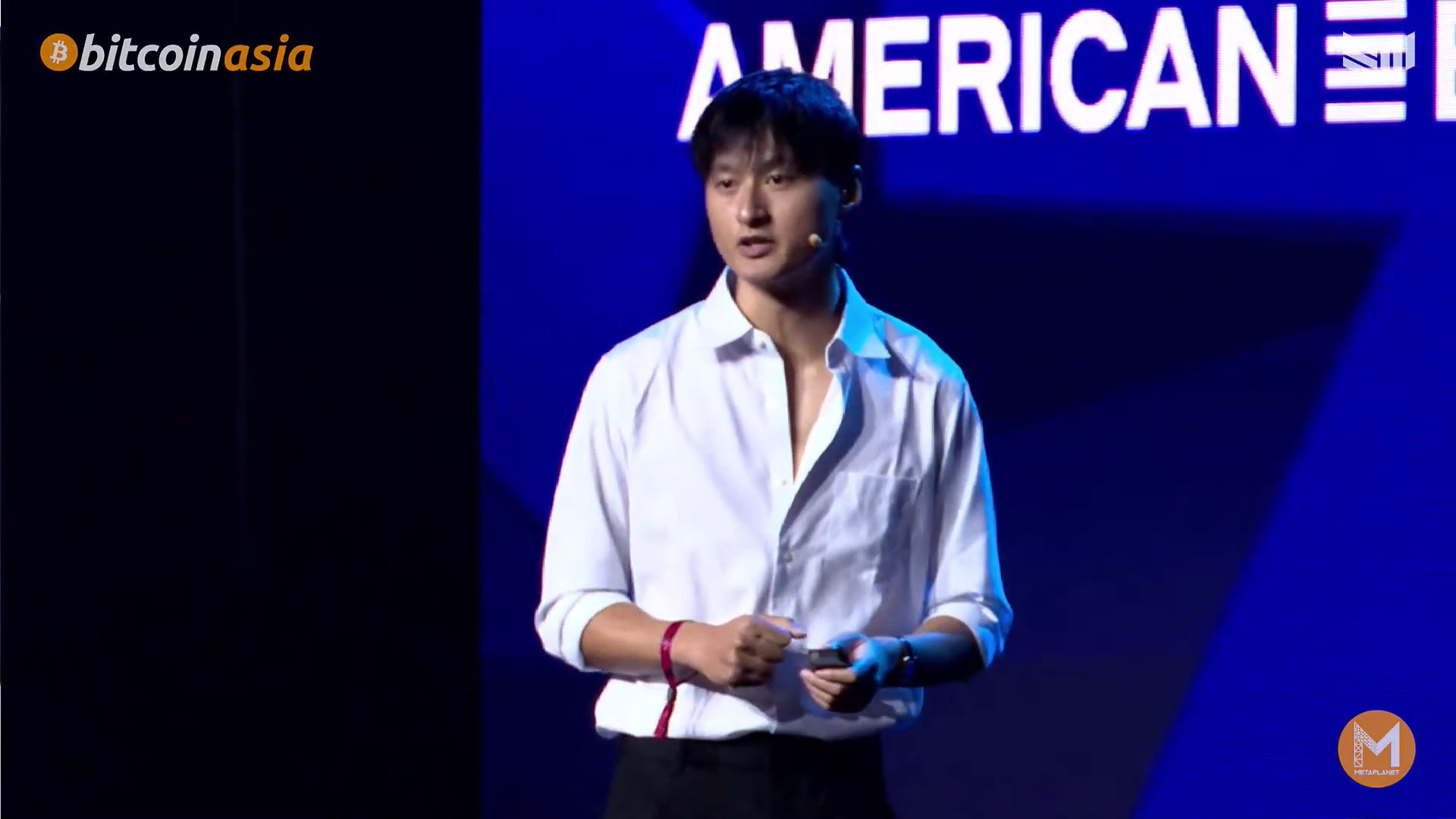
Speaking at Bitcoin Asia in Hong Kong on Thursday, Damian Chen, VP of growth at the Starknet Foundation, demonstrated how funds vulnerable to future quantum attacks can be secured without requiring a network-wide fork, thanks to the company’s latest solution.
“This is a monumental moment,” Chen said. “This is the first post-quantum-resistant Bitcoin transaction on bitcoin mainnet today. It required no soft forks; it required no hard forks; it required no core protocol upgrades, and it’s live today.”
The transaction happened using a method created by StarkWare researcher Avihu Levy. It works like this: Bitcoin transactions sit briefly in a public queue before confirmation. During that window, they expose cryptographic material that a sufficiently powerful quantum computer could use to forge a signature and steal the funds before the transaction is confirmed.
But rather than accepting the first valid signature, his method generates millions of signature candidates until it finds one with a specific structural property that doesn’t expose that vulnerable material while waiting in the mempool.
This “signature grinding” is deliberately computationally expensive — a single transaction takes hours to produce — but that cost is what makes it resistant to quantum shortcuts.
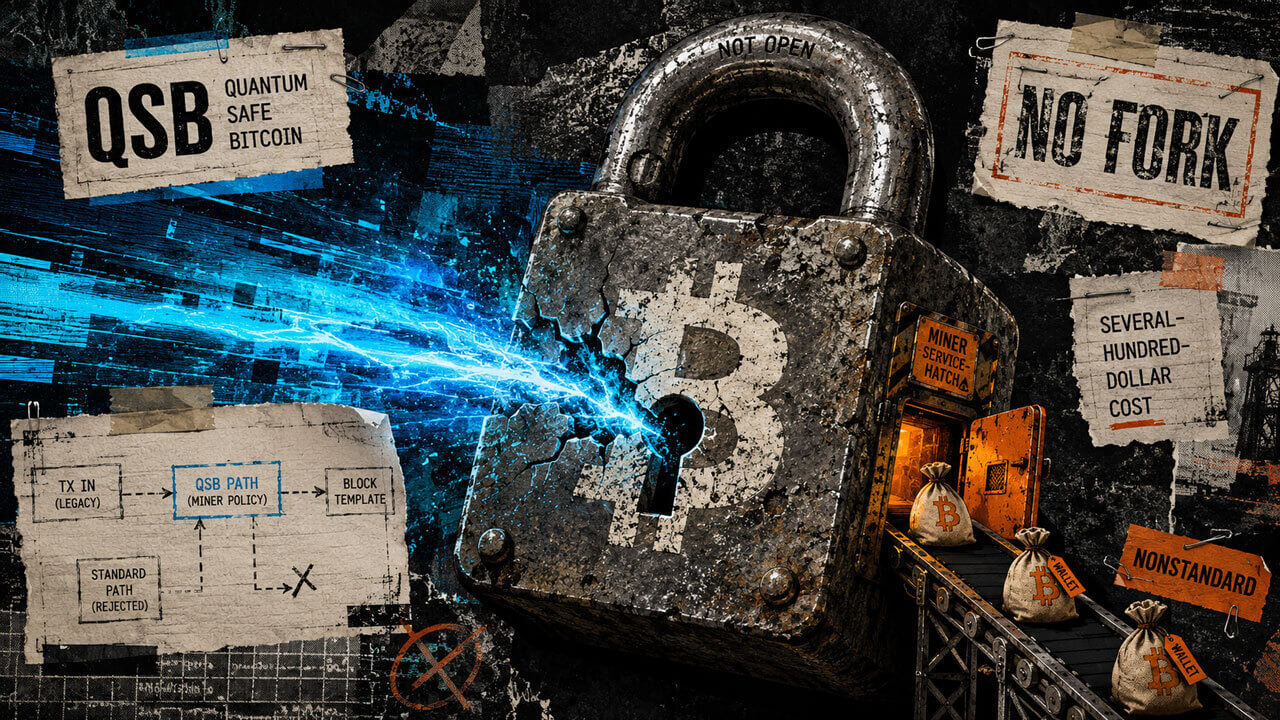
Touting Quantum safe Bitcoin transactions — dubbed “QSB” — to institutions, Chen said that even if attackers have a fund’s private keys, they couldn’t make a fraudulent transfer.
“QSB introduces a new hash authorization, and so an attacker with a sufficiently capable computer, even if they have your exposed public key, even if they derive your private key from your public key, even if they try to use that to authorize a spend to move your coins out of your wallet, those things are not enough for them to do so,” he said.
It’s worth noting that ordinary Bitcoin nodes currently don’t recognize this non-standard transaction format, so it couldn’t go into the public mempool and instead had to be handed straight to a miner willing to accept it — with mining company MARA’s Slipstream service being the one that mined the QSB transaction.
Quantum researchers have warned that a time will come when Bitcoin’s software — which underpins the biggest and strongest computer network in the world — will need to be upgraded to deal with quantum computing.
While some crypto VC firms have urged action, top Bitcoin developers have argued that many of today’s quantum computers have limited capabilities, and have only demonstrated trivial computations.
Still, they have noted that their development could arrive unexpectedly — just like advances with artificial intelligence — and have started developing some solutions.
Chen added: “The question to me has never been when will quantum arrive. We all know quantum will arrive at one stage, but the question to me has always been, how long will it take for you to be ready when quantum does arrive?”
This post No Fork Required: Bitcoin’s First Quantum-Safe Transaction Just Happened first appeared on Bitcoin Magazine and is written by Mathew Di Salvo.


Read More
Bitcoin now has a quantum computing escape route, but 7 million BTC may still be exposed