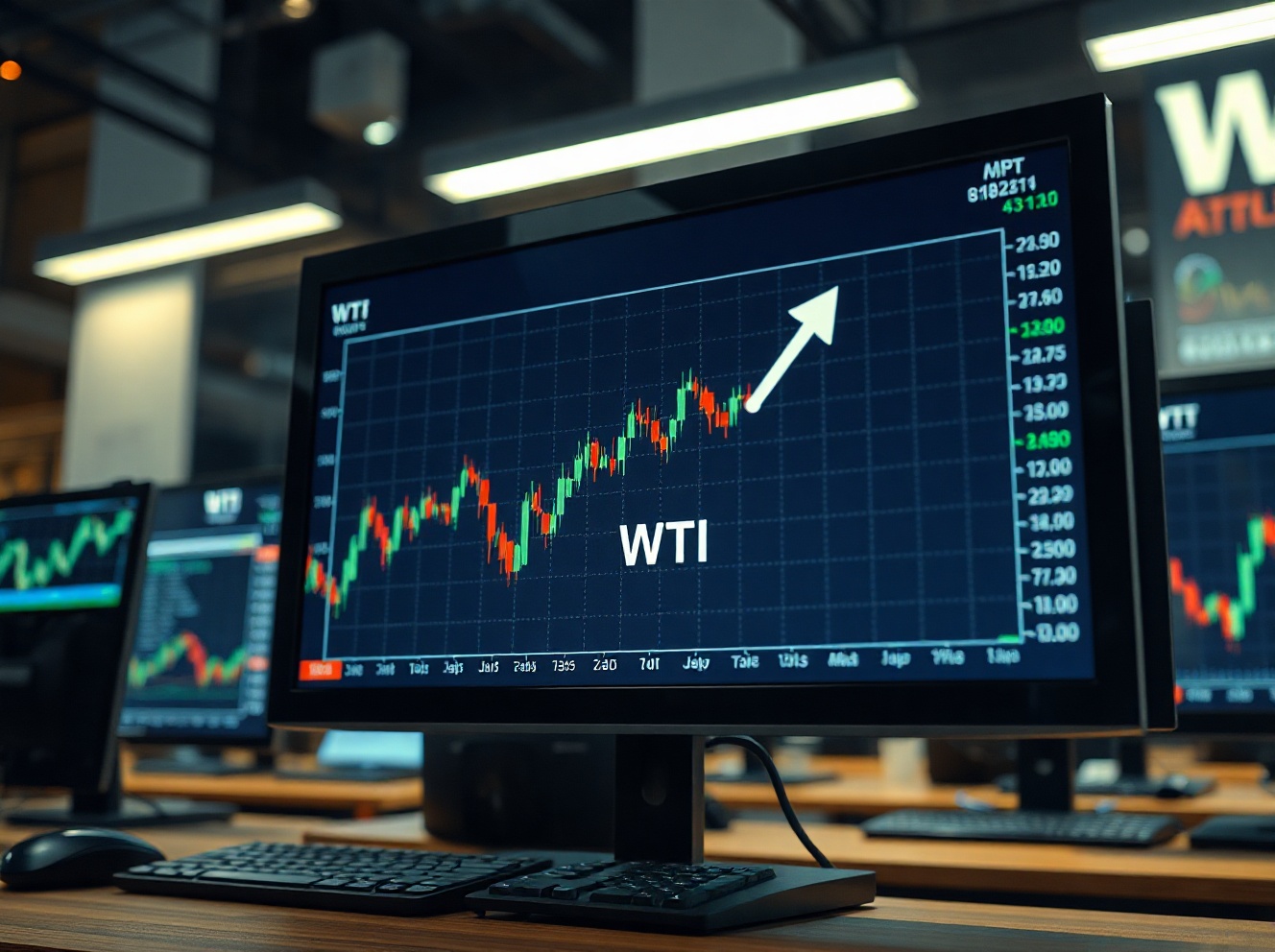
WTI Price Outlook: Crude Oil Aims for $80 as US-Iran Tensions Intensify

Share:
WTI crude futures climbed more than 3% early this week toward the $80.00/bbl mark as increased US naval deployments and renewed US‑Iran tensions raised a supply‑risk premium around the Strait of Hormuz, which handles roughly 20% of global oil flows. Technical resistance sits at $79.80 with a decisive close above $80 potentially targeting $82.50 while RSI near 68 and support at $76.20 warn of a pullback; higher oil prices could lift inflation and influence central bank policy and risk sentiment for crypto and DeFi markets.
Predictions Markets
See what traders are focused on

BitcoinWorld
WTI Price Outlook: Crude Oil Aims for $80 as US-Iran Tensions Intensify
WTI crude oil futures are pressing toward the $80.00 per barrel mark, driven by escalating US-Iran tensions that have heightened supply disruption risks in the Middle East, while technical indicators present a mixed picture for traders.
Supply Risk Premium Builds on Geopolitical Flashpoints
As of early this week, WTI futures have climbed more than 3% from the previous session, buoyed by reports of increased US naval deployments and renewed diplomatic friction with Tehran. The market is pricing in a tangible risk of supply interruptions from the Strait of Hormuz, a chokepoint through which roughly 20% of global oil transits daily.
Analysts note that the geopolitical premium has returned to crude after months of relative calm, but they caution that the actual supply impact may remain limited unless there is a direct disruption to tanker movements or production facilities. The White House has reiterated its commitment to enforcing sanctions on Iranian exports, while Tehran has responded with threats of retaliation, keeping traders on edge.
Technical Setup: Bullish Momentum vs. Overbought Signals
From a technical standpoint, WTI is testing the upper boundary of a consolidation range that has held since late April. The recent breakout above the 50-day moving average suggests bullish momentum, but the Relative Strength Index (RSI) is hovering near 68, approaching overbought territory. This has led some chartists to warn of a potential pullback before a sustained move higher.
Key resistance is identified at $79.80, a level that previously acted as support in March. A decisive close above this threshold could open the path toward the psychological $80.00 mark and potentially $82.50, the high from February. On the downside, support rests at $76.20, the 100-day moving average, with a break below that potentially negating the near-term bullish bias.
What This Means for Energy Markets and Consumers
The push toward $80 carries broader implications. Higher crude prices typically translate into increased gasoline and diesel costs, which could feed into inflation readings in major economies. The Federal Reserve and other central banks are closely monitoring energy prices as they assess the path of interest rates. For oil producers, the current price level offers a profitable incentive to increase drilling activity, though supply chain constraints and capital discipline remain limiting factors.
Conclusion
WTI crude oil is poised at a critical juncture, with geopolitical tensions providing upward pressure and technical indicators suggesting caution. While the $80.00 level is within reach, traders should remain alert to sudden shifts in diplomatic developments and technical reversal signals. The balance between supply risks and demand uncertainty will likely dictate the next major move in the coming sessions.
FAQs
Q1: What is driving the current rise in WTI prices?
The immediate driver is heightened US-Iran tensions, which raise the risk of supply disruptions in the Middle East, particularly through the Strait of Hormuz. This geopolitical risk premium has pushed prices toward $80.
Q2: What are the key technical levels to watch for WTI?
Traders are watching resistance at $79.80 and the psychological $80.00 level. A breakout above these could lead to $82.50. On the downside, support is at $76.20, with a break below that signaling a bearish reversal.
Q3: How might higher oil prices affect the broader economy?
Higher oil prices can increase transportation and production costs, potentially leading to higher inflation. This may influence central bank policy decisions, including interest rate adjustments, and affect consumer spending on fuel and goods.
This post WTI Price Outlook: Crude Oil Aims for $80 as US-Iran Tensions Intensify first appeared on BitcoinWorld.


Predictions Markets
See what traders are focused on
Share:
Predictions Markets
See what traders are focused on
Share:
Read More
Why the WTI sell-off may be hiding a supply warning