Tether finally got the audit critics demanded, just as Washington changed the test

Share:
Predictions Markets
See what traders are focused on

Tether says KPMG issued an unqualified opinion on Tether International's 2025 financial statements, its first full audit from a Big Four accounting firm. The audited numbers show reserves exceeding liabilities by $6.814 billion as of Dec. 31, 2025.
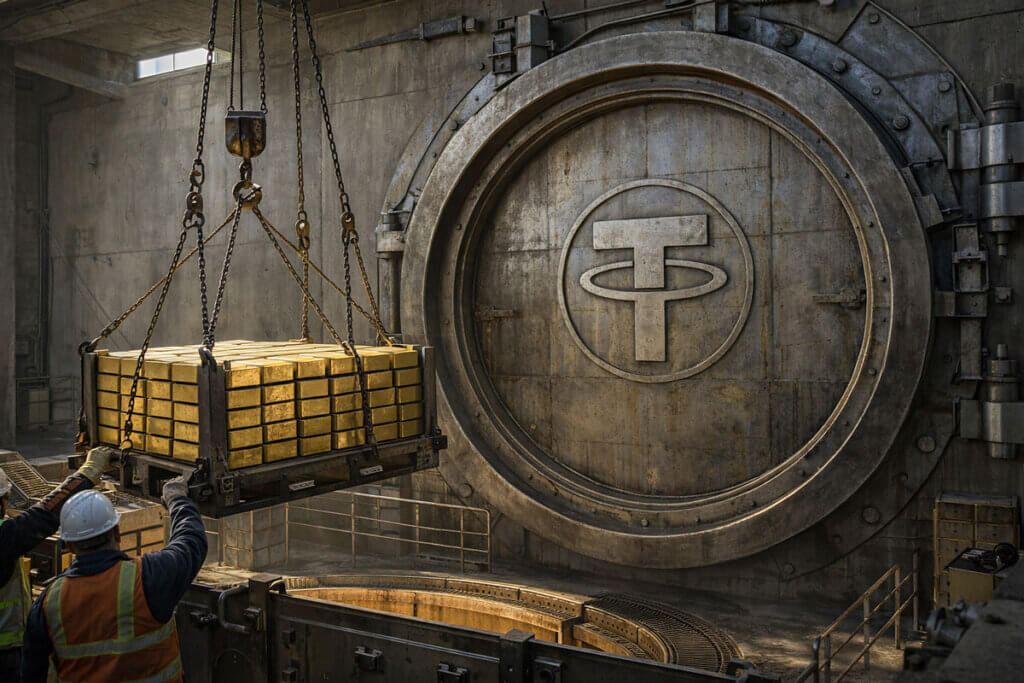
Quarterly reserve attestations confirm a snapshot of assets against liabilities. A full financial-statement audit examines the balance sheet, transactions, counterparties, and underlying evidence, and Tether says KPMG even physically counted every gold bar in its reserves.
| Transparency item | Reserve attestation | Full financial-statement audit | GENIUS-style regime |
|---|---|---|---|
| Point-in-time reserve snapshot | Yes | Yes | Yes |
| Full balance sheet review | Limited | Yes | Expected |
| Transactions and counterparties | Limited | Yes | Expected |
| Liability verification | Yes | Yes | Yes |
| Ongoing liquidity-risk management | No | Not the main purpose | Yes |
| Monthly public reporting | No | No | Yes |
| Weekly confidential regulator reporting | No | No | Yes |
| Standing supervisory framework | No | No | Yes |
Tether CEO Paolo Ardoino said KPMG's unqualified opinion was “the best possible audit opinion an independent auditor can issue” and the firm's audit was “the largest inaugural audit in the history of finance.”
He added:
“[Tether] has evolved into one of the most financially significant and operationally sophisticated private companies in the world. This audit demonstrates that our financial infrastructure and governance have evolved alongside that responsibility.”
Why this specific milestone carried so much weight
In 2021, the CFTC fined Tether $41 million, finding that during a 26-month sample period, Tether held sufficient fiat reserves to back USDT on only 27.6% of days. The regulator also found Tether had represented it would undergo routine professional audits without ever completing one.
New York's attorney general separately reached an $18.5 million settlement with Tether and Bitfinex the same year, tied to reserve representations and the movement of funds. That case grew out of an $850 million shortfall at Bitfinex connected to Crypto Capital.
Tether responded by publishing regular independent reserve attestations, but a full audited financial statement remained the one document outside observers kept asking for.
Then the GENIUS Act and its proposed implementing rules asked more than whether Tether had the reserves for its stablecoins. The FDIC's proposed rule for large permitted stablecoin issuers contemplates prescribed reserve assets, reserve segregation, and liquidity risk management.

It also calls for monthly public reserve disclosures, examinations by registered accounting firms, confidential weekly regulatory reports, quarterly financial condition reports, redemption planning, and annual audited financial statements for issuers with assets above $50 billion.
Where Tether's reserves fall outside the new rules
The proposed reserve-asset menu covers currency, Federal Reserve balances, demand deposits, short-dated Treasuries, overnight Treasury-backed repo and certain money-market instruments. Gold does not appear on that list, and Tether has been expanding its gold holdings as part of its reserve strategy.

The FDIC's proposal also defines a major redemption event as requests that exceed 10% of the outstanding issuance within 24 hours.
| Reserve category | Included in proposed FDIC reserve menu? | Relevance to Tether story |
|---|---|---|
| Cash / currency | Yes | Core eligible reserve asset |
| Federal Reserve balances | Yes | High-quality regulated liquidity |
| Demand deposits | Yes | Eligible if held appropriately |
| Short-dated U.S. Treasuries | Yes | Central to major stablecoin reserve models |
| Overnight Treasury-backed repo | Yes | Eligible liquidity tool |
| Certain money-market instruments | Yes | Allowed within limits |
| Gold | No | Tether has expanded gold holdings |
| Bitcoin / other crypto assets | No | Highlights the gap between broader reserve strategy and proposed U.S. rules |
Applied to Tether's roughly $183.6 billion token liabilities in the second quarter, that threshold works out to about $18.4 billion leaving in a single day, a liquidity test no annual audit can answer on its own.
In February, Sen. Jack Reed introduced the Foreign Stablecoin Transparency Act, citing Tether directly and arguing that GENIUS left foreign issuers outside the annual audit requirement that applies to large US issuers.
His bill would require foreign dollar-stablecoin issuers to undergo audits as well, citing Tether's years without a completed audit as evidence of the gap.
Tether describes the KPMG audit as voluntary, and nothing ties Reed's legislation to the timing. Six months on from his bill naming Tether's missing audit as the problem, the legislative question still applies, since a completed audit is a single event and a statutory audit requirement is a standing obligation.
USAT and USDT sit on separate tracks
Tether has already built a second track for US regulation without folding its main product into it. Anchorage Digital Bank, a federally chartered institution, issues USAT, a stablecoin launched in January and designed around the GENIUS framework.
Global USDT is a separate product that Tether says is progressing toward GENIUS compliance, and it remains enormous. Tether reported roughly $184.6 billion in USDT outstanding at the end of the second quarter, with more than 60% of the total stablecoin market.
Tether says KPMG conducted the audit in accordance with AICPA standards. GENIUS sets the PCAOB standards as the statutory benchmark for large US issuers' annual audits, though the FDIC's proposed rule would allow non-public entities to choose either standard.
Tether's audit differs from the recurring examination and supervisory regime around which GENIUS is built.
Which way Tether's next chapter goes
The bull case has Tether repeating full audits every year, shifting more of USDT's backing toward GENIUS-eligible assets, and using USAT's design as a template to gradually extend it to the global product.
Monthly reserve detail deepens, non-eligible exposure shrinks, and the KPMG audit becomes remembered as the first step in a longer institutional rehabilitation.

The bear case has the audit doing what it was meant to do and no more. The reputational cloud lifts, but US policymakers continue to treat foreign stablecoin issuers as a structural gap regardless of any single company's transparency.
| Issue | Bull case | Bear case |
|---|---|---|
| Audit cadence | Tether repeats full audits annually | Audit remains a major one-off milestone |
| Reserve composition | More backing shifts toward GENIUS-eligible assets | Non-eligible exposure remains a policy friction point |
| Reporting | Monthly reserve detail becomes deeper and more standardized | Disclosures remain less comparable to U.S. permitted issuers |
| U.S. regulatory access | USAT becomes a template for broader compliance | USAT and USDT remain sharply separate tracks |
| Political risk | Reed-style foreign issuer bills lose urgency | Foreign issuer audit rules gain momentum |
| Market impact | USDT keeps institutional access while improving credibility | USDT remains dominant globally but harder for U.S.-regulated intermediaries |
USDT remains dominant globally, but it becomes harder for US-regulated intermediaries to engage with it if it cannot meet GENIUS-style disclosures, eligible reserve rules, and redemption planning.
Reed's bill becomes easier to pass once it is framed as applying the same rules to all foreign issuers.
For a decade, Tether's test was to secure a Big Four firm's sign-off on its books, and KPMG has now done so.
The next test asks whether the world's largest stablecoin can keep proving the same thing every month, under supervision, for as long as $185 billion in USDT stays outstanding.
The post Tether finally got the audit critics demanded, just as Washington changed the test appeared first on CryptoSlate.
In This News
Coins

$ 62.77K
-1.25%
$ 0.9989
-0.01%
$ 0.379
+1.78%
$ 4.35K
-0.82%
$ 0.9984
-0.02%


Predictions Markets
See what traders are focused on
Share:
In This News
Coins
$ 62.77K
-1.25%$ 0.9989
-0.01%$ 0.379
+1.78%$ 4.35K
-0.82%$ 0.9984
-0.02%Predictions Markets
See what traders are focused on
Share:
Read More

Russia picks Bitcoin, Ethereum and USDT for public trading as retail faces $58,000 cap