SEC Proposes New Regulation for Crypto Assets; Here Are the Details
Share:
On August 18, 2026 the SEC proposed "Regulation Crypto Assets" with a 60 day comment period, applying the Howey test and offering a safe harbor that lets projects raise up to $5 million over four years for one-time offers or $75 million in one year with mandatory audits and disclosures before tokens revert to full securities treatment. The framework requires principles-based narrative disclosures, anti-fraud provisions and decentralization benchmarks to exit securities status, would preempt state laws, and gives clearer rules for crypto fundraising, token launches, DeFi projects and DEX and CEX interaction, likely boosting adoption and capital access while increasing compliance costs.
Predictions Markets
See what traders are focused on

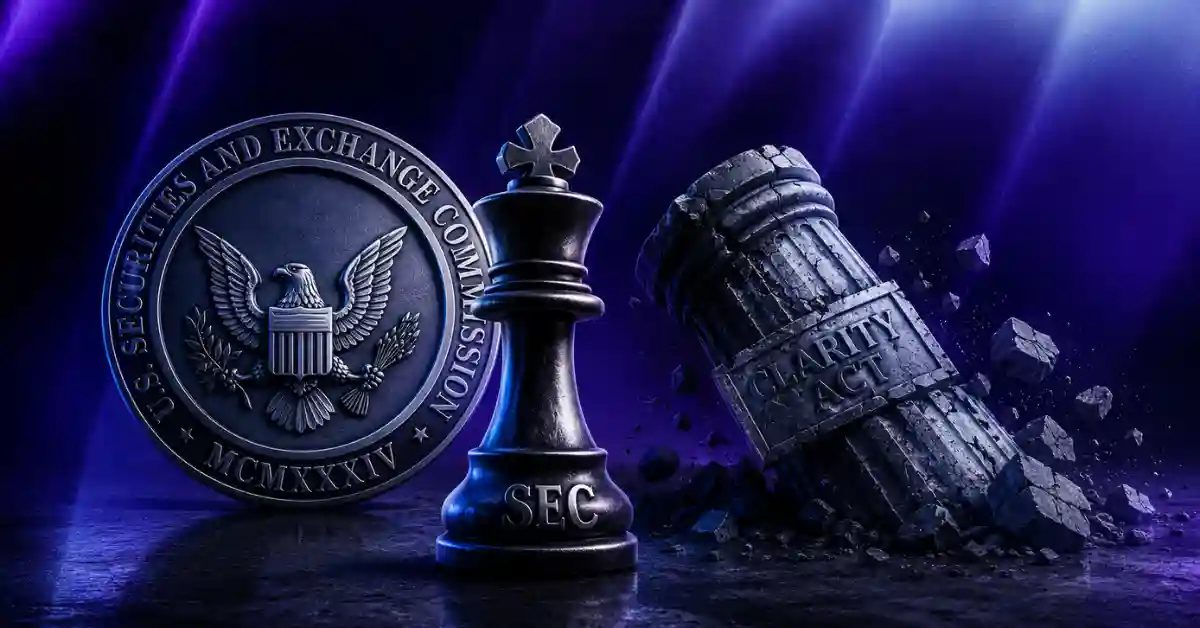
The US Securities and Exchange Commission (SEC) has just proposed several new rules for the crypto industry, with a 60-day commentary period.
Dubbed “Regulation Crypto Assets,” the August 18 proposal provides specific guidance for cryptocurrencies grouped under securities or investment contracts.
SEC Recommends Crypto Securities Regulatory Framework
To begin with, the SEC acknowledges that crypto tokens are securities if investors purchase them expecting to make returns from the efforts of a central team (Howey test).
This rule, however, presents filing, disclosure, and audit challenges for many crypto startups.
Under the proposed rules, the agency grants these projects a “safe harbour,” or a window of exceptions to the 1933 Securities Act. Crypto projects can legally raise capital without standard registration if they comply with the following requirements:
- Fundraising for small start-ups is limited to $5 million over four years for a one-time offer.
- Fundraising for large-scale projects is limited to $75 million over one year, with mandatory financial audits and detailed reports.
- Beyond these timelines, tokens would be permanently subject to the SEC’s standard securities laws.
- All startup teams need to provide “principles-based narrative disclosures” that outline the project’s source code, structure, tokenomics, roadmap, and core team in plain English.
- Standard anti-fraud and anti-manipulation provisions apply.
Most importantly, the SEC’s ultimate goal is for these tokens to transition out of a securities classification by achieving full decentralization.
Decentralization benchmarks include zero central control, independent governance, and distributed nodes. A fourth element is token market independence, where token value is based on utility rather than centralized marketing.
Notably, should the proposed pathway become law, it would override or preempt any state securities requirements. This would greatly remove the burden of unifying state and federal laws.
“Rules should be written so that well-intentioned people can follow them without having to abandon legitimate pursuits.” – SEC Commissioner Hester Peirce.
Current regulatory limbo
A meeting scheduled tomorrow between regulatory agencies and the office of the US President might give further insight into crypto regulations.


Predictions Markets
See what traders are focused on
Share:
Predictions Markets
See what traders are focused on
Share:
Read More

XRP Rises 10% As Garlinghouse Joins Trump at White House Crypto Summit