WTI Price Drops Below $80 as US-Iran Nuclear Deal Nears Finalization
Share:
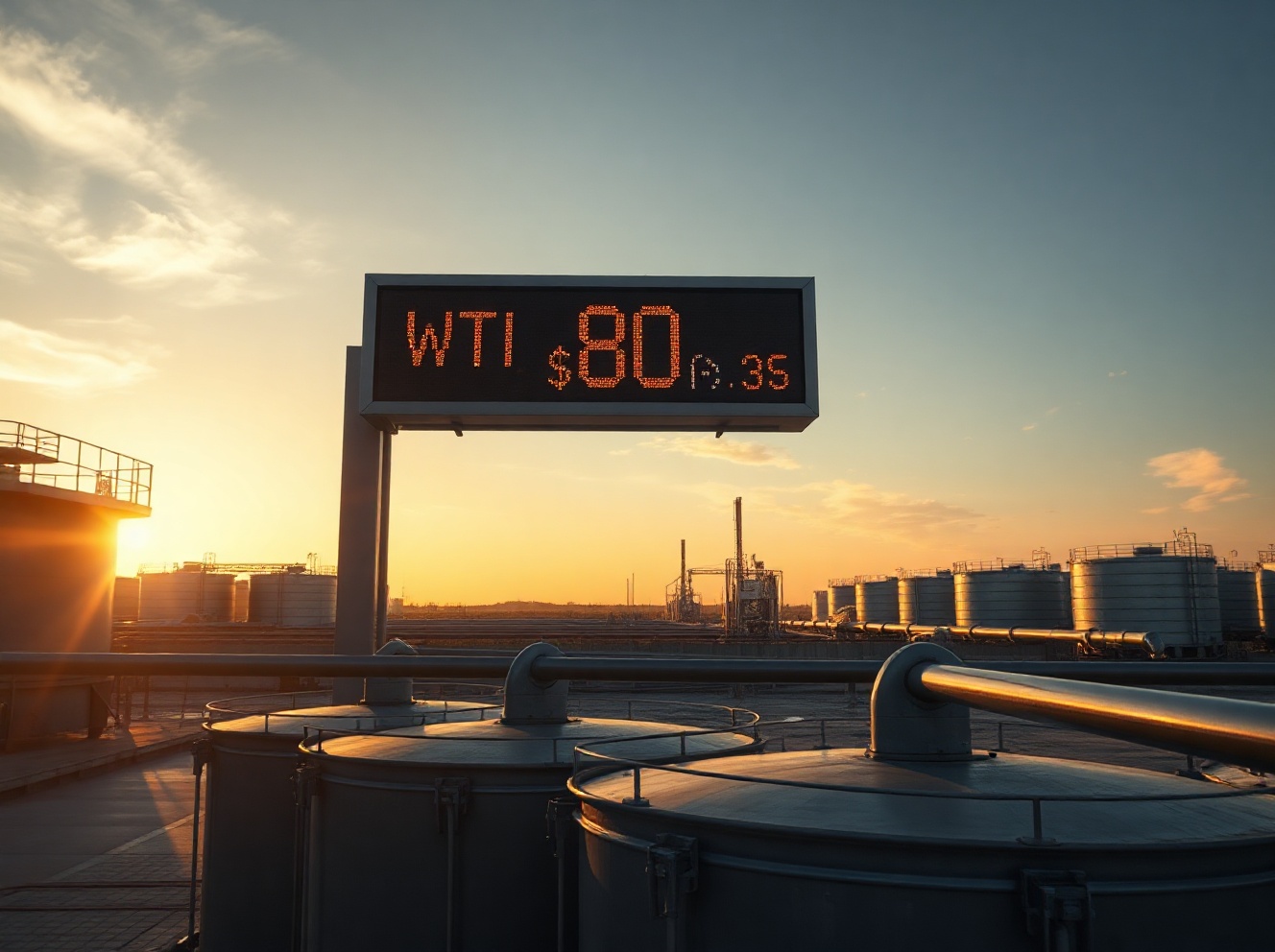
WTI crude slid below $80 to $79.45 for June delivery (Brent $83.20), down about 2.3% as markets price in a likely US‑Iran JCPOA that could return roughly 1.3 million barrels per day of Iranian crude. The break of $80 support (next support $75–76, downside target $72, RSI 42) ahead of the June 1 OPEC+ meeting raises downside risk for energy prices; lower oil could ease inflation and indirectly support risk assets including crypto, DeFi and CEX markets, but the immediate signal is bearish for commodities.
Predictions Markets
See what traders are focused on

BitcoinWorld
WTI Price Drops Below $80 as US-Iran Nuclear Deal Nears Finalization
West Texas Intermediate (WTI) crude oil futures slid below the $80 per barrel mark on Monday, extending losses as markets priced in the growing likelihood of a finalized nuclear agreement between the United States and Iran. The decline marks a significant shift in sentiment, driven by expectations that sanctions relief could bring Iranian crude back into global markets, adding to supply at a time when demand concerns are already weighing on prices.
Market Reaction to Geopolitical Breakthrough
The price drop follows reports that negotiators in Vienna have made substantial progress toward restoring the 2015 Joint Comprehensive Plan of Action (JCPOA). Market participants are now pricing in the potential return of approximately 1.3 million barrels per day (bpd) of Iranian crude exports, a volume that could significantly offset current supply tightness. WTI crude for June delivery fell 2.3% to $79.45 per barrel in afternoon trading, while Brent crude declined 2.1% to $83.20 per barrel.
Analysts note that the market had previously been supported by OPEC+ production cuts and geopolitical risk premiums tied to the Israel-Hamas conflict. However, the prospect of Iranian supply entering the market has shifted the supply-demand calculus. “The Iran deal is the most significant supply-side catalyst we’ve seen in months,” said energy market strategist David Chen of Global Energy Analytics. “If finalized, it could add enough barrels to push prices lower, especially if OPEC+ maintains its current production levels.”
Implications for Global Oil Markets
The potential return of Iranian oil comes at a critical juncture. Global oil inventories have been declining, and OPEC+ has maintained voluntary production cuts of over 2 million bpd through June. However, the cartel’s ability to manage prices could be tested if Iranian supply floods the market. The International Energy Agency (IEA) has projected a slight surplus in the second half of 2024, and additional Iranian barrels could accelerate that trend.
For consumers, lower oil prices could translate into reduced gasoline and heating costs, offering relief after two years of elevated energy inflation. The average U.S. gasoline price has already fallen to $3.45 per gallon, down from $3.80 a month ago, according to AAA. Further declines could support consumer spending and ease pressure on central banks grappling with inflation.
Geopolitical and Strategic Considerations
The nuclear deal, if finalized, would represent a major diplomatic achievement for the Biden administration, but it also carries risks. Critics argue that sanctions relief could provide Iran with additional revenue to support proxy forces in the Middle East. Supporters counter that a verified agreement is the best way to constrain Iran’s nuclear program and reduce regional tensions.
Market participants are also watching for OPEC+’s response. The group is scheduled to meet on June 1 to discuss production policy. Some analysts expect OPEC+ to extend cuts if prices fall further, while others believe the cartel may tolerate lower prices to maintain market share. “OPEC+ faces a difficult choice,” said independent oil analyst Sarah Al-Mansouri. “They can cut further to defend prices, or they can accept a lower price environment to discourage non-OPEC supply growth.”
Technical Outlook for WTI Crude
From a technical perspective, WTI has broken below key support at $80, a level that had held since early March. The next major support zone lies at $75-$76, a range that previously acted as resistance in late 2023. Resistance is now at $82-$83. The Relative Strength Index (RSI) has fallen to 42, indicating bearish momentum but not yet oversold territory.
Volume has increased sharply during the sell-off, suggesting strong institutional participation. Traders are advised to watch for a potential dead-cat bounce, but the trend remains bearish as long as prices stay below $80. A sustained move below $78 could trigger further selling, targeting $72 per barrel.
Conclusion
The slide in WTI crude below $80 reflects a fundamental reassessment of supply dynamics driven by the potential US-Iran nuclear deal. While the agreement is not yet finalized, markets are already adjusting to the likelihood of increased Iranian exports. The coming weeks will be critical, with OPEC+ policy decisions and final diplomatic steps shaping the next phase of the oil market. For investors and consumers alike, the direction of crude prices will have broad implications for inflation, monetary policy, and economic growth.
FAQs
Q1: How much oil could Iran add to global markets?
If sanctions are lifted, Iran could increase exports by 1.3 million barrels per day within six months, based on pre-sanction production capacity and current idle wells.
Q2: Will lower oil prices affect gasoline at the pump?
Yes, crude oil accounts for about 50-60% of the cost of gasoline. A sustained decline in WTI prices typically leads to lower gasoline prices within 2-4 weeks, depending on refinery margins and seasonal demand.
Q3: What is OPEC+’s likely response to falling prices?
OPEC+ has historically defended prices by cutting production. However, internal disagreements and the desire to maintain market share may limit the scope of further cuts. The group’s June meeting will provide clarity.
This post WTI Price Drops Below $80 as US-Iran Nuclear Deal Nears Finalization first appeared on BitcoinWorld.


Read More

Oil Prices Retreat as Ceasefire Hopes Fade Again in the Middle East