Microsoft's Starlink deal has an awkward Elon Musk problem

Share:
Microsoft partners with SpaceX's Starlink to establish 450 community hubs in Kenya, enhancing internet access for underserved regions. This initiative aims to promote AI adoption globally, surpassing Microsoft's previous target by connecting over 299 million people. However, tensions arise as Musk sues OpenAI and Microsoft, calling their actions a betrayal of OpenAI’s mission.
Predictions Markets
See what traders are focused on

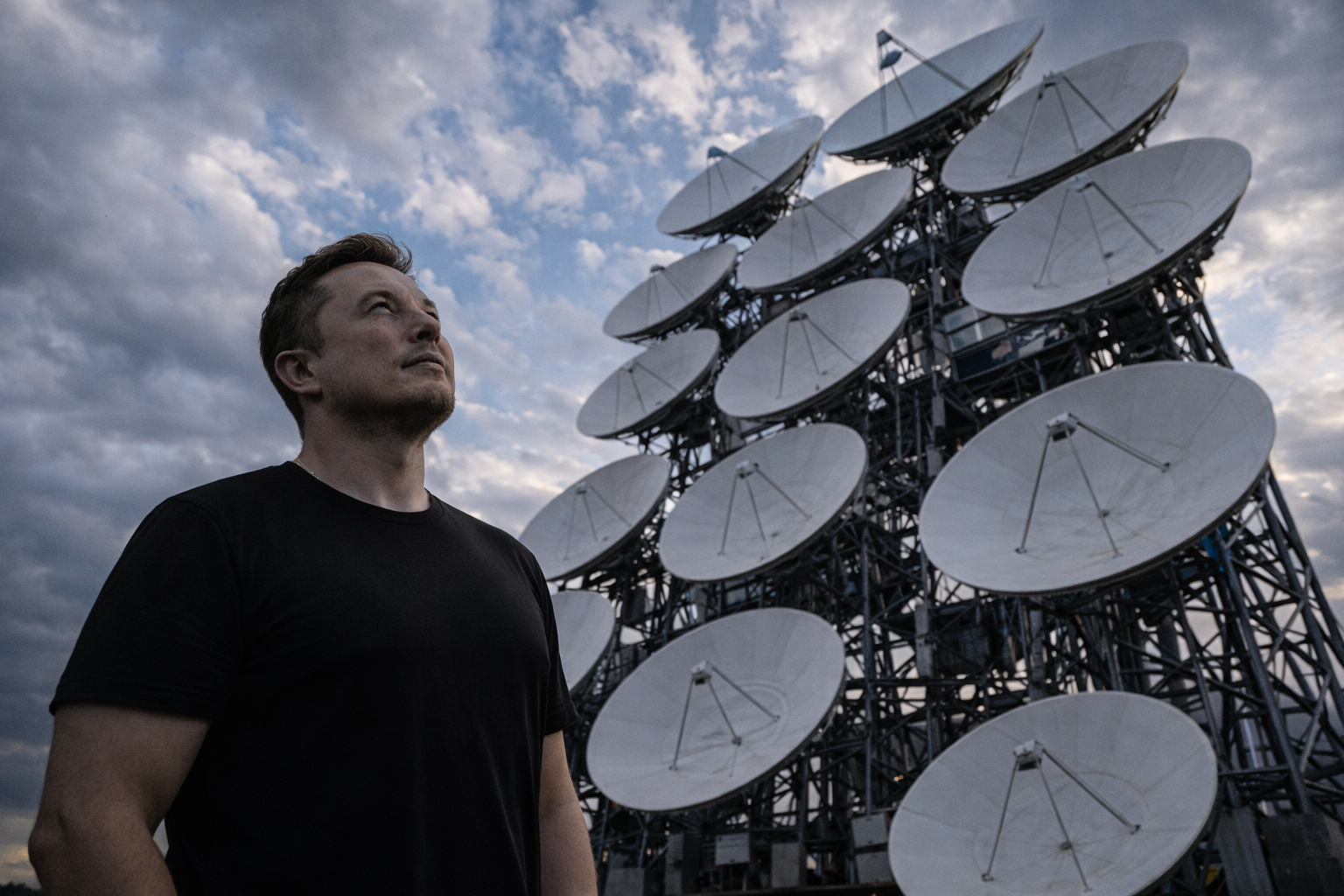
Microsoft is expanding its push to connect underserved communities by partnering with SpaceX’s Starlink, including plans to support connectivity for 450 “community hubs” in Kenya.
The company framed the initiative as part of building “AI-ready communities” for a world where AI is becoming central to economic growth.
The awkward wrinkle: Microsoft is also OpenAI’s biggest financial partner, while Elon Musk is in court pursuing claims against OpenAI and Microsoft over what he argues is a betrayal of OpenAI’s founding mission.
The triangle nobody is talking about
Microsoft’s new collaboration with Starlink is designed for areas where traditional broadband is difficult to establish.
In its blog post, Microsoft stated that it is combining low-Earth orbit satellite connectivity with community-based deployment models and local partnerships, citing Kenya as an early example, with Starlink and local provider Mawingu Networks.
Microsoft said the Kenya program targets 450 hubs across rural and underserved regions, including farmer cooperatives, aggregation centers and digital hubs.
Microsoft is pitching the effort as a bridge into the “global AI economy,” noting that 2.2 billion people remain offline worldwide.
It also said it has exceeded its earlier goal of expanding internet access to 250 million people by end-2025, reporting connectivity coverage extended to more than 299 million people globally, including more than 124 million across Africa.
The business case is clear; the politics are messier.
The Starlink partnership is described as a sign that Microsoft is willing to work with Musk’s companies even as Musk pursues legal action tied to OpenAI, Microsoft’s most important AI partner.
Elon Musk is seeking up to $134 billion from OpenAI and Microsoft, with OpenAI calling his lawsuit “baseless” and part of a “harassment” campaign.
Beyond awkwardness: What's really at stake?
For Microsoft, Starlink is an infrastructure lever.
Low-Earth orbit satellites can provide broadband in regions where laying fiber is slow or uneconomic, and Microsoft’s own framing is that connectivity is foundational to broader AI adoption.
If Microsoft wants Azure and AI services to penetrate new markets, getting a dependable “last-mile” connection matters as much as any software bundle.
For Musk, enterprise partnerships like this are also strategically valuable.
The initiative could increase demand for Musk’s aerospace business, which holds contracts with the US Department of Defense and NASA, and said it “may possibly” go public this year.
Even without an IPO, commercial deals tied to long-duration connectivity projects can help normalize Starlink as enterprise-grade infrastructure rather than a consumer-only service.
There’s also a competitive move in the background as satellite internet is no longer Starlink’s market alone.
Amazon’s Project Kuiper is pegged as a direct competitor to Starlink, with a planned constellation aimed at delivering broadband for consumers, enterprises and governments.
That dynamic helps explain why Microsoft might lock in a relationship now, because in a cloud arms race, whoever controls distribution in hard-to-reach places can shape where workloads land.
The post Microsoft's Starlink deal has an awkward Elon Musk problem appeared first on Invezz


Predictions Markets
See what traders are focused on
Share:
Predictions Markets
See what traders are focused on
Share:
Read More
NOW, IBM, other software stocks surge as Huang eases AI fears