Samsung hits $1 trillion: what's behind the 10% surge in one day?

Share:
Samsung shares jumped >10% in one day to push market cap to ~1,500 trillion won (~$1.03T); Q1 operating profit 57.2 trillion won (8x YoY) — larger than full-year 2025 op profit of 43.6T won — and revenue 133.9T won; KOSPI topped 7,000 and rival SK Hynix rose >9%. Rally driven by AI memory demand and product milestones: Samsung began mass production of HBM4 in Feb 2026, aiming to reclaim HBM leadership; Bloomberg (May 5) reports Apple held exploratory foundry talks with Samsung/Intel, a potential major foundry win that boosts adoption and sector re‑rating. Implications for market impact, AI infrastructure and compute-heavy crypto/DeFi/DEX/CEX projects.
Predictions Markets
See what traders are focused on

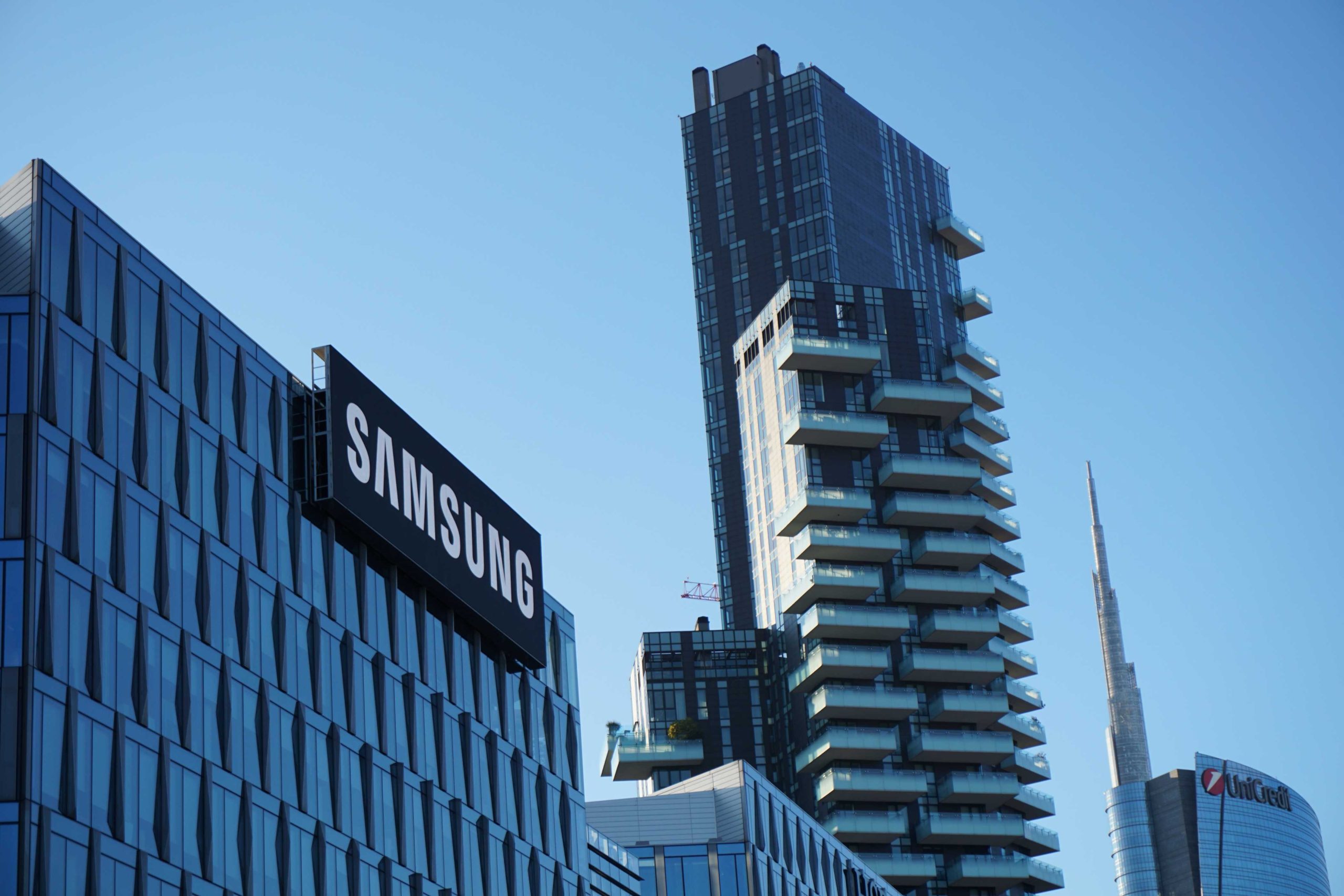
Samsung Electronics vaulted past the $1 trillion market capitalization mark on Wednesday after its shares surged by more than 10%.
The move briefly put the company at about 1,500 trillion won, or roughly $1.03 trillion.
That made Samsung only the second Asian company after Taiwan’s TSMC to cross the milestone, while South Korea’s KOSPI index also broke 7,000 for the first time ever.
The scale of the jump was striking, but the driver was not the only factor.
The rally was primarily based on multiple factors, including a record earnings report, a fresh Apple (NASDAQ: AAPL) supply-chain wildcard, and the market’s growing belief that Samsung’s next-generation AI memory push could reshape the semiconductor race.
Quarter that rewrote Samsung’s record books
The foundation for Wednesday’s surge was laid by a stunning first-quarter performance.
Samsung reported operating profit of 57.2 trillion won, an eightfold jump from a year earlier.
More strikingly, that single quarter surpassed the company’s entire full-year 2025 operating profit of 43.6 trillion won.
Revenue hit a record 133.9 trillion won, underscoring just how quickly the cycle has turned.
At the heart of this growth is high-bandwidth memory (HBM), a specialized chip essential for AI data centres.
These chips work alongside processors from companies like Nvidia to handle massive volumes of data used in training and running AI models.
Demand has surged so quickly that supply has struggled to keep up, creating a pricing tailwind for producers.
Samsung sits at the centre of this trend, alongside its closest rival SK Hynix.
Notably, SK Hynix stock also jumped more than 9% on the same day, reinforcing that this is not just a Samsung story but a broader re-rating of the AI memory sector.
The benchmark KOSPI crossing 7,000 for the first time further highlighted how widespread investor optimism has become.
Apple's wildcard that changed the game
If strong earnings started the rally, news involving Apple made it surge even faster.
According to a Bloomberg report on May 5, Apple has held exploratory discussions with both Samsung and Intel about manufacturing chips for its devices in the United States.
For years, Apple has relied almost exclusively on TSMC for its most advanced chips.
Any shift would mark a significant change in the global semiconductor landscape.
The motivation is clear, as geopolitical tensions and supply-chain risks tied to Taiwan have pushed large tech companies to diversify manufacturing.
For Samsung, the potential upside is enormous as its foundry business has long lagged behind TSMC in cutting-edge chip manufacturing.
Winning even a slice of Apple’s business would be a major credibility boost and could accelerate investment and customer interest.
Samsung’s bet on the next AI memory supercycle
In February 2026, Samsung announced it had begun mass production of HBM4, the latest generation of high-bandwidth memory.
This is not a routine upgrade as HBM4 is expected to underpin next-generation AI systems, including platforms linked to Nvidia’s future architectures.
The timing matters as Samsung had lost early leadership in HBM to SK Hynix, which currently dominates supply to Nvidia.
HBM4 represents Samsung’s attempt to reclaim that ground and position itself at the centre of the next wave of AI infrastructure spending.
The post Samsung hits $1 trillion: what's behind the 10% surge in one day? appeared first on Invezz


Read More
US Retail Stock Buying Slumps to Lowest Level Since Early 2020