
Why China's biggest trade fair is flashing warning signs for exporters

Share:
At the Canton Fair (≈32,000 exhibitors) exporters say rising commodity prices linked to the Middle East conflict have fed into input costs — one manager cited ~20% raw material inflation; some firms raised prices ~15% while others still sell at a loss, and US-focused suppliers report 7–8% higher input costs. - Revenue and margin pressure: planned H1 Middle East sales of ~30 million yuan have been put on hold, orders are slower and more price-sensitive, and firms are weighing production shifts to Southeast Asia to evade US tariffs and protect margins. - Market impact and risk: geopolitical fallout and tariff uncertainty are increasing downside risk to trade flows and profitability; exporters are responding with a mix of price hikes, cost absorption, and supply‑chain relocation, signaling weaker demand and longer-term margin pressure (tariffs, market impact, risk, adoption).
Predictions Markets
See what traders are focused on

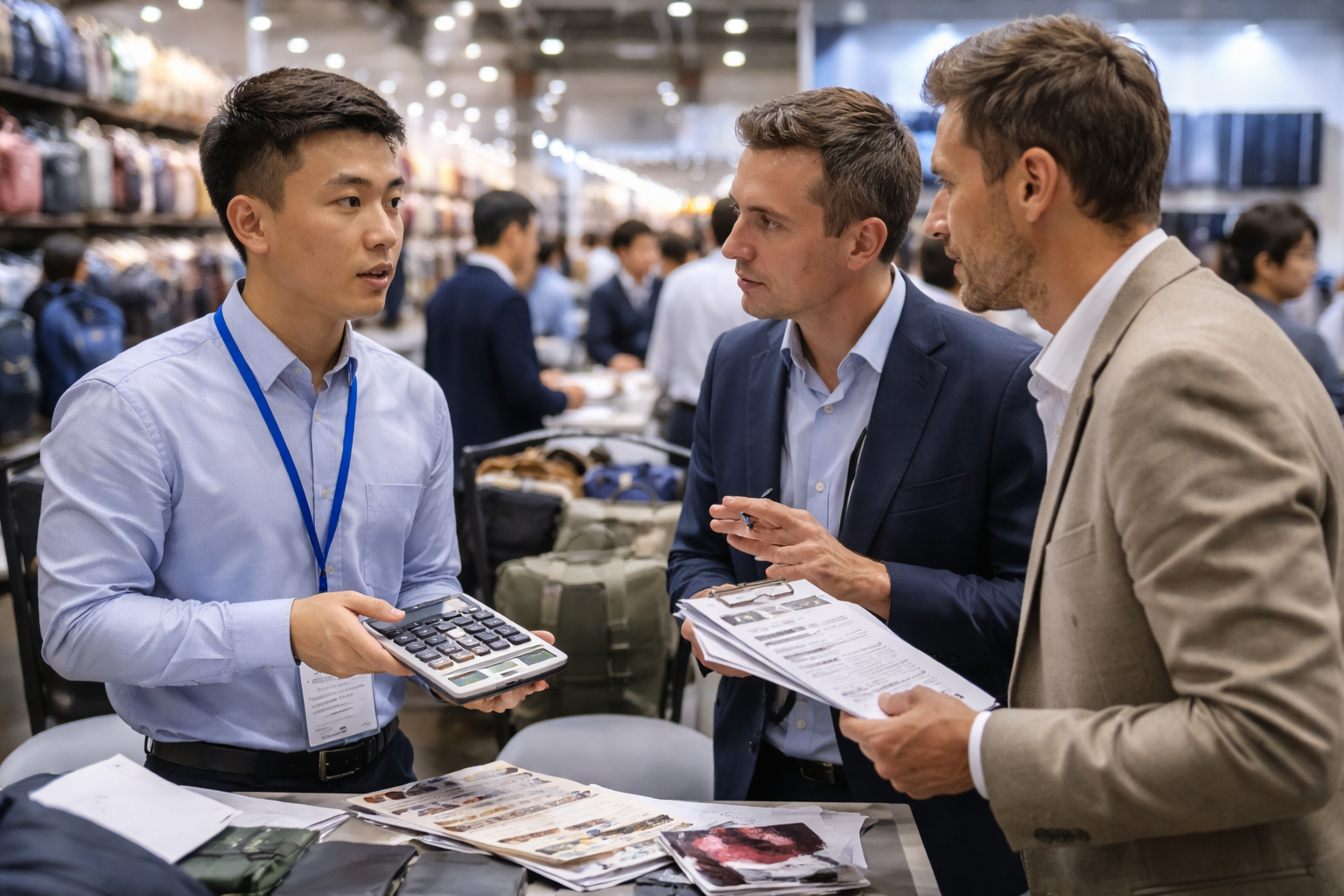
Concerns that a wider conflict with Iran could push up crude and commodity prices are starting to weigh on exporters at one of China’s biggest trading platforms, with suppliers at the Canton Fair warning of rising input costs and more cautious overseas buyers.
The pressure comes at an awkward time for Chinese manufacturers.
A year ago, many exporters were still benefiting from solid margins and resilient trade flows as they expanded into new markets.
This time, the mood is more restrained.
Higher production costs are eating into profitability, while soft global demand is making it harder for factories to pass those increases on in full.
Exporters report rising costs and weaker demand
Suppliers of plastics, electronics and other industrial inputs said the recent jump in commodity prices had fed quickly into their cost base.
One manager said raw material costs had risen by about 20% since fighting began, leaving manufacturers with little room to protect margins without raising prices.
That is becoming a broader theme across the Canton Fair, where around 32,000 exhibitors are seeking orders in an environment that looks notably more difficult than it did at the last edition.
Exporters say buyers are more price-sensitive, order books are slower and negotiations are taking longer as customers try to judge whether current cost pressures will prove temporary or more lasting.
Pricing power varies across factories
For some manufacturers, the only immediate response has been to raise prices.
One supplier of rice cookers and kettles said the cost of plastic, copper and aluminium had climbed sharply, forcing the company to increase prices by 15%.
Even so, the business was still selling at a loss, a sign of how quickly margins can be wiped out when costs rise faster than demand.
Others have had more success passing the pressure on.
Some suppliers said they had managed to recover higher fibre, metal and plastic costs through price increases, while peers across the industry had done the same.
But that pricing power is uneven.
The companies with stronger customer relationships, more specialised product lines or better scale are coping better than those competing mainly on price.
Middle East sales and tariffs complicate strategy
The impact is not limited to raw materials.
Some exporters say the conflict is already affecting sales plans in the Middle East.
A supplier of electrical components said it had expected first-half sales to the region to reach as much as 30 million yuan, but the conflict has put those ambitions on hold.
For companies selling into the US market, tariffs remain another complication.
One manufacturer supplying major American retailers said input costs had risen by 7% to 8%, but the company planned to absorb the increase for at least six months in order to honour existing orders.
If trade conditions worsen sharply, however, it could accelerate plans to shift production from China to Southeast Asia, where labour costs are lower and US tariffs are less punitive.
Politics adds another layer of uncertainty
Exporters are also watching the political backdrop for any sign of relief.
Some businesses hope a thaw in US-China relations could eventually ease tariff pressure, but few are willing to bet on it.
For now, management teams are having to plan around uncertainty rather than any clear improvement in policy.
That means the challenge is no longer just about winning new business.
It is about protecting margins, deciding how much cost to absorb, and judging whether supply chains need to move closer to cheaper or less exposed markets.
In practical terms, companies are trying three approaches at once: raising selling prices where they can, swallowing part of the extra cost where they must, and looking for alternative suppliers or production bases where it makes sense.
What it means for exporters
The broader message from the Canton Fair is that Chinese exporters are entering a more demanding phase.
Higher commodity prices, weaker global demand and geopolitical uncertainty are combining to make an already competitive market even tougher.
For now, few companies are talking about a collapse in business.
But many are clearly preparing for a period in which margins stay under pressure and orders become harder won.
That shift in tone matters. It suggests exporters are no longer simply navigating a cyclical slowdown.
They are adjusting to a more fragile trading environment, where every move in oil, tariffs or diplomacy can feed quickly into prices, demand and profitability.
The post Why China's biggest trade fair is flashing warning signs for exporters appeared first on Invezz
