Currencies37065
Market Cap$ 2.45T-1.20%
24h Spot Volume$ 40.26B+4.69%
DominanceBTC56.66%+0.55%ETH9.99%+1.60%
ETH Gas0.04 Gwei
Cryptorank
/

Saudi Aramco shuts down its largest refinery after drone strikes


by Ananthu C U
for Invezz
Saudi Aramco shuts down its largest refinery after drone strikes

Share:

AI Overview

Saudi Aramco shut down its 550,000 bpd Ras Tanura refinery following drone strikes, raising concerns over Middle Eastern energy supply disruptions. Oil prices surged over 8% amidst fears of prolonged supply issues, affecting markets globally. The shutdown is part of broader regional attacks that also impacted oil production in Iraq and gas exports from Israel.

Bearish
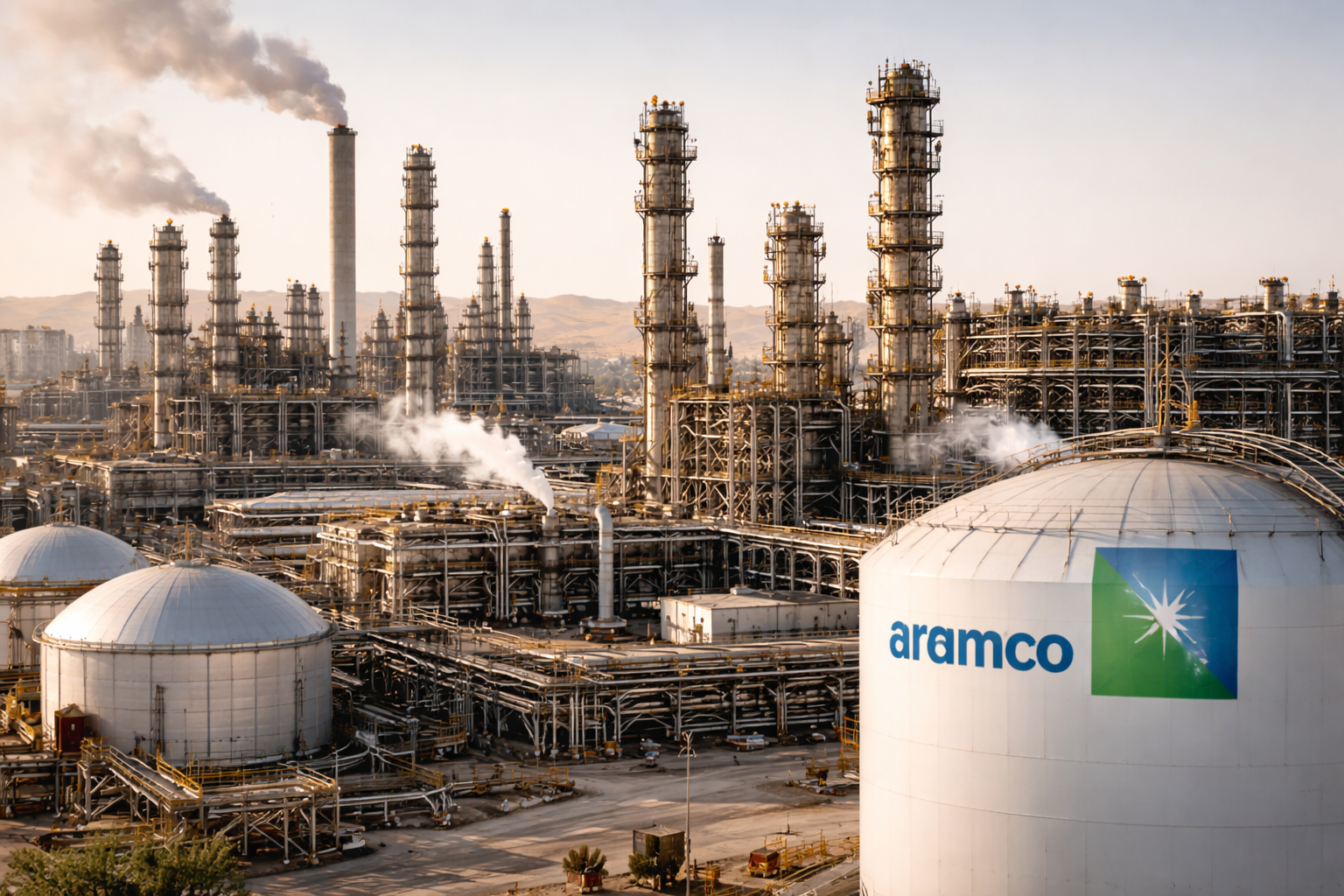
Saudi Aramco oil refinery and storage tanks

Saudi Aramco halted operations at its largest domestic refinery on Monday after a drone strike near the facility, intensifying concerns about energy supply disruptions across the Middle East and pushing oil prices sharply higher.

The closure of the 550,000 barrel-per-day Ras Tanura refinery — part of a critical export complex on the Saudi Arabia's Gulf coast — comes as a widening regional conflict has already forced precautionary shutdowns at oil and gas installations in Iraq and Israel.

Authorities said the refinery fire was limited and contained, but the incident has heightened fears about the vulnerability of global energy infrastructure.

Refinery shutdown after drone interception

Saudi Aramco shut the Ras Tanura facility as a precaution while assessing damage, according to a Bloomberg report.

Two drones were intercepted near the complex, with debris causing a fire at the site.

Saudi officials said there were no injuries.

The Saudi defence ministry confirmed the blaze was caused by intercepted drones, while the state news agency SPA reported that some units were temporarily closed but domestic petroleum supply remained unaffected.

The refinery forms part of a larger export hub that includes storage tanks, loading points and berths for crude shipments.

Nearby infrastructure serves as one of the kingdom’s primary export terminals, making the site strategically important to global oil markets.

"The attack on Saudi Arabia’s Ras Tanura refinery marks a significant escalation, with Gulf energy infrastructure now squarely in Iran’s sights," said Torbjorn Soltvedt, principal Middle East analyst at risk intelligence firm Verisk Maplecroft in a Reuters report.

He added: "The attack is also likely to move Saudi Arabia and neighbouring Gulf states closer to joining US and Israeli military operations against Iran."

Saudi energy facilities have previously been targeted, notably in 2019 when attacks on the Abqaiq and Khurais plants temporarily knocked out more than half of the kingdom’s crude output.

Regional supply disruptions spread

The refinery shutdown occurred amid a broader wave of attacks across the region.

Oil production in Iraqi Kurdistan was suspended as companies including DNO, Gulf Keystone Petroleum, Dana Gas, and HKN Energy halted operations as a precaution, though no damage was reported.

The region had exported around 200,000 barrels per day via pipeline to Turkey’s Ceyhan port.

Offshore Israel, the Chevron-operated Leviathan gas field was shut, while Energean halted production at smaller gas fields.

The closures reduced gas exports to Egypt and disrupted regional energy flows.

Shipping near the Strait of Hormuz — through which roughly one-fifth of global oil consumption moves — has also slowed dramatically after attacks on vessels.

Tankers were reported waiting near the waterway amid security and insurance concerns.

Oil prices jump on supply fears

Markets reacted quickly, with Brent crude jumping roughly 8.4% to above $79 a barrel and ICE gasoil futures surging more than 20%, the largest intraday increase since March 2022.

The Ras Tanura refinery is a key supplier of diesel to Europe and also produces gasoline.

The conflict follows US and Israeli strikes on Iran and retaliatory missile and drone attacks across the region.

Analysts warn that damage to energy infrastructure could prolong supply uncertainty.

A prolonged disruption would raise inflation risks and act as a cost burden for businesses and consumers globally.

The situation is particularly sensitive because the Middle East remains central to global oil supply chains.

The post Saudi Aramco shuts down its largest refinery after drone strikes appeared first on Invezz

Read the article at Invezz

In This News

Coins

$ 0.00342

-0.54%

$ 0.00235

+8.12%

Funds

Share:

In This News

Coins

$ 0.00342

-0.54%

$ 0.00235

+8.12%

Funds

Share:

Saudi Aramco shuts down its largest refinery after drone strikes


by Ananthu C U
for Invezz
Saudi Aramco shuts down its largest refinery after drone strikes

Share:

AI Overview

Saudi Aramco shut down its 550,000 bpd Ras Tanura refinery following drone strikes, raising concerns over Middle Eastern energy supply disruptions. Oil prices surged over 8% amidst fears of prolonged supply issues, affecting markets globally. The shutdown is part of broader regional attacks that also impacted oil production in Iraq and gas exports from Israel.

Bearish
Saudi Aramco oil refinery and storage tanks

Saudi Aramco halted operations at its largest domestic refinery on Monday after a drone strike near the facility, intensifying concerns about energy supply disruptions across the Middle East and pushing oil prices sharply higher.

The closure of the 550,000 barrel-per-day Ras Tanura refinery — part of a critical export complex on the Saudi Arabia's Gulf coast — comes as a widening regional conflict has already forced precautionary shutdowns at oil and gas installations in Iraq and Israel.

Authorities said the refinery fire was limited and contained, but the incident has heightened fears about the vulnerability of global energy infrastructure.

Refinery shutdown after drone interception

Saudi Aramco shut the Ras Tanura facility as a precaution while assessing damage, according to a Bloomberg report.

Two drones were intercepted near the complex, with debris causing a fire at the site.

Saudi officials said there were no injuries.

The Saudi defence ministry confirmed the blaze was caused by intercepted drones, while the state news agency SPA reported that some units were temporarily closed but domestic petroleum supply remained unaffected.

The refinery forms part of a larger export hub that includes storage tanks, loading points and berths for crude shipments.

Nearby infrastructure serves as one of the kingdom’s primary export terminals, making the site strategically important to global oil markets.

"The attack on Saudi Arabia’s Ras Tanura refinery marks a significant escalation, with Gulf energy infrastructure now squarely in Iran’s sights," said Torbjorn Soltvedt, principal Middle East analyst at risk intelligence firm Verisk Maplecroft in a Reuters report.

He added: "The attack is also likely to move Saudi Arabia and neighbouring Gulf states closer to joining US and Israeli military operations against Iran."

Saudi energy facilities have previously been targeted, notably in 2019 when attacks on the Abqaiq and Khurais plants temporarily knocked out more than half of the kingdom’s crude output.

Regional supply disruptions spread

The refinery shutdown occurred amid a broader wave of attacks across the region.

Oil production in Iraqi Kurdistan was suspended as companies including DNO, Gulf Keystone Petroleum, Dana Gas, and HKN Energy halted operations as a precaution, though no damage was reported.

The region had exported around 200,000 barrels per day via pipeline to Turkey’s Ceyhan port.

Offshore Israel, the Chevron-operated Leviathan gas field was shut, while Energean halted production at smaller gas fields.

The closures reduced gas exports to Egypt and disrupted regional energy flows.

Shipping near the Strait of Hormuz — through which roughly one-fifth of global oil consumption moves — has also slowed dramatically after attacks on vessels.

Tankers were reported waiting near the waterway amid security and insurance concerns.

Oil prices jump on supply fears

Markets reacted quickly, with Brent crude jumping roughly 8.4% to above $79 a barrel and ICE gasoil futures surging more than 20%, the largest intraday increase since March 2022.

The Ras Tanura refinery is a key supplier of diesel to Europe and also produces gasoline.

The conflict follows US and Israeli strikes on Iran and retaliatory missile and drone attacks across the region.

Analysts warn that damage to energy infrastructure could prolong supply uncertainty.

A prolonged disruption would raise inflation risks and act as a cost burden for businesses and consumers globally.

The situation is particularly sensitive because the Middle East remains central to global oil supply chains.

The post Saudi Aramco shuts down its largest refinery after drone strikes appeared first on Invezz

Read the article at Invezz

In This News

Coins

$ 0.00342

-0.54%

$ 0.00235

+8.12%

Funds

Share:

In This News

Coins

$ 0.00342

-0.54%

$ 0.00235

+8.12%

Funds

Share: