US data center electrical equipment market to reach $65B by 2030

Share:
US data center electrical equipment market projected to grow from $20B to $65B by 2030; capacity forecast to rise from 24 GW to 110 GW between 2026–2030 and consume >400,000 GWh — a major infrastructure boost for crypto mining, node hosting, CEX/DeFi backend and institutional custody. Severe supply bottlenecks: 18–36 month lead times, manufacturers imposing ~20% price hikes, ~600 GW of planned data center pipeline still searching for power vs 183 GW with secured supply; equipment demand surges (padmount transformers 1,573→9,395; panel boards 5,111→30,500) pose short-term risks to token launches, exchange uptime and security. Two scenarios: “Moderated Demand” (95 GW by 2030) vs “Accelerated Demand” (manufacturing investment, behind‑the‑meter generation, modular builds to 259 GW by 2050); this creates fundraising and deployment opportunities for crypto infrastructure providers and accelerates adoption, but near-term cost and interconnection risks remain.
Predictions Markets
See what traders are focused on

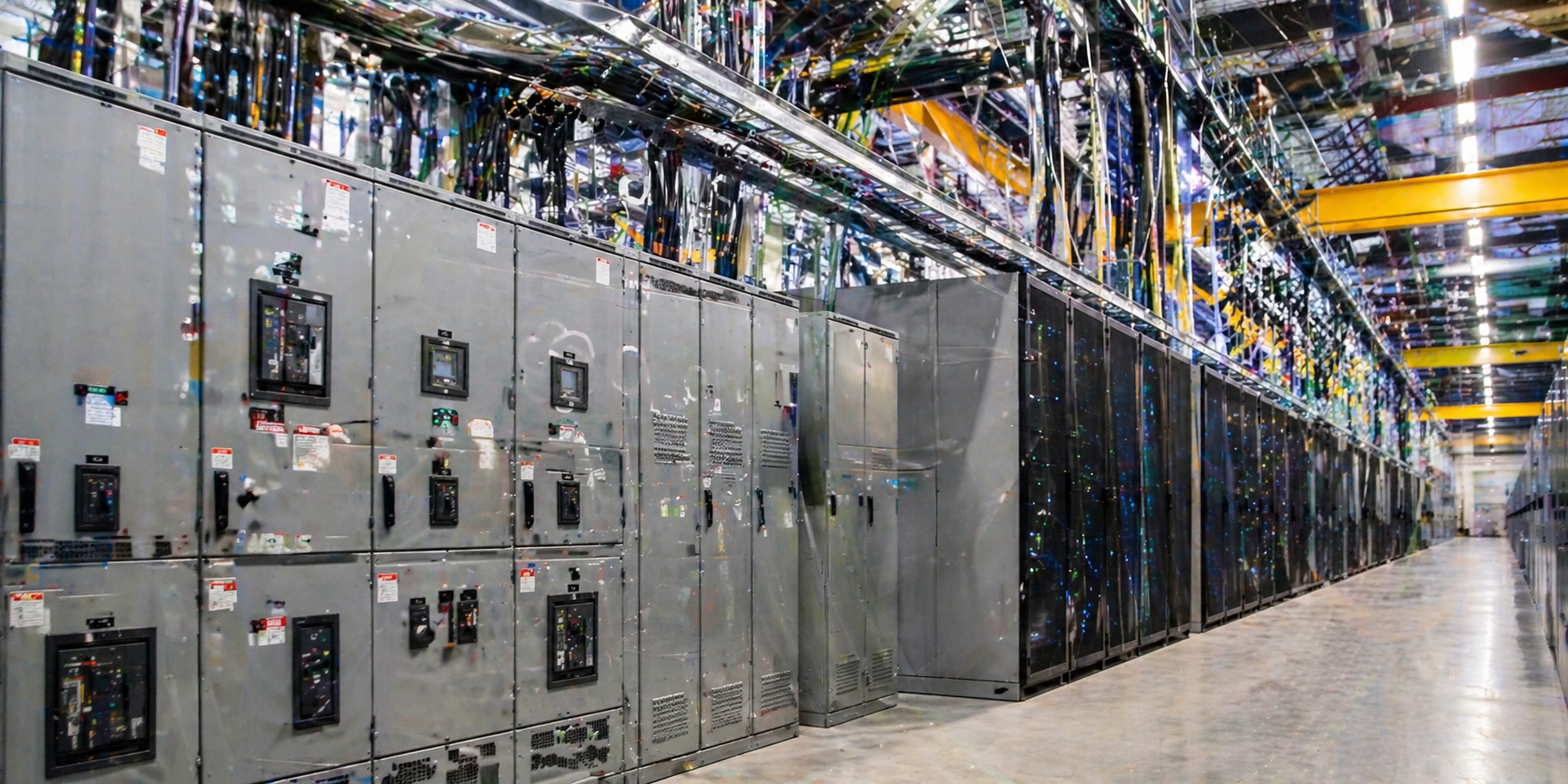
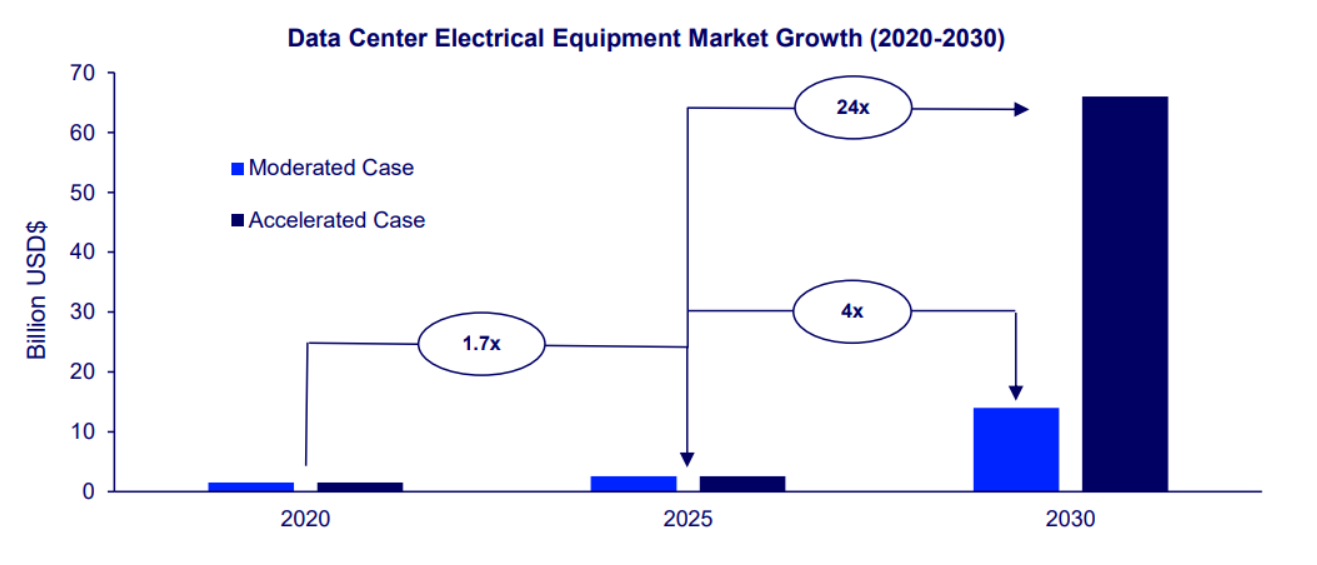
The US data center electrical equipment market is projected to surge from $20 billion to $65 billion by 2030 as explosive growth in artificial intelligence and cloud computing drives unprecedented power demand, according to a new analysis by Wood Mackenzie.
Data centers are expected to account for up to 40% of the entire US electrical equipment market under accelerated scenarios, a dramatic jump from less than 2% in 2020.
US data center capacity is forecast to leap from 24 GW to 110 GW between 2026 and 2030, representing 68% of total US load growth over the period.
Massive power hunger
Data centers are set to consume more than 400,000 GWh of electricity in that timeframe — eight times more than electric vehicles — marking one of the most concentrated surges in power demand in modern history.
The rapid expansion is already creating severe bottlenecks.
Lead times for critical electrical equipment now stretch between 18 and 36 months, pushing up prices and threatening to delay major projects.
Of Wood Mackenzie’s massive data center project pipeline, approximately 600 GW of planned capacity is still searching for power, compared with only 183 GW that have secured electricity supply agreements with utilities.
Even after accounting for expected project attrition, grid-connected data center capacity is expected to nearly quadruple in the next four years.
Two scenarios for the future
Wood Mackenzie outlined two distinct scenarios for the sector’s growth.
In the “Moderated Demand” scenario, persistent equipment shortages, long manufacturing lead times, and grid interconnection delays continue to constrain development, resulting in data center capacity reaching about 95 GW by 2030.
In the more optimistic “Accelerated Demand” scenario, massive capital investment in manufacturing, wider adoption of behind-the-meter generation, and modular construction techniques allow the industry to overcome bottlenecks, pushing capacity significantly higher in the long term, reaching 259 GW by 2050.
Unprecedented equipment demand
The scale of equipment needed is staggering.
In the hyper-scale segment alone, demand for padmount transformers is expected to jump from 1,573 units in 2025 to 9,395 by 2030.
Panel boards are projected to surge from 5,111 to over 30,500 units, while medium-voltage switchgear, automatic transfer switches, and power distribution units (PDUs) face similarly explosive growth.
“Data centers are fundamentally different from any load the electrical equipment industry has supported before,” said Ben Boucher, senior analyst for supply chain at Wood Mackenzie.
“This is a structural shift that will define the next decade of the electrical equipment market.”
Boucher warned that manufacturers now face a critical choice: “Invest significant capital to expand capacity, or cede market share in what could be a $65 billion market by 2030.”
He added that constrained supply would slow the entire AI infrastructure buildout.
We’re already seeing manufacturers return to customers with year-old purchase orders to impose 20% price increases just to maintain delivery schedules. Hyperscalers are willing to pay these premiums because missing a launch window risks massive revenue losses.
The report underscores that the data center boom is no longer a future trend — it is actively reshaping the US electrical equipment industry and the nation’s power infrastructure.
The post US data center electrical equipment market to reach $65B by 2030 appeared first on Invezz


Read More

Brent crude oil price slips after Israel-Lebanon ceasefire, but key risks remain