Mexico Cattle Exports to US Resume, Beef Prices Remain Near Record Highs
Share:
Mexico resumed live cattle exports to the US Monday from Agua Prieta into Douglas, Arizona after binational inspections, with daily import caps beginning at 700 head, rising to 900 in week two and about 1,300 eventually; Mexico traditionally supplies ~1.1 million cattle annually (~3% of US supply) and could export roughly 200,000 cattle to the US in 2026 worth about $420 million, while US cattle inventory was 86.2 million head at the start of 2026 and US beef and veal prices were up 9.4% year‑over‑year in July. The reopening poses biosecurity risk with screwworm detected in Texas, New Mexico and Mexican states and control efforts producing ~100 million sterile flies per week in Panama and Mexico and a planned 300 million/week Texas facility, but economists expect little short‑term effect on beef prices and negligible direct impact on crypto markets or DeFi, CEX/DEX activity, token launches and fundraising despite broader security and macroeconomic implications.
Predictions Markets
See what traders are focused on

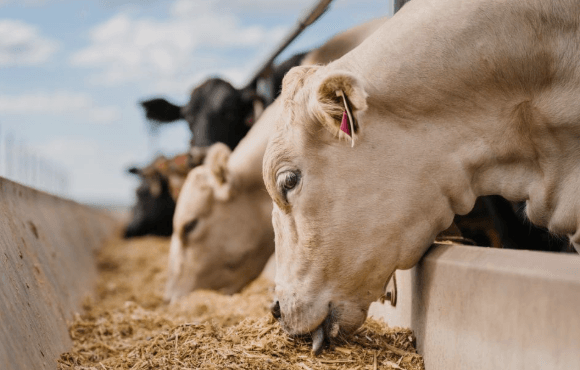
Mexico resumed live cattle exports to the United States. Hundreds of cattle began crossing Monday from Agua Prieta in Sonora, Mexico, into Douglas, Arizona, after inspections by Mexican and US officials.
The reopening comes after prolonged restrictions linked to the New World screwworm outbreak, which was first detected in Mexico in November of 2024. The US formally closed the border to Mexican cattle imports in May of 2025.
Under the new system, cattle must carry radio-frequency identification tags and undergo inspections that are designed to detect screwworm infections. Imports are initially capped at 700 cattle per day, rising to 900 in the second week and eventually around 1,300 per day.
Why the Reopening Matters for US Beef PricesThe timing is particularly important for the US beef industry. USDA data shows the US cattle and calf inventory stood at just 86.2 million head at the beginning of 2026, with the number of beef cows falling to 27.6 million.
United States cattle inventory (Source: USDA)
That shortage contributed to sharply higher prices. US beef and veal prices were 9.4% higher year-over-year in July, while ground beef prices were up 9%. Average ground beef prices have risen nearly 57% since July of 2021, from $4.39 per pound to $6.89.
Ground beef prices (Source: Balanced Proteins)
However, shoppers should not expect immediate relief.
Mexico traditionally supplies around 1.1 million cattle annually to the US, which represents only about 3% of the country's cattle supply. Economists therefore expect the gradual reopening to have little measurable effect on beef prices in the short term. Rebuilding the domestic US herd could take years because cattle reproduction is inherently slow.
Screwworm Threat Has Not DisappearedThe reopening is also a calculated biosecurity risk. Screwworm has now been detected in both Texas and New Mexico, while cases have recently appeared in the key Mexican cattle-producing states of Chihuahua and Sonora.
Authorities are fighting the parasite by releasing huge quantities of sterilized male flies, which mate with wild females without producing offspring. USDA-supported facilities in Panama and Mexico can each produce around 100 million sterile flies per week, while a new Texas facility is being built with planned capacity of 300 million per week.
If the Arizona reopening proves successful, USDA plans to consider additional crossings in New Mexico. Industry estimates suggest Mexico could still export as many as 200,000 cattle to the US during 2026, potentially worth roughly $420 million.
In This News
Coins

$ 0.400
-0.73%
$ 0.419
-0.96%
$ 0.989
+0.01%
$ 0.970
-0.52%


Predictions Markets
See what traders are focused on
Share:
In This News
Coins
$ 0.400
-0.73%$ 0.419
-0.96%$ 0.989
+0.01%$ 0.970
-0.52%Predictions Markets
See what traders are focused on
Share:
Read More

Crypto Market Eyes $1T Treasury Move as Bessent Targets Iran