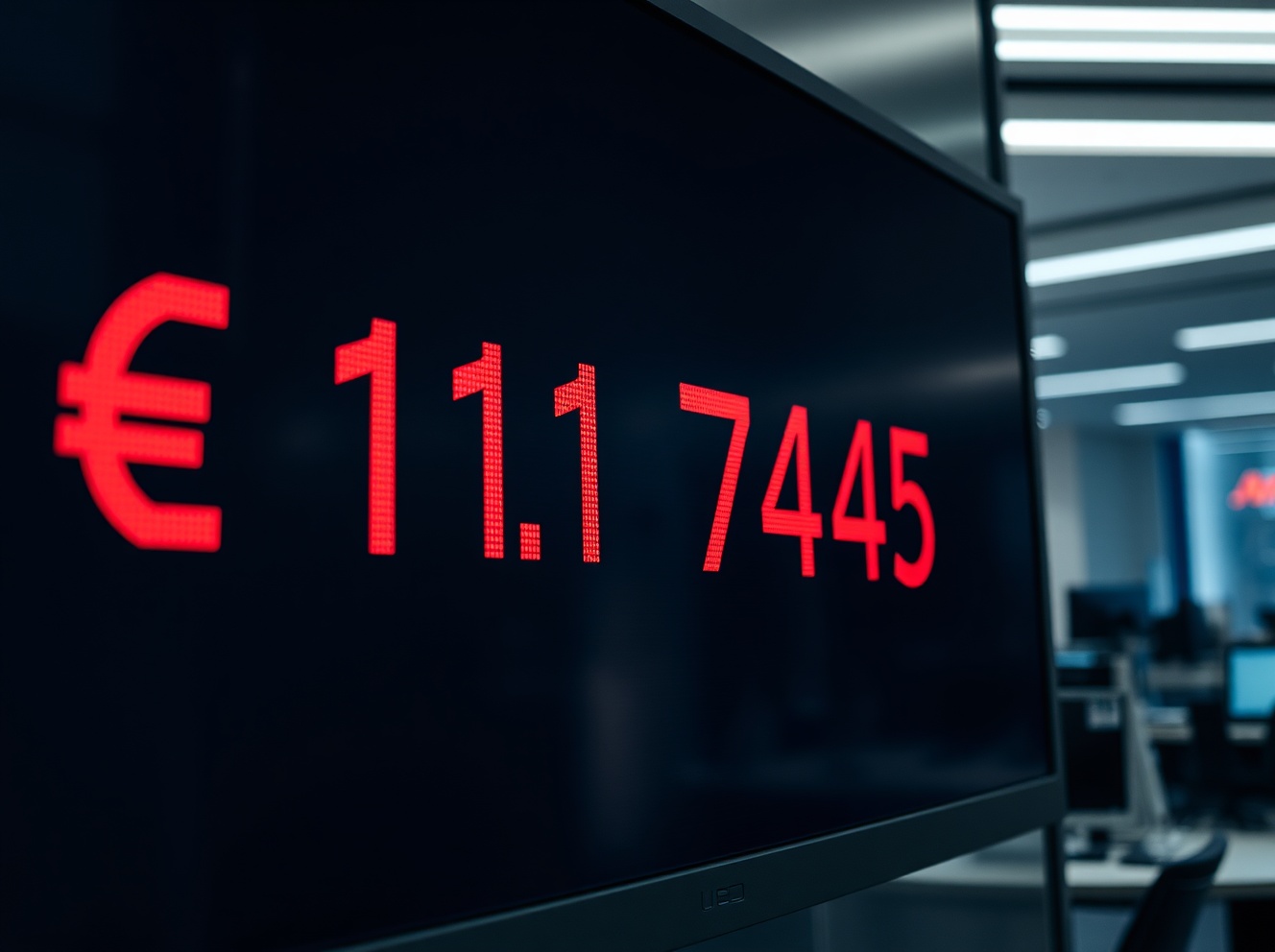
Euro Slips Below 1.1750 as Stronger US Inflation Data Lifts Dollar
Share:
US CPI in January surprised higher at +0.4% month-on-month (headline 3.1% y/y vs 2.9% forecast; core 0.4% m/m, 3.9% y/y), lifting the 10-year Treasury to 4.32% and pushing EUR/USD below 1.1750 to a session low of 1.1725 as eurozone data remain weak (industrial production -0.3% in December) with analysts flagging 1.1700 and a possible slide toward 1.1600. The stronger dollar and hawkish Fed repricing raise downside risk for risk assets, likely weighing on crypto prices, DeFi and token markets and straining CEX liquidity, so market participants should watch upcoming US PPI and Fed commentary for further market impact and adoption implications.
Predictions Markets
See what traders are focused on

BitcoinWorld
Euro Slips Below 1.1750 as Stronger US Inflation Data Lifts Dollar
The euro weakened past the 1.1750 threshold against the US dollar on Wednesday, as hotter-than-expected inflation data from the United States reinforced expectations that the Federal Reserve will maintain its aggressive monetary tightening stance. The EUR/USD pair dropped to a session low of 1.1725 before stabilizing near 1.1740, reflecting a broad-based dollar rally across major currency pairs.
US Inflation Data Fuels Dollar Strength
The US Bureau of Labor Statistics reported that the Consumer Price Index (CPI) rose 0.4% month-over-month in January, exceeding consensus estimates of 0.3%. On an annual basis, headline inflation came in at 3.1%, slightly above the 2.9% forecast. Core CPI, which excludes volatile food and energy prices, also surprised to the upside at 0.4% monthly and 3.9% yearly.
The data suggests that inflationary pressures remain stickier than many economists anticipated, reducing the likelihood of near-term rate cuts by the Federal Reserve. Market-implied probabilities for a rate cut in March fell sharply, while the probability of a hold in May increased. This hawkish repricing boosted US Treasury yields, with the 10-year note rising to 4.32%, further supporting the greenback.
Eurozone Economic Outlook Remains Fragile
On the other side of the Atlantic, the eurozone continues to face headwinds. The European Central Bank has signaled a cautious approach to policy easing, but recent data points to a sluggish recovery. Industrial production in the bloc contracted by 0.3% in December, while business confidence indicators remain subdued. The widening interest rate differential between the US and the eurozone is putting additional downward pressure on the common currency.
Analysts at several major banks have revised their near-term EUR/USD forecasts lower, with some now targeting the 1.16 level in the coming weeks if the dollar rally persists.
Market Implications for Traders and Investors
The move below 1.1750 is technically significant, as it breaks a key support level that had held since early December. Traders are now watching the 1.1700 handle as the next major psychological barrier. A sustained break below that could open the door to further losses toward the 1.1600 area.
For importers and exporters, a weaker euro means higher costs for dollar-denominated goods, particularly energy and raw materials, which are priced in USD. This could feed into eurozone inflation in the months ahead, complicating the ECB’s policy path.
Conclusion
The euro’s decline below 1.1750 reflects a clear market reaction to stronger US inflation data, which has shifted the narrative around Federal Reserve policy. While the ECB faces its own challenges, the immediate driver for EUR/USD remains the relative monetary policy outlook. Traders should monitor upcoming US producer price index data and Fed commentary for further direction.
FAQs
Q1: Why did the euro fall below 1.1750?
The euro weakened after US inflation data came in hotter than expected, reinforcing expectations that the Federal Reserve will keep interest rates higher for longer, which boosted the US dollar.
Q2: What is the next key support level for EUR/USD?
The next major support level is at 1.1700, a psychological barrier. If that breaks, the pair could test the 1.1600 area.
Q3: How does this affect European importers?
A weaker euro makes dollar-denominated imports more expensive, including energy and raw materials, which could increase costs for European businesses and potentially feed into higher consumer prices.
This post Euro Slips Below 1.1750 as Stronger US Inflation Data Lifts Dollar first appeared on BitcoinWorld.


Predictions Markets
See what traders are focused on
Share:
Predictions Markets
See what traders are focused on
Share:
Read More

Swiss Franc Strengthens as Fed Policy Uncertainty Weighs on US Dollar