DAX Elliott Wave Analysis: Index Approaches Final Wave (v) Before Likely Correction
Share:
Technical analysis indicates the DAX is in the fifth sub-wave ((v)) of a five-wave Elliott impulse, suggesting the current advance is maturing and a three-wave A-B-C corrective phase may follow. Traders should wait for reversal confirmation as a correction could raise volatility and ripple into global markets including crypto, DeFi and DEX/CEX trading, potentially offering lower-entry opportunities for long-term investors.
Predictions Markets
See what traders are focused on

BitcoinWorld
DAX Elliott Wave Analysis: Index Approaches Final Wave (v) Before Likely Correction
The DAX is approaching the final leg of its current Elliott Wave impulse, wave ((v)), according to the latest technical analysis shared in a video update. This suggests the German benchmark index may soon complete its upward move and enter a broader corrective phase, a development that could signal a shift in short-term market momentum.
Understanding the Elliott Wave Count
Elliott Wave theory identifies recurring price patterns driven by investor psychology. In this framework, an impulse wave consists of five sub-waves, labeled (i) through (v), followed by a three-wave correction (A-B-C). The current analysis indicates that the DAX is in the fifth and final sub-wave of a larger impulse, meaning the upside may be nearing exhaustion.
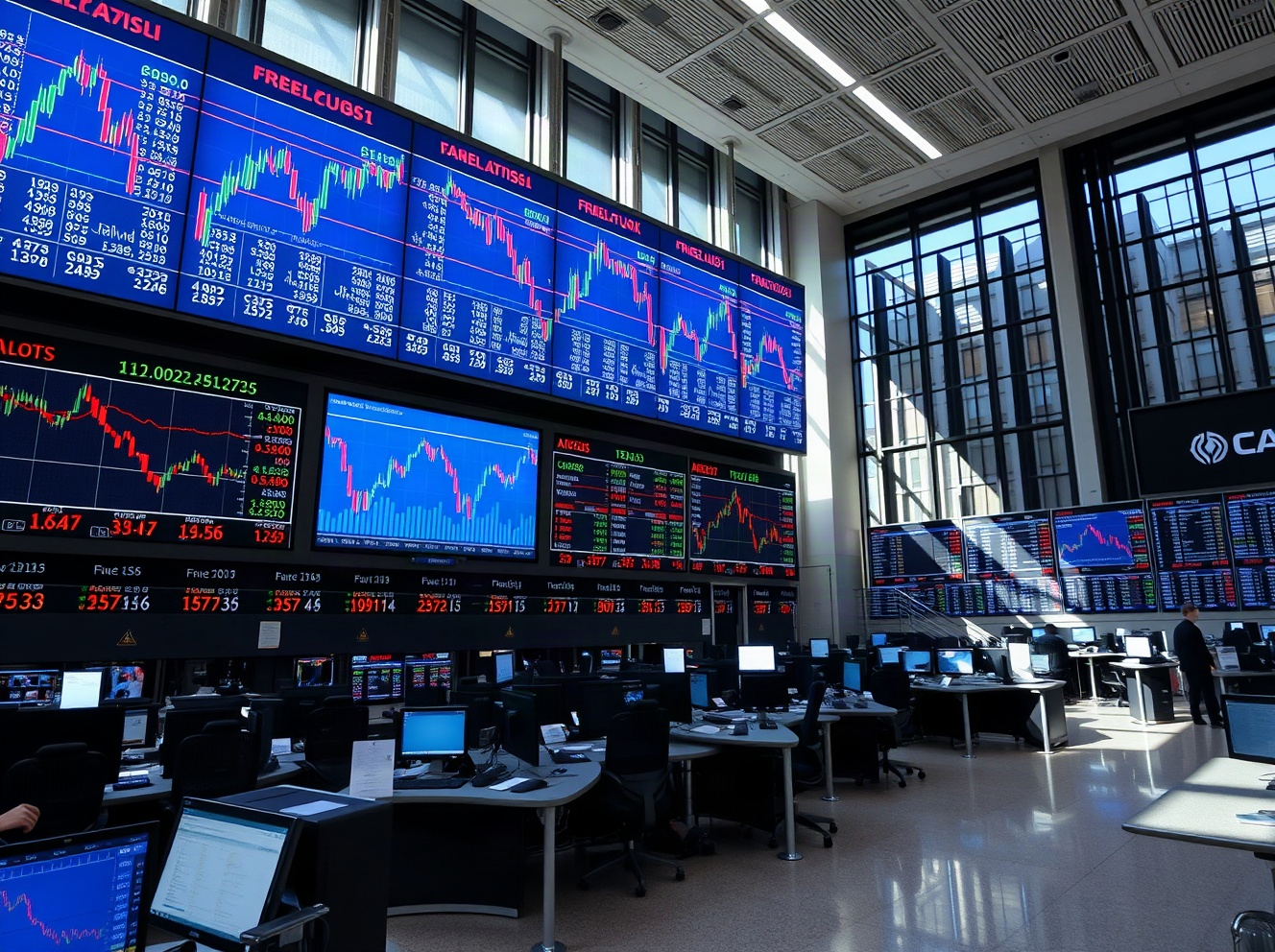
This wave count is based on the price action visible on the provided charts, which are part of the video content. The analysis does not specify exact price targets or timing, but the implication is that the current advance is mature and could be followed by a meaningful pullback.
Implications for Traders and Investors
For traders using technical analysis, the completion of wave ((v)) could present opportunities to position for a corrective move. However, Elliott Wave counts are subjective and can be invalidated if price breaks key levels. The analysis emphasizes that the final wave can extend, so confirmation of a reversal is crucial.
Investors with a longer horizon may view a potential correction as a natural part of the market cycle, offering potential entry points at lower valuations. The DAX, as a leading European index, is closely watched by global market participants, so any significant move could have ripple effects across other equity markets.
Why This Matters
Understanding the current wave position helps market participants anticipate potential turning points. A corrective phase after a prolonged advance could affect portfolio positioning, risk management, and sector rotation. The analysis serves as a technical tool, not a forecast, and should be used in conjunction with other indicators and fundamental factors.
Conclusion
As the DAX approaches the final wave ((v)) of its Elliott Wave impulse, the market may be preparing for a broader corrective phase. Traders should monitor price action for confirmation of a top, while investors can use this information to plan for potential volatility. The analysis is based on the latest video update and charts, and as with all technical approaches, it carries inherent uncertainty.
FAQs
Q1: What is Elliott Wave theory?
Elliott Wave theory is a technical analysis method that identifies recurring price patterns in financial markets, based on investor psychology and crowd behavior. It categorizes price movements into impulse waves (trending) and corrective waves (counter-trend).
Q2: How reliable is the Elliott Wave count for predicting market tops?
Elliott Wave counts are subjective and can be revised as new price data emerges. They are best used as a framework for understanding market structure, not as a precise timing tool. Confirmation from other indicators is essential.
Q3: What should traders do if the DAX completes wave ((v))?
Traders might look for reversal signals such as bearish divergence or break of trendlines before entering short positions. Alternatively, they could wait for the corrective phase to play out and then look for long entry points at support levels.
This post DAX Elliott Wave Analysis: Index Approaches Final Wave (v) Before Likely Correction first appeared on BitcoinWorld.
Predictions Markets
See what traders are focused on
Share:
Predictions Markets
See what traders are focused on
Share:
Read More
S&P 500 Forecast: Rally Stalls as Bears Eye Deeper Correction Toward 7,480