Treasury warns of sanctions after White House accuses Moonshot of stealing Anthropic AI model
Share:
On Wednesday the U.S. Treasury warned sanctions after White House official Michael Kratsios accused Beijing-based Moonshot of improperly distilling Anthropic’s Fable model (released July 1) to produce Kimi K3 (released last week), alleging the firm used Nvidia GB300/Blackwell servers accessed in Thailand and potentially violated export controls. Experts question the timeline, but the dispute escalates regulation and security risks, could disrupt cross-border open-weight model flows, and may dampen adoption, fundraising and investor confidence in AI infrastructure.
Predictions Markets
See what traders are focused on

BitcoinWorld
Treasury warns of sanctions after White House accuses Moonshot of stealing Anthropic AI model
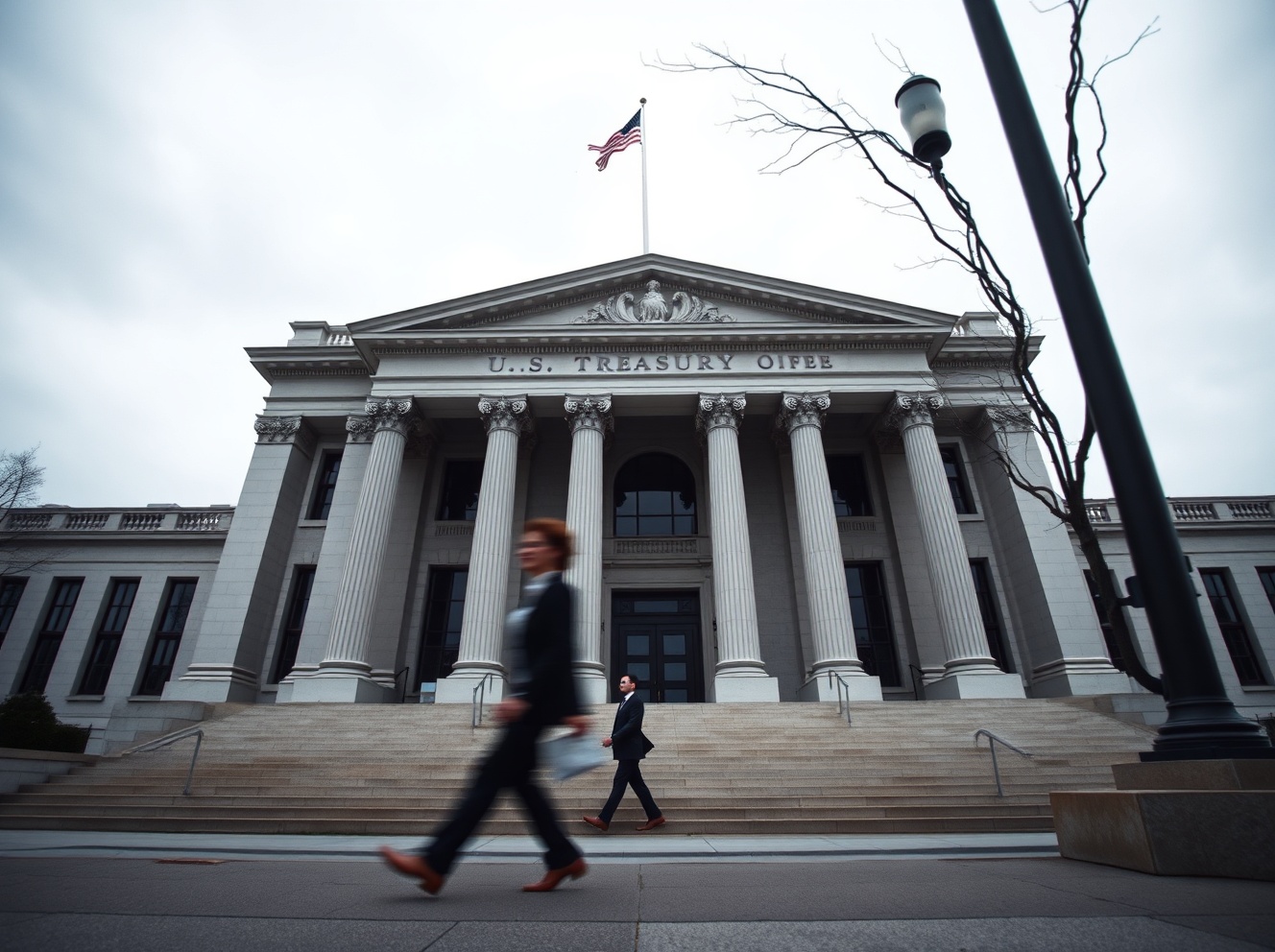
The U.S. Treasury Department escalated its confrontation with Chinese artificial intelligence companies on Wednesday, with Secretary Scott Bessent stating that sanctions remain a possible response after a White House official accused Beijing-based Moonshot AI of improperly distilling Anthropic’s Fable model. The allegations, which Moonshot has not yet publicly addressed, have intensified a broader Washington debate over intellectual property theft, export controls, and the competitive threat posed by Chinese open-weight AI models.
What is model distillation and why does it matter?
Model distillation is a common AI training technique where a smaller, more efficient model learns from the outputs of a larger, more capable one. While the practice is widely used as a legitimate optimization method across the industry, it can cross into intellectual property infringement when done without authorization and on an industrial scale. The White House’s science and technology policy chief, Michael Kratsios, specifically accused Moonshot of conducting large-scale distillation against U.S. models, alleging that the firm acquired Nvidia’s GB300-equipped servers—part of the Blackwell generation banned from sale to Chinese companies—and accessed them in Thailand, potentially violating U.S. export control rules.
Official statements and escalating rhetoric
Secretary Bessent posted on X that “open source is not open season on American IP,” warning that when Chinese firms conduct “covert, industrial-scale distillation attacks that cross the line into IP theft, sanctions and Entity List designations will be on the table.” His remarks follow a statement earlier this week that the U.S. government would examine open source models from China for signs of intellectual property theft and impose sanctions if found. The Treasury’s position aligns with a growing faction in Washington that views Chinese open-weight AI models as a national security concern.
Timeline of key events
- July 1: Anthropic publicly releases the Fable model.
- Last week: Moonshot releases Kimi K3 as an open-weight model with advanced capabilities.
- Wednesday: White House official Kratsios publicly accuses Moonshot of large-scale distillation and potential export control violations.
- Wednesday: Treasury Secretary Bessent doubles down on sanctions warnings.
Expert skepticism and industry implications
Some experts have questioned the White House’s timeline, noting that Fable has only been publicly available since July 1, making it unlikely that Moonshot’s Kimi K3—released last week—could have been developed primarily through distillation from Fable. The advanced capabilities of Kimi K3 have nonetheless sparked debate about the sustainability of the business models of leading U.S. AI labs, which rely on enormous capital investment to maintain a competitive edge. The episode has also intensified calls from figures like Dean Ball, a former White House AI advisor now at OpenAI, to restrict or effectively ban the use of Chinese open-weight models in the U.S.
What this means for the AI landscape
The allegations against Moonshot represent a significant escalation in U.S.-China technology competition, moving beyond hardware export controls into the realm of AI model weights and training methodologies. If the U.S. imposes sanctions or Entity List designations, it could disrupt the flow of open-weight models across borders and reshape how AI companies collaborate globally. For investors and industry observers, the outcome of this dispute may signal whether the U.S. government intends to treat AI model weights as critical infrastructure subject to the same controls as advanced semiconductors.
Conclusion
The Treasury’s sanctions threat, combined with the White House’s specific allegations against Moonshot, marks a new phase in the U.S. government’s effort to protect American AI intellectual property. With Moonshot yet to respond and experts questioning the factual basis of the distillation claims, the coming weeks will determine whether this escalates into formal trade penalties or remains a diplomatic warning. Bitcoin World has reached out to Moonshot and the Treasury for comment.
FAQs
Q1: What is model distillation in AI?
Model distillation is a training technique where a smaller, faster AI model learns to replicate the behavior of a larger, more powerful model by training on its outputs. It is commonly used to create efficient models for deployment on devices with limited computing power.
Q2: What are the potential consequences for Moonshot if sanctions are imposed?
If the U.S. imposes sanctions or places Moonshot on the Entity List, the company could be restricted from accessing American technology, including Nvidia hardware, software, and cloud services. This would severely hamper its ability to develop and deploy AI models.
Q3: Why are Chinese open-weight AI models a concern for U.S. policymakers?
Policymakers worry that Chinese open-weight models could be used to circumvent U.S. export controls, steal American intellectual property, or pose national security risks if deployed in sensitive applications. Some also argue that open-weight models erode the competitive advantage of U.S. AI labs that invest billions in proprietary technology.
This post Treasury warns of sanctions after White House accuses Moonshot of stealing Anthropic AI model first appeared on BitcoinWorld.
Predictions Markets
See what traders are focused on
Share:
Predictions Markets
See what traders are focused on
Share:
Read More
Data centers on track to quadruple U.S. electricity consumption by 2035, report warns