MegaETH Closes Mega Mafia Accelerator as Successful Projects Migrate to Competing Blockchains
Share:
MegaETH shut down its two-year Mega Mafia incubator after backing 20 startups that collectively raised $80 million, but many teams migrated to rival chains (Base, Monad, sovereign chains) and two of five incubated apps folded, returning little value to the network. After launching native token MEGA on April 30 following performance milestones from ten apps, MegaETH will pivot to building first-party OMEGA consumer apps and use USD stablecoin net income to buy back MEGA tokens to retain economic activity, a strategic move that reduces reliance on external startups but signals mixed outcomes for adoption and ecosystem growth.
Predictions Markets
See what traders are focused on

- MegaETH officially shut down its Mega Mafia incubator program after two years of operation.
- The network will redirect its resources to build first-party consumer applications and ecosystem-specific products.
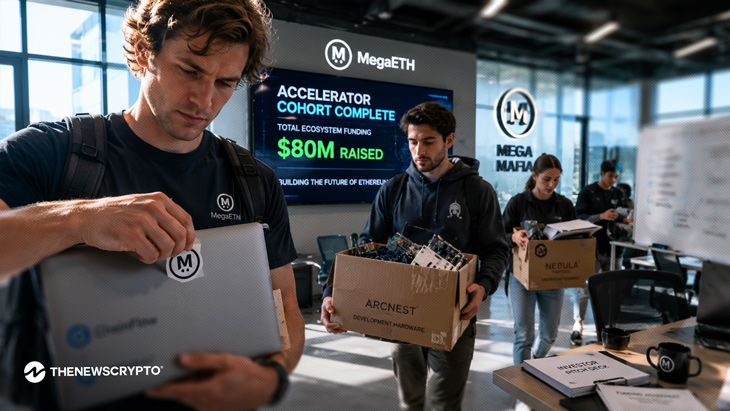
Blockchain scaling network MegaETH recently shut down its flagship Mega Mafia incubator program. The team made this tough decision after two years of operations. During this period, the program supported twenty early-stage startup teams. These incubated companies collectively raised eighty million dollars from prominent venture capital firms.
After spending the last two years building the MegaMafia, we’ve decided to sunset the program.
— Shuyao Kong (@hotpot_dao) July 16, 2026
While it was a success in many ways, we believe that the program was built on assumptions that no longer hold.
Here are some reflections, and what’s coming up next.
> We had real…
However, MegaETH did not take equity or ownership stakes in these projects. The core developers originally expected these founders to remain loyal to the network. The core team hoped that shared values would secure long-term commitment without formal contracts. However, the realities of the competitive crypto market quickly proved that assumption wrong. Founders naturally prioritized their own product roadmaps over ecosystem alignment.
Developers moved these successful apps to rival blockchain networks. For instance, Global Token Exchange decided to construct its sovereign chain. The Noise team moved the social attention market to Coinbase’s Base, while the HelloTrade team migrated the app to the Monad blockchain. Cap, the stablecoin issuer, went for a multi-chain approach. In addition, two out of five incubated apps ceased to operate. Not much value flowed back into MegaETH as a result.
Transitioning to First-Party Apps
Such an abrupt change in the structure took place immediately after an important network milestone. On April 30, MegaETH created its native token MEGA. This was done in response to the achievement of performance milestones by ten ecosystem apps.
Moving forward, the MegaETH platform will directly finance its own native consumer applications. These native products will be known as OMEGA applications, developed exclusively to leverage MegaETH’s very fast real-time execution capabilities. This is an audacious move that demonstrates faith in proprietary development in the Web3 ecosystem.
MegaETH Strengthens Developer-Led Ecosystem
As a result of this switch, the core team will be able to establish personal connections with the users of their platform. No longer will there be a need to depend on external startups to boost transaction volume. This switch puts more accountability on the developers for product performance.
The platform will also continue to implement its stablecoin-based economic system. Net income from USD stablecoins will be used to continuously purchase back the MEGA tokens. It is hoped that the new approach of first-party development will help keep the economic activity within the core ecosystem.
Highlighted Crypto News:
UK Jails Fake Police Crypto Gang as Authorities Tighten Digital Asset Rules


Read More

Visa Unveils Stablecoin Platform to Expand Blockchain Payments