Altman Testifies Musk Once Proposed Handing OpenAI to His Children
Share:
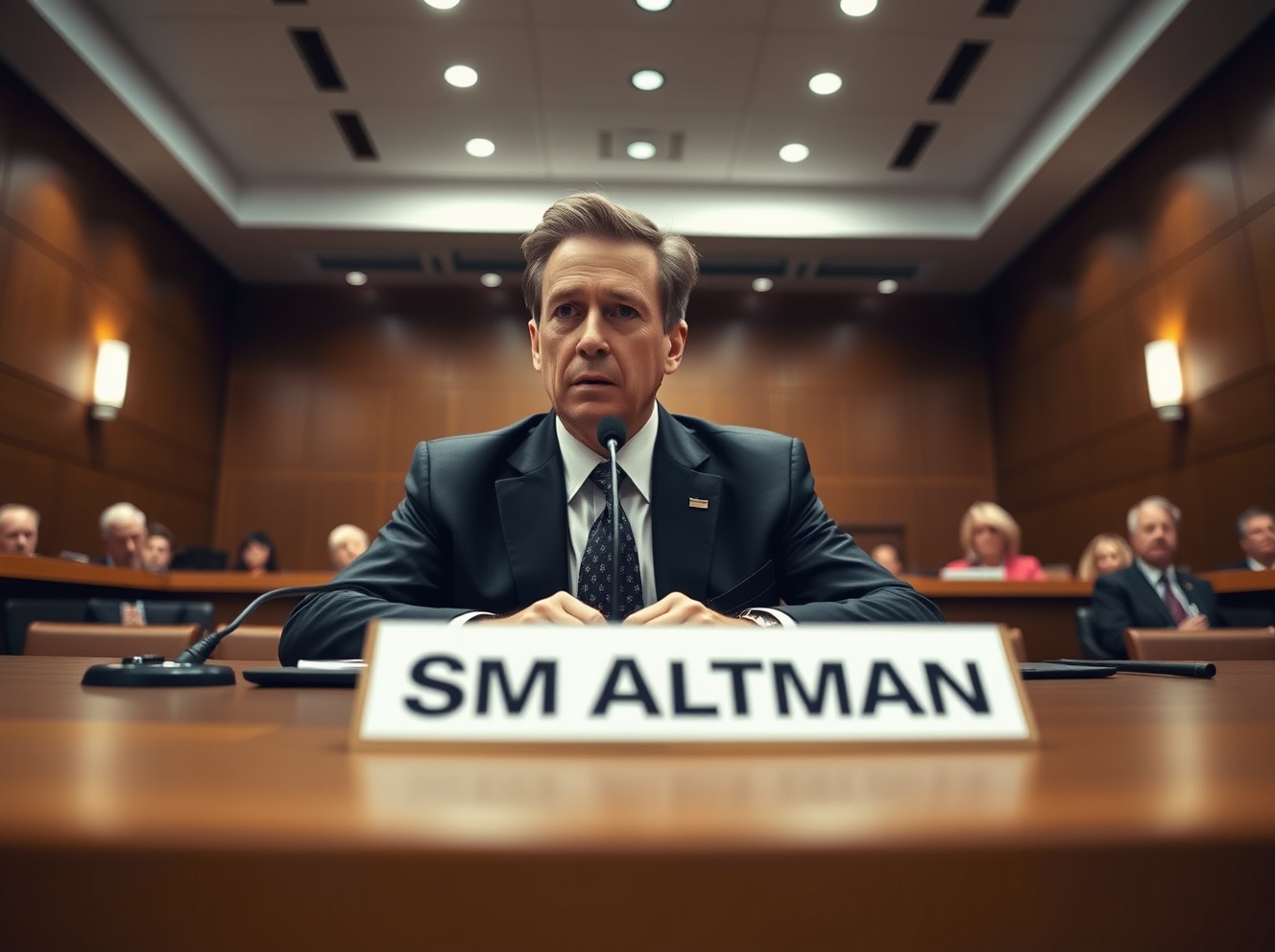
Sam Altman testified in a San Francisco federal trial that Elon Musk once proposed in 2017 that OpenAI could pass to his children, a suggestion Altman said contradicted the nonprofit’s mission as OpenAI transitioned to a for‑profit structure and completed a 2025 restructuring that left a foundation holding about $200 billion in assets. The testimony highlighted cultural clashes and alleged harm to research practices and could set governance precedents that affect fundraising, investor sentiment and security and adoption concerns for AI-linked crypto projects and token launches.
Predictions Markets
See what traders are focused on

BitcoinWorld
Altman Testifies Musk Once Proposed Handing OpenAI to His Children
OpenAI CEO Sam Altman took the stand this morning in a San Francisco federal courtroom to defend himself and his company against a lawsuit filed by former co-founder Elon Musk. The case, which challenges OpenAI’s transition from a non-profit to a for-profit structure, hinges on whether the organization abandoned its original safety-focused mission in pursuit of commercial gain.
Musk’s 2017 Proposal Raises Eyebrows
Altman testified that during a pivotal 2017 debate over how to fund OpenAI’s increasingly expensive AI models, Musk proposed a plan that gave Altman serious pause. According to Altman, when asked what would happen to a hypothetical for-profit entity if Musk died, Musk responded that “maybe OpenAI should pass to my children.” Altman described this as a “particularly hair-raising moment,” noting that OpenAI’s core mission was to prevent advanced AI from being controlled by any single individual.
Altman, who previously ran the Y Combinator startup accelerator, testified that he knew “founders who had control usually did not give it up.” He expressed concern that Musk’s desire for personal control conflicted with the organization’s founding principles.
Clash Over Research Culture
The testimony also painted a picture of deep cultural friction between Musk and OpenAI’s research team. Altman stated bluntly that “I don’t think Mr. Musk understood how to run a good research lab.” He recounted an incident where Musk demanded that co-founders Greg Brockman and Ilya Sutskever compile a list of researchers, rank their accomplishments, and “take a chainsaw through a bunch.” Altman said this approach “did huge damage for a long time to the culture of the organization.”
Altman portrayed himself as a defender of the “sweat equity” of Brockman and Sutskever, who were effectively running OpenAI’s day-to-day operations while both Musk and Altman held other jobs. The clash over control and management style ultimately led Musk to leave OpenAI’s board and launch competing AI initiatives at Tesla and his own startup, xAI.
The Non-Profit Question
Musk’s attorneys have argued that OpenAI’s foundation — now holding assets estimated at $200 billion — was effectively dormant, lacking full-time employees until earlier this year. OpenAI board chair Bret Taylor testified that this was due to the complexity of converting equity into cash, a process completed during the company’s 2025 restructuring.
Altman rejected the characterization that the founders “stole a charity,” saying, “It feels difficult to even wrap my head around that framing. We created one of the largest charities in the world.”
Ongoing Communication Despite Legal Battle
Despite the acrimony, Altman acknowledged that he kept in touch with Musk after his departure, updating him on OpenAI’s work and seeking his funding and advice. During one discussion about a 2018 Microsoft investment, Altman recalled a “good vibes meeting” where Musk spent a “long conversation showing us memes on his phone.”
The case underscores the ongoing tension between AI safety ideals and the enormous financial incentives driving the industry. A ruling against OpenAI could reshape the governance of AI companies and set a precedent for how non-profit entities transition to for-profit structures.
Conclusion
The trial continues this week, with both sides expected to call additional witnesses. The outcome will have significant implications not only for OpenAI’s corporate structure but also for the broader debate over how to balance rapid AI development with safety and ethical oversight.
FAQs
Q1: What is the central issue in Elon Musk’s lawsuit against OpenAI?
The lawsuit challenges OpenAI’s transition from a non-profit to a for-profit structure, arguing that the company abandoned its original mission of developing AI safely and for the benefit of humanity.
Q2: Why did Sam Altman find Musk’s 2017 proposal concerning?
Altman testified that Musk suggested OpenAI could pass to his children if he died, which conflicted with the organization’s goal of preventing any single person from controlling advanced AI.
Q3: What was the nature of the conflict between Musk and OpenAI’s researchers?
Altman testified that Musk’s management style, including demanding a ranking and reduction of research staff, damaged the company’s culture and demotivated key researchers.
This post Altman Testifies Musk Once Proposed Handing OpenAI to His Children first appeared on BitcoinWorld.


Read More

Veteran Macro Investor Says AI’s Easy Money Is Over and Bitcoin Is Next