White House AI Framework Deadline Lapses Without Public Deliverables

Share:
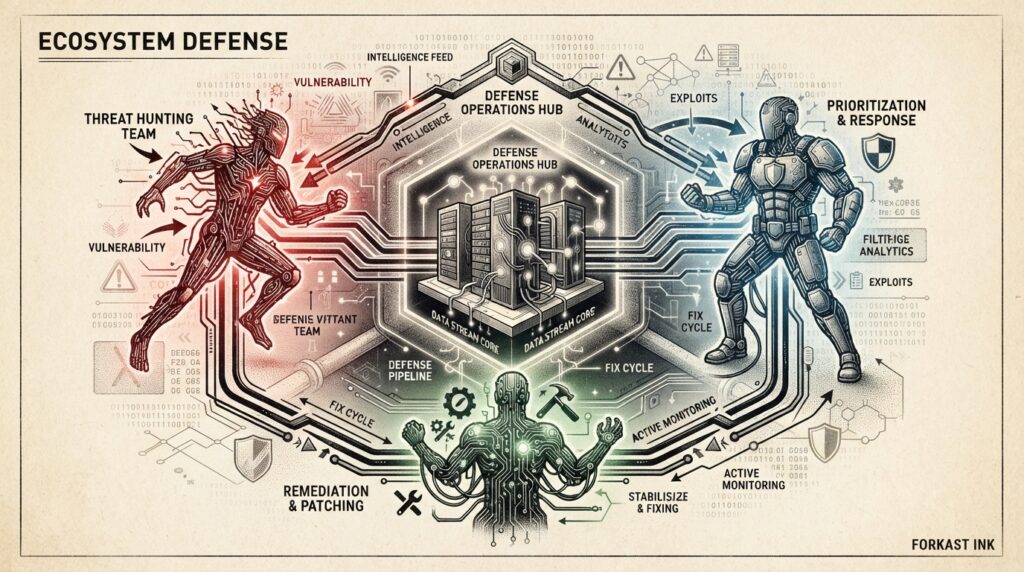
As of 00:00Z on August 1, 2026 the U.S. missed three statutory deliverables under Executive Order 14409 — a classified benchmarking process (NSA/CISA/NIST), a voluntary frontier AI disclosure framework (Treasury/NSA/CISA/NIST), and a federal cyber workforce plan (OPM) — leaving the TRAINS jailbreak scoring program suspended and creating a regulatory vacuum for frontier models. The silence forces labs to delay releases, taxes capital allocation and raises investor risk while international actors like DeepSeek build 1GW data centers in Mongolia, creating security and adoption headwinds and potential negative knock-on effects for crypto, DeFi, fundraising, token launches and CEX/DEX platforms that depend on AI-driven infrastructure.
Predictions Markets
See what traders are focused on

The silence is the story. As of 00:00Z on August 1, 2026, the federal government failed to deliver on the mandates established by Executive Order 14409. There were no Federal Register notices, no NIST or CISA publications, and no statements from the Office of Science and Technology Policy (OSTP). In a sector defined by rapid iteration and high-stakes deployment, this absence of guidance is not merely a bureaucratic delay; it is a structural failure that ripples through the entire AI ecosystem.
The EO required three specific deliverables by the August 1 deadline: a classified benchmarking process involving the NSA, CISA, and NIST; a voluntary frontier AI disclosure framework managed by the Treasury, NSA, CISA, and NIST; and a federal cyber workforce expansion plan from the OPM. These were not aspirational goals; they were statutory requirements intended to provide the guardrails for the next generation of frontier models. Instead, the industry faces a vacuum. The TRAINS program, which aims to standardize jailbreak severity scoring across major labs like OpenAI, Anthropic, Google, Microsoft, and xAI, remains in a state of suspended animation with no public status update.
For investors and operators, this regulatory uncertainty creates direct, quantifiable risks. Define the rules of the road, or capital allocation becomes speculative. Frontier labs are currently forced to delay or modify internal release timelines because they cannot determine if their specific architectures will trigger the ‘covered frontier model’ thresholds. Every week of uncertainty effectively taxes innovation by forcing labs to hold back compute resources or pivot development strategies. The market interprets this silence as a sign of deep interagency coordination friction, suggesting that the government is struggling to reconcile the technical realities of AI with the political demands of oversight.
This moment is the culmination of a specific policy trajectory. The EO itself was a direct response to the K3 Cyber incident, which exposed critical vulnerabilities in existing infrastructure. It exists in a complex web of legislative activity, including the Kill Switch Act and the policy framework proposed by Anthropic CEO Dario Amodei. The current lapse suggests that the momentum behind these efforts has stalled, raising the question of whether this is a temporary administrative bottleneck or a fundamental inability to align disparate federal agencies on a unified technical standard.
The contrast with international developments is stark. While the U.S. remains silent, DeepSeek is actively building 1GW data centers in Mongolia. This is not a theoretical threat; it is a massive, tangible infrastructure buildout that signals a different approach to scaling. If the U.S. cannot define its own regulatory framework, it risks ceding the pace of development to actors who operate without such constraints. What that actually means is that while domestic labs are paralyzed by the lack of clarity, global competitors are aggressively expanding their compute capacity.
We must distinguish between a lapse and a missed qualification. A lapse is a failure to meet a deadline; a missed qualification implies the government has failed to define the very criteria that determine which models are subject to oversight. Without a clear definition of what constitutes a ‘covered’ model, regulation is ineffective. This ambiguity shifts the risk entirely onto the builders, who must now guess at the regulatory environment of the coming months.
Ultimately, the lack of action on August 1 is a signal. It tells the market that the government is not yet ready to govern the technology it seeks to oversee. For those building the future of AI, the message is that the regulatory environment remains a moving target, while the infrastructure buildout continues elsewhere without domestic clarity.


Read More
DOE Is Converting Its Own Cold War Uranium Sites Into $100 Billion AI Data Centers