
US Stocks Open Lower: What’s Driving Today’s Market Decline?
Share:

BitcoinWorld
US Stocks Open Lower: What’s Driving Today’s Market Decline?
If you checked the markets this morning, you likely saw a sea of red. The three major U.S. stock indices opened in negative territory, signaling a cautious start to the trading day. For investors tracking market momentum, understanding why US stocks open lower is crucial for making informed decisions. This movement often reflects broader economic sentiments and specific sector pressures that can influence your portfolio.
Why Did US Stocks Open Lower Today?
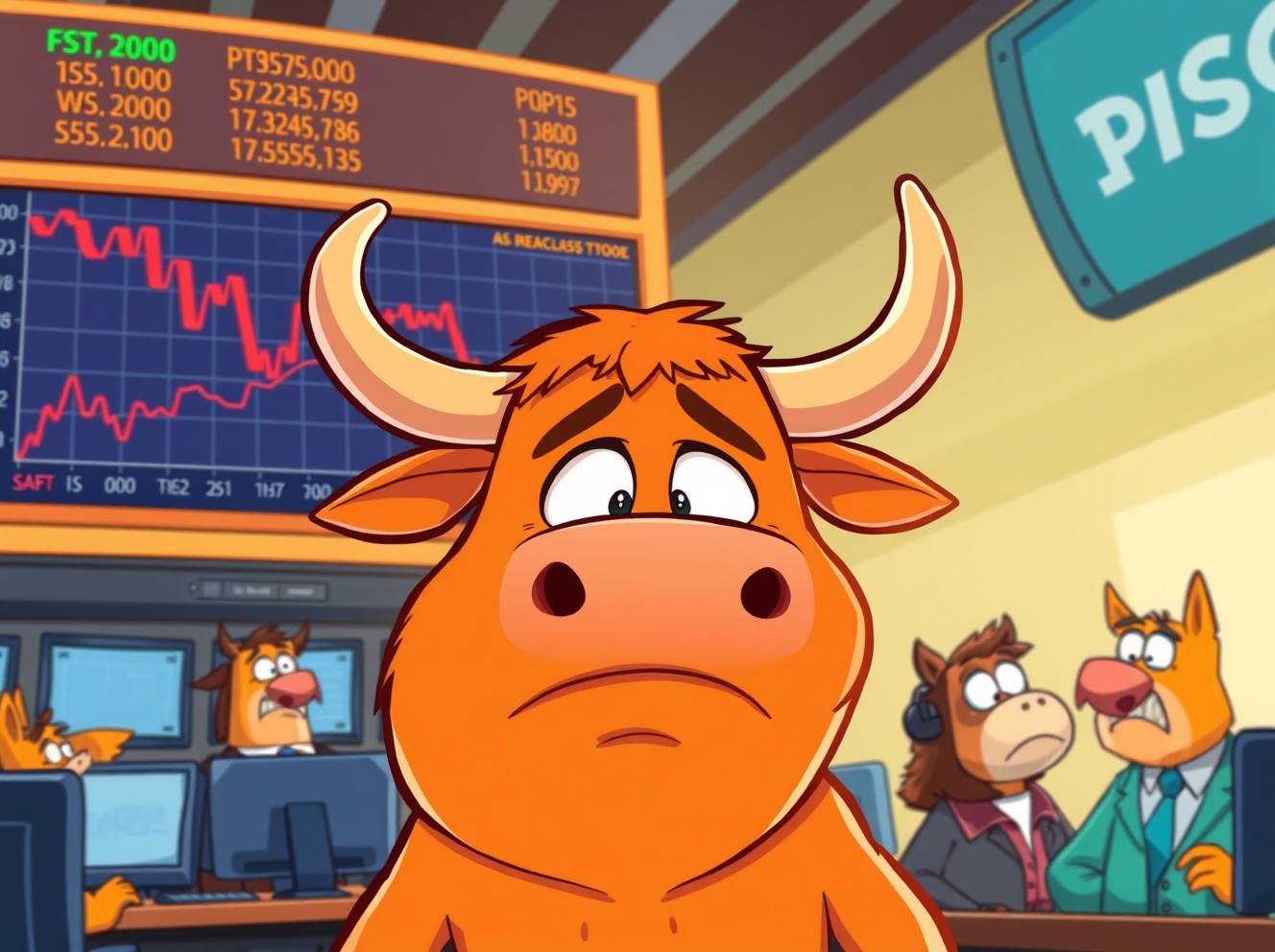
The opening bell brought a clear downward trend. The S&P 500 fell 0.23%, the tech-heavy Nasdaq Composite dropped 0.4%, and the Dow Jones Industrial Average saw a more modest 0.05% decline. This pattern suggests that technology and growth stocks faced particular pressure. When US stocks open lower, it typically points to overnight developments or pre-market sentiment shifting investor behavior. Several factors could be at play, from economic data releases to geopolitical tensions influencing trader confidence.
What Factors Influence a Lower Open?
Market opens don’t happen in a vacuum. A lower opening often results from a combination of domestic and international cues. For instance, stronger-than-expected inflation data can spark fears of prolonged high interest rates, weighing on stocks. Conversely, weak corporate earnings forecasts from major companies can trigger sector-wide sell-offs. Therefore, seeing US stocks open lower is a signal to examine:
- Economic Indicators: Jobs reports, inflation data, and consumer sentiment surveys.
- Corporate News: Earnings misses, guidance revisions, or major management changes.
- Global Events: International conflict, trade policy shifts, or foreign market slumps.
- Monetary Policy: Comments from the Federal Reserve regarding future rate decisions.
How Should Investors React to a Lower Open?
Watching US stocks open lower can be unsettling, but a strategic response is key. First, avoid panic selling based solely on the opening tick. The initial movement often sees volatility as traders react to overnight news. Instead, assess whether the decline is broad-based or concentrated in specific sectors. This distinction helps determine if it’s a market-wide correction or a rotation out of certain industries. Historically, many lower opens reverse course by the afternoon as more data and volume enter the market.
Is This a Buying Opportunity or a Warning Sign?
This is the critical question for every investor when they see US stocks open lower. A dip can present a chance to acquire quality assets at a discount, especially if the fundamentals remain strong. However, it can also be the start of a deeper correction if macroeconomic headwinds are strengthening. To decide, review your investment horizon and risk tolerance. Long-term investors might see a lower open as a minor blip, while short-term traders may adjust their positions for increased volatility.
Key Takeaways from Today’s Market Action
Today’s session where US stocks open lower reminds us that markets are dynamic. The Nasdaq’s sharper decline highlights ongoing sensitivity in the tech sector, possibly due to valuation concerns or shifting interest rate expectations. The Dow’s relative stability suggests a rotation into more defensive, value-oriented stocks. Monitoring these intraday trends provides valuable context beyond the headline numbers.
In summary, a lower open for US stocks is a common market event driven by a complex mix of factors. While today’s declines in the S&P 500, Nasdaq, and Dow are noteworthy, they represent a single data point in a longer trend. Successful investing requires looking beyond the opening bell to understand the underlying drivers and maintaining a disciplined strategy regardless of short-term fluctuations.
Frequently Asked Questions (FAQs)
What does it mean when US stocks open lower?
It means the major market indices, like the S&P 500 and Nasdaq, started the trading day at a price lower than the previous day’s closing price, indicating selling pressure at the open.
Should I sell my stocks if the market opens lower?
Not necessarily. A lower open is often short-term volatility. It’s better to assess the reasons behind the move and your long-term investment goals rather than react impulsively.
Which index fell the most in today’s lower open?
In the provided data, the Nasdaq Composite fell the most, down 0.4%, suggesting technology and growth stocks were under particular pressure.
Can a lower open predict the rest of the trading day?
Not reliably. While it sets the initial tone, market direction can change significantly based on news flow, economic data releases, and trading activity throughout the session.
How often do US stocks open lower?
It’s a regular occurrence. Markets open lower roughly 40-45% of the time, reflecting the constant balance between bullish and bearish sentiments.
Where can I find reliable analysis on market opens?
Reputable financial news websites, official exchange data, and analysis from established financial institutions provide context for why US stocks open lower on any given day.
Found this breakdown of why US stocks open lower helpful? Share this article with fellow investors on social media to help them navigate market volatility with confidence!
To learn more about the latest market trends, explore our article on key developments shaping investor sentiment and future price action.
This post US Stocks Open Lower: What’s Driving Today’s Market Decline? first appeared on BitcoinWorld.
In This News
Funds

Share:
In This News
Funds
Share:
Read More

Stunning Surge: BTC Price Soars Above $87,000, Igniting Market Optimism

US Stock Indices Close Lower: Decoding Monday’s Market Pullback
US Stocks Open Lower: What’s Driving Today’s Market Decline?
Share:
BitcoinWorld
US Stocks Open Lower: What’s Driving Today’s Market Decline?
If you checked the markets this morning, you likely saw a sea of red. The three major U.S. stock indices opened in negative territory, signaling a cautious start to the trading day. For investors tracking market momentum, understanding why US stocks open lower is crucial for making informed decisions. This movement often reflects broader economic sentiments and specific sector pressures that can influence your portfolio.
Why Did US Stocks Open Lower Today?
The opening bell brought a clear downward trend. The S&P 500 fell 0.23%, the tech-heavy Nasdaq Composite dropped 0.4%, and the Dow Jones Industrial Average saw a more modest 0.05% decline. This pattern suggests that technology and growth stocks faced particular pressure. When US stocks open lower, it typically points to overnight developments or pre-market sentiment shifting investor behavior. Several factors could be at play, from economic data releases to geopolitical tensions influencing trader confidence.
What Factors Influence a Lower Open?
Market opens don’t happen in a vacuum. A lower opening often results from a combination of domestic and international cues. For instance, stronger-than-expected inflation data can spark fears of prolonged high interest rates, weighing on stocks. Conversely, weak corporate earnings forecasts from major companies can trigger sector-wide sell-offs. Therefore, seeing US stocks open lower is a signal to examine:
- Economic Indicators: Jobs reports, inflation data, and consumer sentiment surveys.
- Corporate News: Earnings misses, guidance revisions, or major management changes.
- Global Events: International conflict, trade policy shifts, or foreign market slumps.
- Monetary Policy: Comments from the Federal Reserve regarding future rate decisions.
How Should Investors React to a Lower Open?
Watching US stocks open lower can be unsettling, but a strategic response is key. First, avoid panic selling based solely on the opening tick. The initial movement often sees volatility as traders react to overnight news. Instead, assess whether the decline is broad-based or concentrated in specific sectors. This distinction helps determine if it’s a market-wide correction or a rotation out of certain industries. Historically, many lower opens reverse course by the afternoon as more data and volume enter the market.
Is This a Buying Opportunity or a Warning Sign?
This is the critical question for every investor when they see US stocks open lower. A dip can present a chance to acquire quality assets at a discount, especially if the fundamentals remain strong. However, it can also be the start of a deeper correction if macroeconomic headwinds are strengthening. To decide, review your investment horizon and risk tolerance. Long-term investors might see a lower open as a minor blip, while short-term traders may adjust their positions for increased volatility.
Key Takeaways from Today’s Market Action
Today’s session where US stocks open lower reminds us that markets are dynamic. The Nasdaq’s sharper decline highlights ongoing sensitivity in the tech sector, possibly due to valuation concerns or shifting interest rate expectations. The Dow’s relative stability suggests a rotation into more defensive, value-oriented stocks. Monitoring these intraday trends provides valuable context beyond the headline numbers.
In summary, a lower open for US stocks is a common market event driven by a complex mix of factors. While today’s declines in the S&P 500, Nasdaq, and Dow are noteworthy, they represent a single data point in a longer trend. Successful investing requires looking beyond the opening bell to understand the underlying drivers and maintaining a disciplined strategy regardless of short-term fluctuations.
Frequently Asked Questions (FAQs)
What does it mean when US stocks open lower?
It means the major market indices, like the S&P 500 and Nasdaq, started the trading day at a price lower than the previous day’s closing price, indicating selling pressure at the open.
Should I sell my stocks if the market opens lower?
Not necessarily. A lower open is often short-term volatility. It’s better to assess the reasons behind the move and your long-term investment goals rather than react impulsively.
Which index fell the most in today’s lower open?
In the provided data, the Nasdaq Composite fell the most, down 0.4%, suggesting technology and growth stocks were under particular pressure.
Can a lower open predict the rest of the trading day?
Not reliably. While it sets the initial tone, market direction can change significantly based on news flow, economic data releases, and trading activity throughout the session.
How often do US stocks open lower?
It’s a regular occurrence. Markets open lower roughly 40-45% of the time, reflecting the constant balance between bullish and bearish sentiments.
Where can I find reliable analysis on market opens?
Reputable financial news websites, official exchange data, and analysis from established financial institutions provide context for why US stocks open lower on any given day.
Found this breakdown of why US stocks open lower helpful? Share this article with fellow investors on social media to help them navigate market volatility with confidence!
To learn more about the latest market trends, explore our article on key developments shaping investor sentiment and future price action.
This post US Stocks Open Lower: What’s Driving Today’s Market Decline? first appeared on BitcoinWorld.
In This News
Funds
Share:
In This News
Funds
Share:
Read More
Stunning Surge: BTC Price Soars Above $87,000, Igniting Market Optimism