The 9th Circuit’s Browser Analogy Leaves a Liability Vacuum
Share:
On August 4, 2026 the 9th U.S. Circuit vacated a preliminary injunction in Amazon v. Perplexity, applying a “browser analogy” that treats AI agents as user-operated tools for the CFAA access prong while remanding trademark and state-law claims. With consumer trust low (Product.ai June 2026: 14% trust autonomous purchases, 86% verify, 42% refuse transactions >$25), payment networks and infrastructure providers—Mastercard’s Agent Pay for Machines with Verifiable Intent (June 2026), Visa’s Trusted Agent Protocol (100+ partners), and Cloudflare Wallets launched the same day—are rolling out cryptographic guardrails to address security, adoption and liability gaps, creating private-sector regulatory layers that impact crypto, DeFi and payments integration amid unresolved legal risk.
Predictions Markets
See what traders are focused on

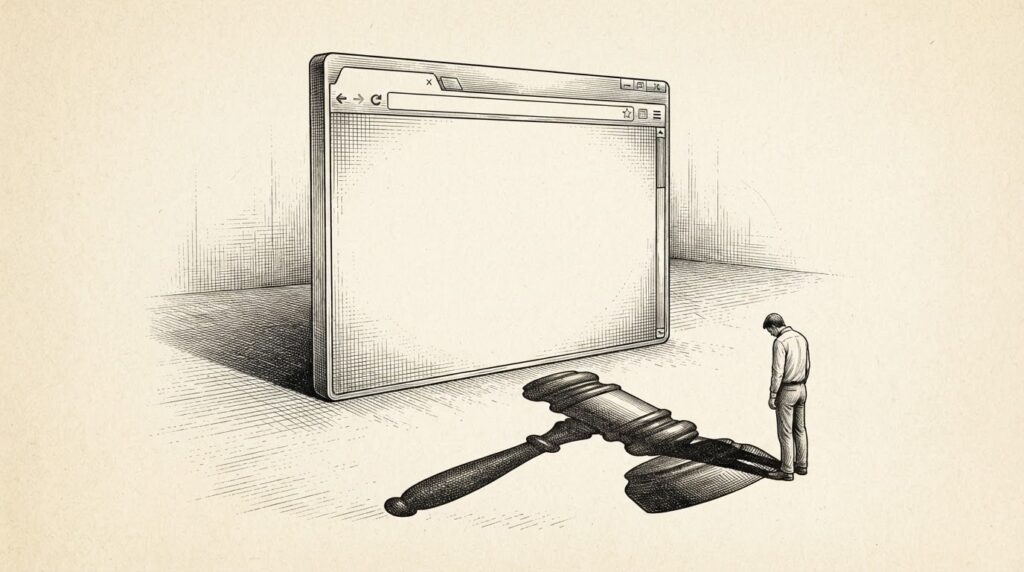
On August 4, 2026, the 9th U.S. Circuit Court of Appeals issued a ruling in Amazon v. Perplexity AI (No. 26-1444) that fundamentally alters the legal landscape for the agentic economy. In a decision authored by Circuit Judge Milan Smith, the court vacated a preliminary injunction that had previously blocked Perplexity’s Comet AI shopping agent from interacting with Amazon’s platform. The core of the court’s reasoning rests on what is now being called the browser analogy: an AI agent is no more Perplexity accessing Amazon than Safari is Apple accessing Amazon. By this logic, the court held that the AI assistant is “a tool, not a person for statutory purposes,” and that the user, not the agent maker, is responsible for the actions taken.
The ruling is narrow but precedent-setting. The court’s holding applies specifically to the access prong of the Computer Fraud and Abuse Act, and it characterized Amazon’s CFAA invocation as “legally baseless” and “bad policy” that “could expose users themselves to criminal liability.” The court cited the Electronic Frontier Foundation’s amicus brief favorably, noting it “articulates the nature of the system most clearly.” But the broader conflict is far from resolved. Amazon’s trademark and state-law claims remain active, and the case has been remanded to the district court. Amazon stated it “respectfully disagreed” with the ruling, and the court itself acknowledged that the “legal treatment of agentic AI will doubtless change.”
That acknowledgment sits at the center of a striking structural contradiction. The court has legally defined the AI agent as a mere tool operated by the user, assigning liability accordingly. Yet market reality suggests users are nowhere near ready to shoulder this burden. According to the Product.ai Trust in AI Commerce Report released in June 2026, only 14% of consumers trust AI to execute purchases without verification. The remaining 86% verify AI recommendations before purchasing, and 42% refuse to trust AI for transactions exceeding $25. The legal framework assumes a level of user agency that does not exist in practice.
This gap has created a liability vacuum that the private sector is now rushing to fill. With the court effectively confirming that the current legal framework is insufficient, payment networks and infrastructure providers are building their own trust layers. Mastercard’s Agent Pay for Machines, launched in June 2026, introduces Verifiable Intent — a cryptographic, credentialed-identity system designed to bind each AI agent to a verified principal and programmatic spending mandates. Visa’s Intelligent Commerce initiative and its Trusted Agent Protocol now count over 100 partners. And Cloudflare Wallets, launched the same day as the ruling, implemented human-configured guardrails — per-agent spending allowances, merchant allowlists, and maximum transaction sizes — that keep humans in control without requiring them in the loop on every transaction.
These initiatives are not product features. They are attempts to create a private-sector regulatory framework where the law has not yet arrived. The court signaled that Congress needs to write a new statute, but legislative action on agent liability is unlikely in the near term. For now, the payment networks are the only infrastructure standing between agent commerce and a liability crisis the court just confirmed exists.
As the x402 Foundation and other industry groups continue to grapple with the governance gap, the open question is structural: if the user is legally liable for an agent’s actions but lacks the technical capacity to monitor those actions, can private-sector guardrails replace a clear legal framework? The court’s browser analogy assumes the user is driving. The market data suggests most users do not even know where the steering wheel is.


Read More

Cloudflare Just Gave AI Agents a Budget. Now the Agents Can Finally Pay.