Is Oracle's 29% crash the best AI bargain on Wall Street right now?

Share:
Oracle shares plunged ~29% YTD as of Mar 31, 2026 despite Q3 revenue $17.19B (+22% YoY); company raised FY2027 revenue target to $90B and reported RPO of $553B (up from $455B in Sep 2025). Management plans fiscal 2026 capex of $50B (more than double prior year) and a $50B debt/equity raise; ~$100B debt by Dec 2025; analysts split (JPMorgan $210 PT in Mar; Melius $160 Hold in Feb) and one view says meaningful free cash flow may not arrive until the 2030s. Crypto/DeFi impact: the heavy AI/cloud infrastructure build and financing risk could raise costs and operational risk for crypto firms, CEX/DEX and DeFi projects that rely on cloud AI services, affecting adoption and fundraising dynamics.
Predictions Markets
See what traders are focused on

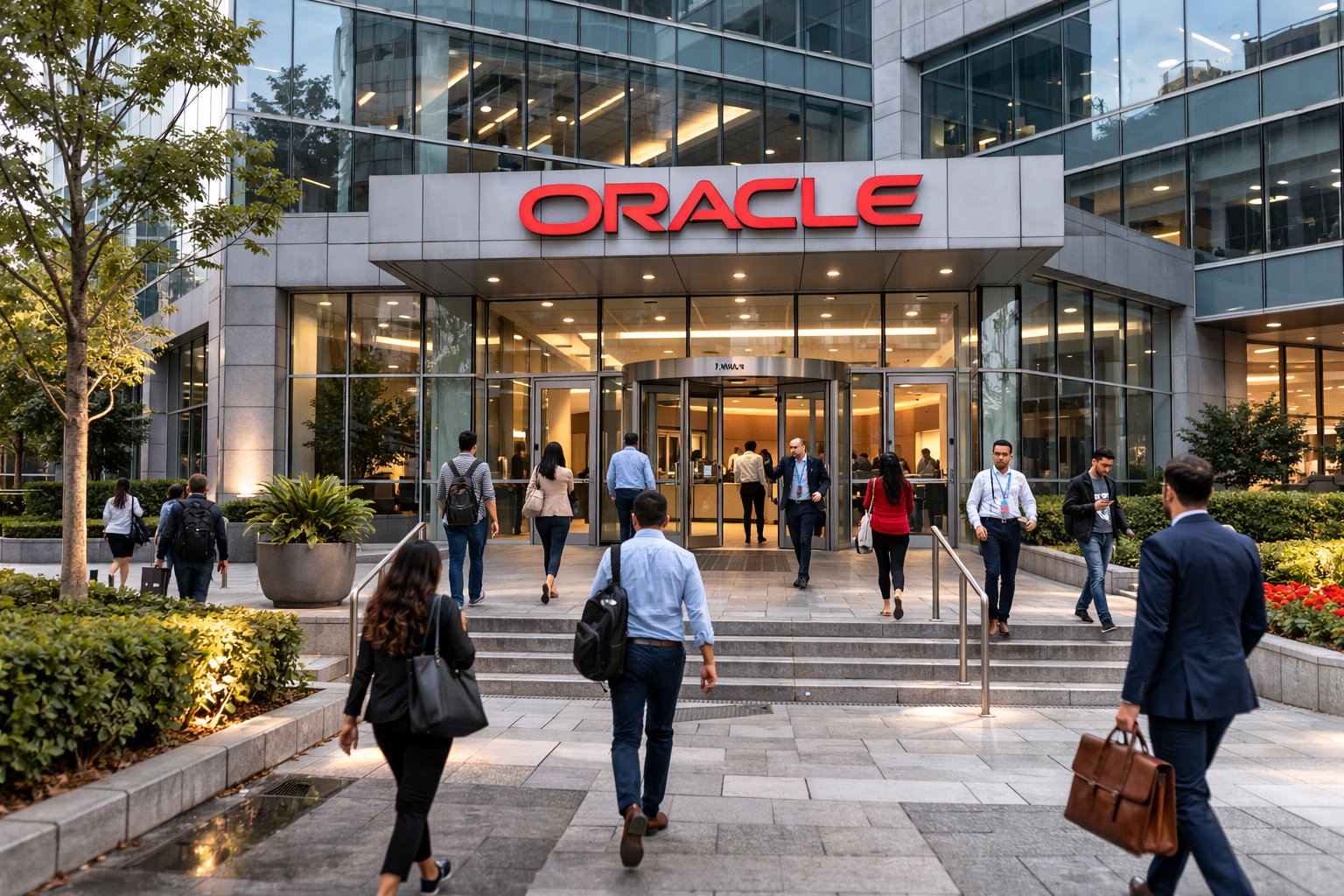
Oracle’s brutal 2026 selloff is forcing Wall Street to answer a harder question than the usual buy-the-dip reflex.
Shares of the cloud and database giant were still down about 29% for the year as of March 31, even after a brief rebound.
Yet the collapse has not produced a consensus.
Instead, it has split analysts into two camps: those who see a rare chance to buy a major AI build-out at a discount, and those who think investors are finally pricing in just how expensive that ambition may be.
Oracle stock: What went wrong?
Oracle’s fall has not been driven by a collapse in demand.
In March, the company reported fiscal third-quarter revenue of [MONEY value="17190000000" currency="usd" notation="long" replace="false"] up about 22% from a year earlier and ahead of Wall Street expectations.
Oracle lifted its fiscal 2027 revenue target to [MONEY value="90000000000" currency="usd" notation="long" replace="false"].
Its remaining performance obligations climbed to [MONEY value="553000000000" currency="usd" notation="long" replace="false"] in the quarter after hitting [MONEY value="455000000000" currency="usd" notation="long" replace="false"] in the fiscal first quarter of 2026.
On the surface, those are not the numbers of a company losing momentum.
The problem is what investors now have to stomach in order to get that growth.
Oracle has said it expects fiscal 2026 capital expenditure of [MONEY value="50000000000" currency="usd" notation="long" replace="false"], more than double the prior year, and in February, it said it planned to raise [MONEY value="50000000000" currency="usd" notation="long" replace="false"] through debt and equity to build more cloud capacity.
By December 2025, Oracle already had around [MONEY value="100000000000" currency="usd" notation="long" replace="false"] in debt, and by April, investors were still scrutinizing the company’s swelling balance sheet and cash burn.
The bull case
For the bulls, the selloff has become an opportunity.
JPMorgan upgraded Oracle to Overweight in March with a $210 price target, arguing that the stock’s collapse had changed the setup more than the business itself.
In Mark Murphy’s phrasing, the “drastic” or “severe” selloff improved the risk-reward because investor sentiment had swung from confidence to pessimism.
That matters because Oracle is still one of the few companies trying to build AI infrastructure at a real scale outside the cloud leaders.
The bullish argument also leans on backlog. Oracle’s contract book has exploded, with RPO jumping from $455 billion [MONEY value="455000000000" currency="usd" notation="long" replace="false"] in September 2025 to $553 billion [MONEY value="553000000000" currency="usd" notation="long" replace="false"] by March 2026.
The bear case
The bear case is simpler and probably easier for retail investors to grasp.
Even if Oracle is right on demand, the path from here to attractive shareholder returns could be long and messy.
Melius analyst Ben Reitzes downgraded the stock to Hold with a $160 target in February, arguing that a company with no meaningful free cash flow until the 2030s should be valued more like an infrastructure builder than a software company.
That is a sharp warning because software stocks usually command premium multiples precisely because they are asset-light and cash generative.
The post Is Oracle's 29% crash the best AI bargain on Wall Street right now? appeared first on Invezz


Read More

US Stocks Open Higher as All Three Major Indices Gain