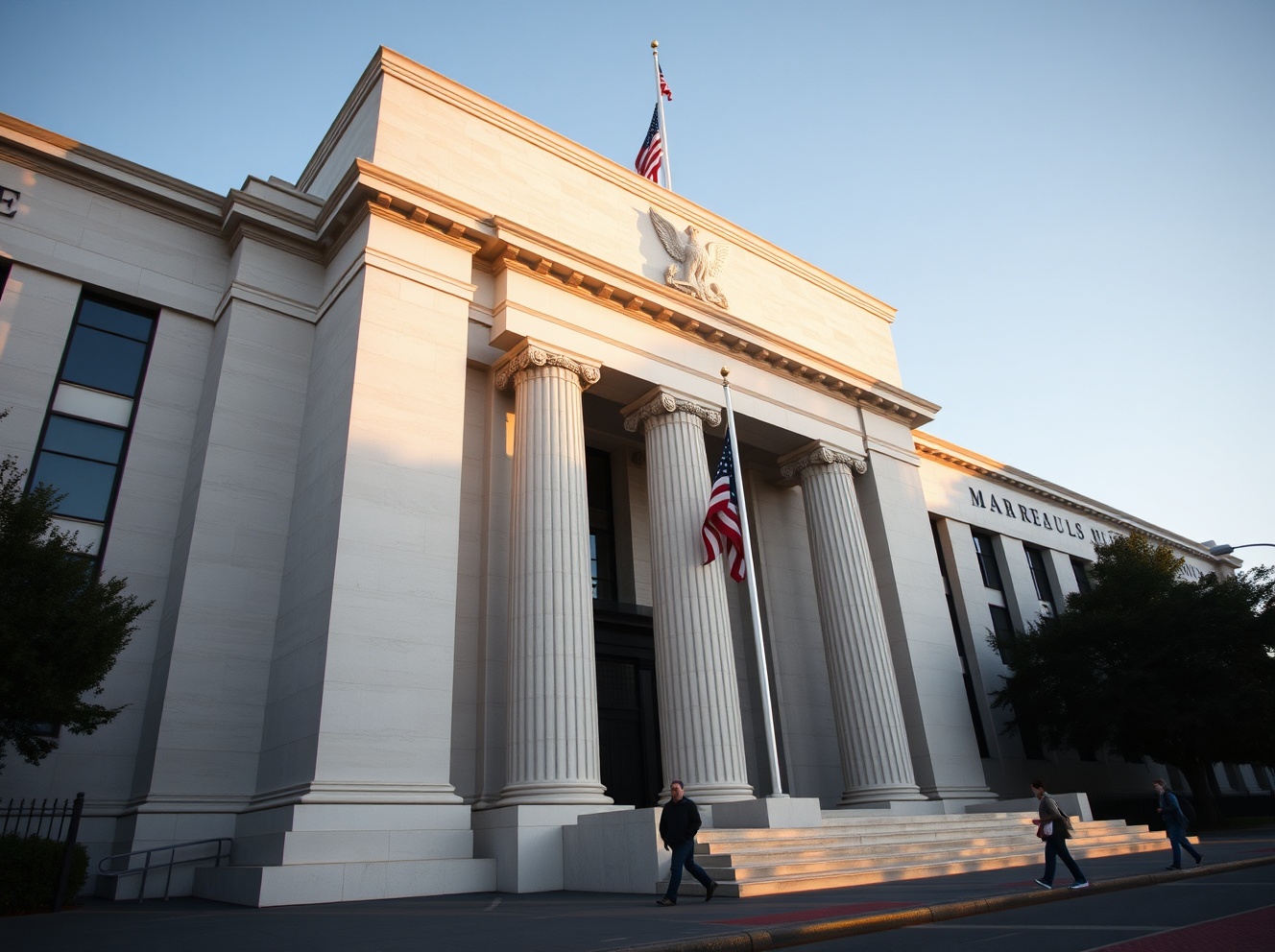
Fed Holds Rates Steady, But Long-Term Treasury Yields Signal Growing Investor Unease

Share:
The Federal Reserve held the federal funds rate steady at its latest meeting, but yields on longer-dated Treasuries including the 10-year and 30-year climbed, signaling investor unease about persistent core inflation and larger fiscal deficits and raising borrowing costs for mortgages, corporations and the government. Higher long-term yields are a headwind for risk assets and could pressure crypto token performance, DeFi lending rates and CEX/DEX activity, while also increasing the likelihood the Fed may resume tightening if market-based inflation expectations stay elevated.
Predictions Markets
See what traders are focused on

BitcoinWorld
Fed Holds Rates Steady, But Long-Term Treasury Yields Signal Growing Investor Unease
The Federal Reserve left its benchmark interest rate unchanged at its latest meeting, but a notable rise in long-term Treasury yields suggests bond investors are growing increasingly nervous about the trajectory of inflation and the federal deficit.
The decision, widely expected by markets, keeps the federal funds rate in its current range. However, the reaction in the bond market tells a more complicated story: while short-term yields remained relatively stable, yields on longer-dated government bonds climbed, a move that often signals concerns about future inflation and the government’s borrowing needs.
Why Long-Term Yields Are Rising Despite a Fed Hold
The divergence between short-term and long-term yields is a key signal for investors. When the Fed holds short-term rates steady, the market’s focus shifts to the longer-term outlook. Several factors are contributing to the upward pressure on the long end of the curve.
One primary driver is inflation expectations. Even as headline inflation has cooled from its peaks, core inflation remains stubbornly above the Fed’s 2% target. Investors are pricing in the possibility that inflation will not decline as quickly as hoped, demanding higher yields to compensate for the erosion of purchasing power over time.
Another factor is the federal government’s fiscal position. Large budget deficits require the Treasury to issue more debt, increasing the supply of long-term bonds. When supply outpaces demand, prices fall and yields rise. This dynamic has been a persistent theme in the bond market over the past year, and it appears to be intensifying.
Market Reaction and Investor Implications
The yield on the 10-year Treasury note, a benchmark for mortgage rates and other consumer loans, moved higher following the Fed’s announcement. The 30-year bond yield also rose, reflecting the same concerns. This movement has implications for both consumers and businesses, as higher long-term yields translate into more expensive borrowing costs for homebuyers, corporations, and the government itself.
For equity investors, the rise in long-term yields can be a headwind, as it increases the discount rate applied to future corporate earnings, potentially putting pressure on stock valuations. The technology sector, which relies heavily on future growth expectations, is often particularly sensitive to these moves.
What This Means for the Fed’s Next Moves
The Fed’s decision to hold rates steady does not mean the tightening cycle is over. Policymakers have repeatedly emphasized that they will be data-dependent, and the recent rise in long-term yields could influence their thinking. If market-based inflation expectations continue to climb, the Fed may feel compelled to resume rate hikes, even if it risks slowing economic growth.
Conversely, if the rise in long-term yields is seen as a market-driven tightening of financial conditions, the Fed might interpret it as doing some of its work for it, potentially reducing the need for further policy action.
Conclusion
The Federal Reserve’s decision to hold rates steady was a pause, not a pivot. The real story is in the bond market, where long-term yields are sending a clear message of unease about inflation and fiscal sustainability. For investors and consumers, the path forward is likely to be shaped by these longer-term rate movements, which will influence borrowing costs and asset prices in the months ahead.
FAQs
Q1: Why did the Fed hold rates steady?
The Fed held rates steady to assess the impact of previous rate hikes on inflation and economic growth, while maintaining a data-dependent approach for future decisions.
Q2: What does a rise in long-term Treasury yields mean for consumers?
Higher long-term yields typically lead to higher mortgage rates, auto loan rates, and other consumer borrowing costs, making it more expensive to finance large purchases.
Q3: Could the Fed raise rates again in the future?
Yes, the Fed has not ruled out future rate hikes if inflation remains elevated or if long-term yields rise in a way that suggests inflation expectations are becoming unanchored.
This post Fed Holds Rates Steady, But Long-Term Treasury Yields Signal Growing Investor Unease first appeared on BitcoinWorld.


Read More
UOB: Federal Reserve to Hold Rates Steady for Extended Period, But Risks of Further Hikes Remain