USD/INR exchange rate surges dramatically as Indian rupee faces FII selling pressure and oil price spike

Share:
The USD/INR exchange rate surged significantly due to intensified foreign institutional investor (FII) selling and rising global oil prices, marking a major market shift. Recent data shows outflows of $2.1 billion from equities in the current month, contributing to rupee depreciation. Analysts are monitoring critical technical levels to assess whether this trend indicates a short-term correction or long-term weakness.
Predictions Markets
See what traders are focused on

BitcoinWorld
USD/INR exchange rate surges dramatically as Indian rupee faces FII selling pressure and oil price spike
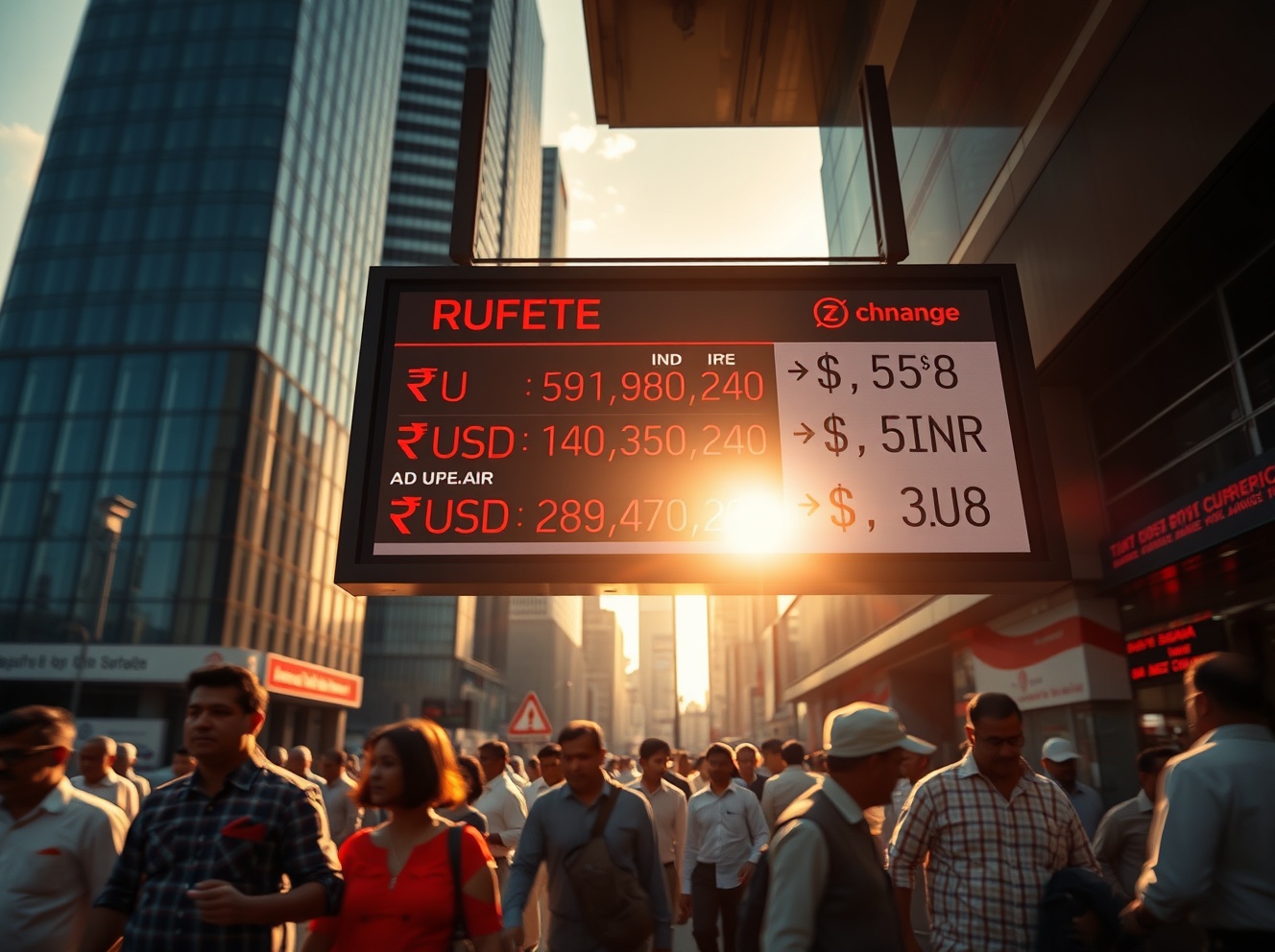
The USD/INR currency pair has experienced a significant gap higher in recent trading sessions, marking one of the most substantial moves in the forex market this quarter. This dramatic shift reflects mounting pressure on the Indian rupee from multiple economic fronts, primarily driven by foreign institutional investor selling and escalating global oil prices. Market analysts now closely monitor these developments as they signal broader implications for India’s economic stability and monetary policy direction.
USD/INR exchange rate technical analysis and market movement
Technical charts reveal the USD/INR pair breaking through several key resistance levels with unusual momentum. The currency pair opened with a substantial gap above previous closing levels, indicating strong overnight selling pressure on the Indian rupee. Market data shows the pair trading at its highest levels in several months, with volatility measures spiking significantly. This movement represents a clear departure from the relatively stable trading range observed throughout the previous quarter.
Forex traders report increased volume and directional conviction in recent sessions. The gap higher suggests fundamental factors rather than technical adjustments primarily drive the current movement. Market participants now watch critical technical levels that could determine whether this represents a short-term correction or the beginning of a more sustained trend. Historical data indicates similar gaps have often preceded extended periods of rupee weakness against the dollar.
Foreign institutional investor selling pressure intensifies
Foreign institutional investors have substantially reduced their exposure to Indian assets in recent weeks. Data from regulatory filings shows net outflows exceeding previous monthly averages by significant margins. This selling pressure directly impacts currency markets as FIIs convert rupee proceeds back to dollars and other global currencies. Several factors contribute to this shift in investor sentiment.
Global risk aversion has increased due to changing monetary policy expectations in major economies. Additionally, relative valuation concerns have emerged as other emerging markets offer potentially more attractive risk-reward profiles. Domestic economic indicators showing slowing growth momentum have further influenced foreign investor decisions. The Reserve Bank of India’s intervention patterns have also affected FII positioning strategies in recent months.
| Time Period | Equity Outflows (USD Billion) | Debt Outflows (USD Billion) | Net Currency Impact |
|---|---|---|---|
| Current Month | -2.1 | -0.8 | Significant Pressure |
| Previous Month | -1.3 | -0.4 | Moderate Pressure |
| Quarter-to-Date | -4.7 | -1.5 | Sustained Pressure |
Expert analysis of capital flow dynamics
Financial market experts highlight several interconnected factors driving FII behavior. Global portfolio rebalancing has accelerated as major central banks signal policy shifts. Currency strategists note that India’s current account position remains vulnerable to sustained outflows. Historical patterns suggest that FII selling often creates self-reinforcing cycles in currency markets. Market participants now closely monitor whether domestic institutional investors can provide sufficient counterbalancing support.
Rising oil prices and their impact on Indian rupee
Global crude oil prices have surged to multi-month highs, creating additional pressure on the Indian rupee. As one of the world’s largest oil importers, India’s trade balance deteriorates significantly with each sustained increase in petroleum prices. Current price levels add billions to the country’s monthly import bill, directly affecting currency demand dynamics. The relationship between oil prices and the USD/INR exchange rate has remained consistently negative for decades.
Several geopolitical and supply factors drive the current oil price increase. Production adjustments by major exporting nations have reduced global supply. Simultaneously, seasonal demand patterns and inventory drawdowns have created tighter market conditions. Energy analysts project that these factors may persist through the coming quarter, suggesting continued pressure on oil-importing currencies like the Indian rupee.
- Brent crude has increased approximately 18% this quarter
- India’s oil import bill rises by roughly $1.2 billion monthly per $10 price increase
- Currency correlation between USD/INR and oil prices remains above 0.7
- Strategic reserves provide limited buffer against sustained price increases
Broader economic context and policy implications
The current currency movement occurs within a complex global economic environment. Major central banks continue navigating inflation concerns while supporting economic growth. The US Federal Reserve’s policy trajectory particularly influences emerging market currencies through interest rate differentials and capital flow patterns. India’s domestic economic indicators show mixed signals, with some sectors demonstrating resilience while others face headwinds.
Monetary policy authorities now face challenging decisions regarding intervention strategies. The Reserve Bank of India possesses substantial foreign exchange reserves but must balance currency stability against other policy objectives. Historical interventions during similar periods provide valuable context for understanding potential central bank responses. Market participants generally expect measured responses unless volatility escalates beyond certain thresholds.
Historical perspective on rupee volatility episodes
Currency analysts compare current conditions to previous periods of rupee pressure. The 2013 taper tantrum and 2018 oil price spike provide particularly relevant case studies. During these episodes, the rupee experienced significant depreciation before stabilizing through policy interventions and improving fundamentals. Current foreign exchange reserve levels substantially exceed those available during previous crises, providing stronger buffers. However, global economic conditions differ meaningfully from historical precedents.
Market reactions and forward-looking indicators
Financial markets have responded to the USD/INR movement across multiple asset classes. Equity markets show sector-specific impacts, with export-oriented companies benefiting while import-dependent sectors face pressure. Bond markets reflect changing expectations regarding interest rates and inflation. Derivatives markets indicate increased hedging activity as market participants manage currency risk exposure.
Forward-looking indicators suggest several factors will determine future currency direction. Global risk sentiment remains a primary driver of capital flows into and out of emerging markets. Domestic economic data releases will provide crucial information about India’s growth trajectory. Policy announcements from major central banks will influence interest rate differentials and currency valuations. Technical analysis identifies key levels that could signal either consolidation or continuation of current trends.
Conclusion
The USD/INR exchange rate surge reflects multiple converging factors affecting the Indian economy and currency markets. Foreign institutional investor selling and rising oil prices create substantial pressure on the rupee, driving the currency pair to multi-month highs. Market participants now monitor whether these factors represent temporary headwinds or signal more sustained challenges. The Reserve Bank of India’s policy response and domestic economic resilience will likely determine the currency’s trajectory in coming months. This USD/INR movement underscores the interconnected nature of global financial markets and emerging economy vulnerabilities.
FAQs
Q1: What causes the USD/INR exchange rate to gap higher?
The USD/INR exchange rate gaps higher when significant selling pressure on the Indian rupee occurs outside regular trading hours, often due to overnight developments in global markets, economic data releases, or geopolitical events that affect investor sentiment.
Q2: How does FII selling impact the Indian rupee?
Foreign institutional investor selling impacts the Indian rupee by creating increased demand for dollars as FIIs convert rupee proceeds from asset sales. This increased dollar demand relative to rupee supply depreciates the local currency against the US dollar.
Q3: Why do rising oil prices weaken the Indian rupee?
Rising oil prices weaken the Indian rupee because India imports most of its petroleum needs. Higher oil prices increase India’s import bill, creating greater demand for dollars to pay for oil imports and thus depreciating the rupee against the dollar.
Q4: What tools does the Reserve Bank of India use to stabilize the currency?
The Reserve Bank of India uses several tools to stabilize the currency, including direct intervention in forex markets using foreign exchange reserves, adjusting interest rates to influence capital flows, implementing regulatory measures, and using moral suasion with market participants.
Q5: How long do currency gaps typically affect market trends?
Currency gaps typically affect market trends for varying periods depending on their cause. Technical gaps often fill quickly, while fundamental gaps caused by significant economic developments can establish new trading ranges that persist for weeks or months, especially when supported by sustained capital flows or economic trends.
This post USD/INR exchange rate surges dramatically as Indian rupee faces FII selling pressure and oil price spike first appeared on BitcoinWorld.


Predictions Markets
See what traders are focused on
Share:
Predictions Markets
See what traders are focused on
Share:
Read More
Indian Rupee Slides as US-Iran Ceasefire Collapse Drives Oil Prices Higher