Google Indexes DeepSeek Chats: Here’s How to Delete Shared Conversations
Share:
Researchers found Google had indexed roughly 2,000 publicly shared DeepSeek chat pages created in 2026, with the largest concentration in April and language breakdowns of about 31% Russian and 20% English. Indexed conversations included commercial code, workplace assignments and financial discussions, raising privacy and security risks for crypto projects, DeFi and CEX-related information because shared links can be discovered and cached by search engines. The findings were published July 20 and reviewed July 22, 2026, and users can remove links via platform settings (Data → Shared Links), underscoring the need for default anti-indexing controls.
Predictions Markets
See what traders are focused on

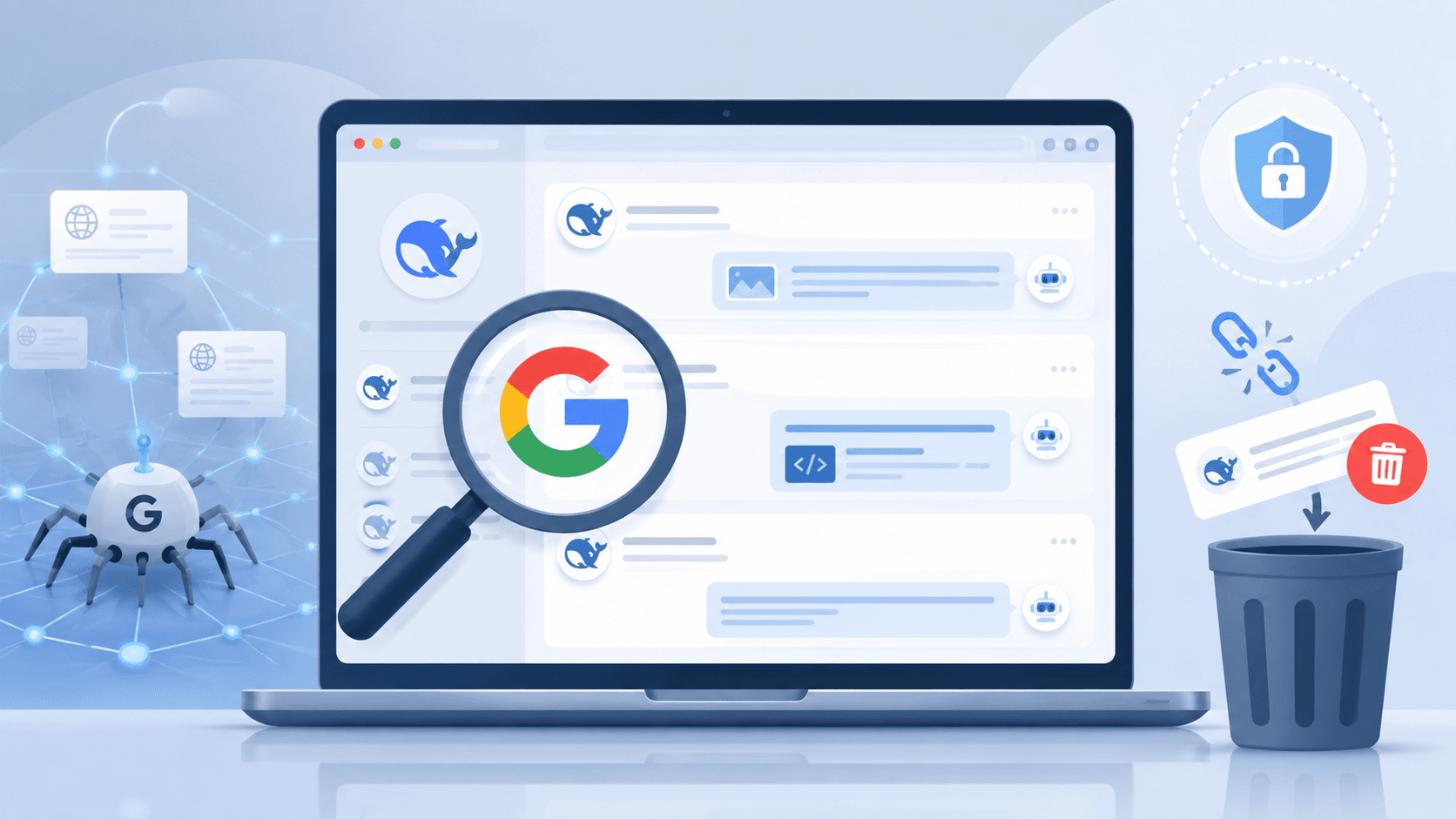
Google is indexing DeepSeek conversations that users have shared through public links, making thousands of chats discoverable through a simple search query.
David Konitzny, an information security specialist at Peec AI, found that Google was displaying pages from DeepSeek’s chat.deepseek.com/share/ directory. Anyone could locate them by entering site:chat.deepseek.com/share/ into the search bar.
Google initially limits the visible results and states that it has omitted similar pages. However, expanding those results reveals a significantly larger number of indexed conversations.
The investigation identified approximately 2,000 publicly accessible pages. The conversations were created in 2026, with the largest concentration appearing in April.
Around 31% of the analyzed chats were written in Russian, while approximately 20% were in English. The remaining conversations appeared in several other languages, suggesting that the privacy issue affected users across multiple regions.
Why Shared DeepSeek Chats Are Appearing on GoogleDeepSeek’s Share feature allows users to select parts of a conversation and generate a public link that can be sent to colleagues, friends or other contacts.
The platform warns users that “anyone with the link” can view the conversation. However, the warning does not clearly explain that search engines may also discover and index the page.
This distinction is important. A user may understand that a recipient can open the link but still assume that the conversation will remain difficult for anyone else to find.
Once a page appears in Google Search, the audience is no longer limited to people who received the original URL. Anyone using the right keywords or search operators may be able to discover it.
Some indexed conversations reportedly contained fragments of commercial code, workplace assignments, personal correspondence and discussions involving financial matters.
Although users chose to create public links, many may not have expected their conversations to become searchable. Google indexing can therefore turn a relatively obscure shared page into a much more visible digital record.
Public Links Can Create a Lasting Digital Footprint
Removing a shared link does not necessarily mean that it will disappear from search results immediately.
Search engines periodically revisit indexed pages, meaning an inaccessible or deleted link may remain visible until Google updates its records. Previously stored snippets or cached information may also continue appearing for some time.
This creates an additional risk for users who only discover the exposure after their conversations have already been indexed.
How DeepSeek Users Can Remove Shared ConversationsUsers can review and delete their public DeepSeek links through the platform’s settings.
The available steps are:
- Open the Settings section.
- Go to the Data tab.
- Select Shared Links.
- Click Manage.
- Delete any links that should no longer remain public.
Users should also review the content of any conversations they previously shared. Removing links containing sensitive professional, personal or financial information should be the priority.
Similar indexing incidents have previously affected ChatGPT and other AI services that allow users to publish conversations through shareable links.
Search engine crawlers generally treat an accessible public URL like any other webpage. Unless the platform applies suitable access controls or uses directives designed to prevent indexing, the page may eventually appear in search results.
The findings were published by Konitzny on July 20, 2026, and later reviewed by Cybernews on July 22. According to the reports, DeepSeek had not issued a public response at the time of the investigation.
The incident highlights a broader privacy problem facing AI platforms. Users frequently provide chatbots with detailed information about professional projects, personal situations, internal company processes and financial decisions.
Many users may understand that shared links are technically public but still expect them to remain accessible only to people who receive the URL directly.
The DeepSeek case shows that this assumption can be risky. A public AI conversation may not remain hidden simply because the link is difficult to guess.
Platforms could reduce that risk by preventing shared chats from being indexed by default and requiring users to actively enable search engine visibility.
Until stronger protections become standard, users should treat every shared AI conversation as information that could eventually become publicly searchable.


Predictions Markets
See what traders are focused on
Share:
Predictions Markets
See what traders are focused on
Share:
Read More
Intel Stock Surges After Q2 Earnings Crush Expectations