Artemis II Splashdown Time Live: NASA Orion Returns After Moon Mission
Share:
Splashdown scheduled for 8:07 p.m. ET Friday after a 10‑day Artemis II mission; Orion reached a human‑flight distance record of >252,000 miles. Critical re‑entry: service module separation, atmospheric entry near 25,000 mph, external temperatures ≈5,000°F and a planned 6‑minute communications blackout; trajectory adjusted after Artemis I to better manage heat. Pacific recovery off San Diego with staged parachutes and ~1‑hour recovery ops if weather holds; mission milestones (first Black lunar crew member Victor Glover, first woman Christina Koch, first non‑U.S. crew Jeremy Hansen) bolster long‑term lunar exploration prospects — keywords: crypto, DeFi, adoption, security.
Predictions Markets
See what traders are focused on

Artemis II heads toward Earth with a splashdown targeted for 8:07 p.m. ET on Friday, as NASA astronauts prepare for the final and most intense phase of the mission. The Orion spacecraft now closes in on the planet after completing a historic journey around the Moon. So, when is Artemis II splashdown, and what happens next?
Countdown To Splashdown Begins
NASA crews have entered the final stretch of the 10-day mission. The Orion capsule continues its descent trajectory toward the Pacific Ocean, aiming for a landing zone off the coast of San Diego.
The four astronauts, Reid Wiseman, Victor Glover, Christina Koch, and Jeremy Hansen, have started critical preparations inside the spacecraft. They are securing equipment, installing seats, and reviewing re-entry procedures. Every step matters at this stage.
Earlier in the mission, the crew traveled around the far side of the Moon before exiting its gravitational influence. Since then, Orion has steadily approached Earth, covering vast distances. At one point, the spacecraft reached more than 252,000 miles from Earth, setting a new record for human spaceflight.
A High-Stakes Re-Entry Awaits
As Orion approaches Earth, the spacecraft will separate from its service module. This maneuver marks the start of re-entry, where conditions become extreme.
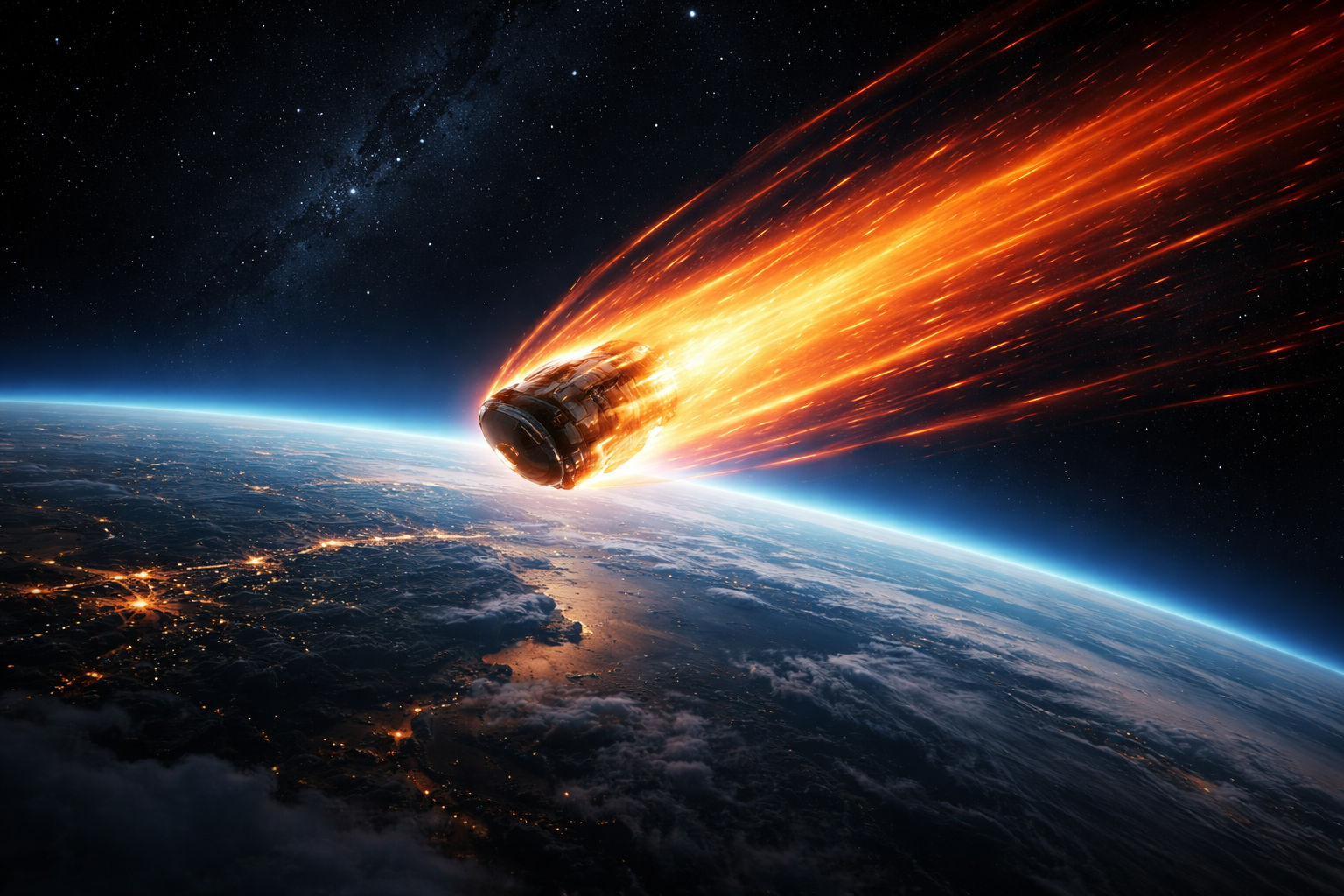
The capsule will hit the atmosphere at speeds near 25,000 miles per hour. Temperatures outside will climb to roughly 5,000 degrees Fahrenheit. NASA engineers have adjusted the re-entry path to manage heat levels more effectively after issues surfaced during the Artemis I test flight.
Even with these adjustments, the margin for error remains small. The spacecraft must follow a precise angle and trajectory. Too steep, and the heat could overwhelm the shield. Too shallow, and the capsule could skip off the atmosphere. Can the system handle the pressure this time?
Communication will also drop during a planned six-minute blackout. This phase often raises tension, as teams on the ground wait for signal confirmation. Once contact resumes, parachutes will deploy in stages to slow the descent.
Splashdown And Recovery Operations
After parachute deployment, Orion will land in the Pacific Ocean. The splashdown will occur within a carefully selected zone, narrowed by updated trajectory planning.
Recovery teams will move quickly after landing. NASA expects crews to secure the capsule, lift it onto a recovery ship, and assist astronauts as they exit. The entire process could take about an hour.
Weather conditions play a key role in this phase. Current forecasts for the landing zone appear favorable, offering a smoother recovery operation. Still, teams remain alert for any last-minute changes.
A Mission That Shapes The Future
Artemis II marks the first crewed mission to the vicinity of the Moon in more than 50 years. It follows the uncrewed Artemis I test and sets the stage for future lunar landings.
The mission also carries historic milestones. Victor Glover became the first Black astronaut to participate in a lunar mission. Christina Koch became the first woman to do so, while Jeremy Hansen became the first non-U.S. citizen on such a journey.
NASA views Artemis II as a critical step toward long-term lunar exploration and eventual missions to Mars. The success of this return phase will influence upcoming plans. All eyes now remain on the clock. The answer to “when is Artemis II splashdown” comes down to a precise moment, 8:07 p.m. ET, when years of preparation meet a defining test in Earth’s atmosphere.


Predictions Markets
See what traders are focused on
Share:
Predictions Markets
See what traders are focused on
Share:
Read More

Google Stock Forecast: Faces a $350 Test as Buyback Pause Raises Dilution Risk