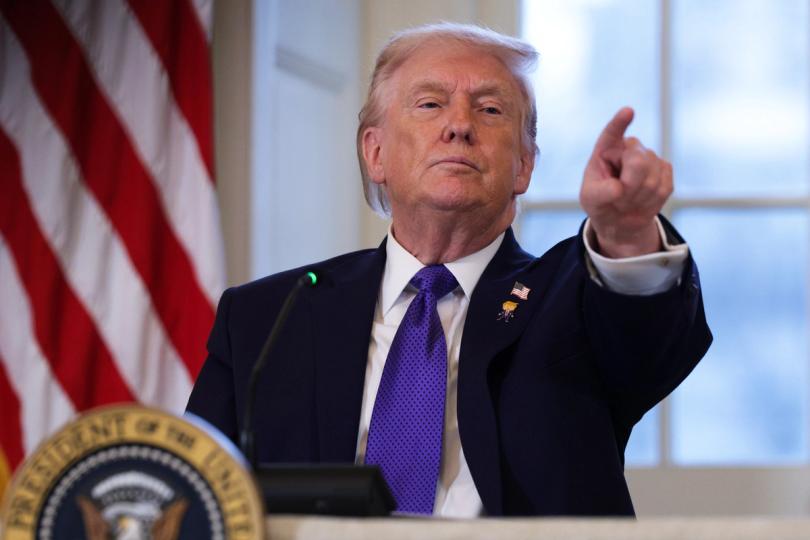
Trump Iran Peace Deal: Breakthrough Optimism for Imminent Agreement
Share:
Trump (2025) told NBC News he is optimistic an Iran peace deal is imminent; any deal would echo the 2015 JCPOA (US withdrew in 2018) and could allow Iran to export “millions” more barrels per day, impacting global oil prices and energy markets. Crypto implications: sanctions relief could boost crypto adoption in Iran (on‑chain flows, DeFi use, token launches, fundraising), and increased oil supply could lower energy costs for Bitcoin miners and affect DEX/CEX liquidity and trading costs. Key risks: IAEA reports larger enriched‑uranium stockpiles (shorter breakout time); verification, sanctions snapback, and regional opposition (Israel, Saudi) make outcomes uncertain and raise regulatory/security risks for crypto actors.
Predictions Markets
See what traders are focused on

BitcoinWorld
Trump Iran Peace Deal: Breakthrough Optimism for Imminent Agreement
WASHINGTON, D.C. – In a significant diplomatic development, former President Donald Trump has expressed strong optimism that a peace agreement with Iran is imminent, according to an exclusive report from NBC News. This statement marks a potential turning point in one of the world’s most protracted and volatile geopolitical standoffs. The prospect of a deal carries profound implications for global energy markets, regional stability in the Middle East, and the broader landscape of international nuclear non-proliferation efforts. Consequently, analysts and policymakers worldwide are scrutinizing this development with intense interest.
Analyzing the Trump Iran Peace Deal Statement
According to the NBC News report, President Trump conveyed his positive outlook during a private discussion. His confidence suggests that behind-the-scenes diplomatic channels, potentially involving intermediaries, have made substantial progress. Historically, US-Iran relations have been characterized by deep mutual distrust, economic sanctions, and accusations related to Iran’s nuclear program. Therefore, any expression of optimism from a key figure like Trump warrants careful examination. Furthermore, this development occurs within a complex international context where multiple nations have vested interests in the outcome.
The statement immediately recalls the 2015 Joint Comprehensive Plan of Action (JCPOA), from which the Trump administration withdrew in 2018. Subsequent years saw a “maximum pressure” campaign of sanctions. However, recent years have witnessed intermittent attempts to revive negotiations. The current optimism may stem from renewed dialogue frameworks or new concessions from involved parties. Importantly, the regional power dynamics have also evolved, with several Arab states normalizing relations with Israel, potentially altering the strategic calculus for all actors involved.
The Diplomatic Context and Historical Background
Understanding the potential for an imminent deal requires a review of the fraught history between the United States and Iran. Relations have been hostile since the 1979 Iranian Revolution and the subsequent hostage crisis. The core dispute centers on Iran’s nuclear ambitions. The international community, through the P5+1 group (the US, UK, France, China, Russia, and Germany), successfully negotiated the JCPOA to limit Iran’s nuclear program in exchange for sanctions relief. The agreement’s collapse and the re-imposition of sanctions crippled Iran’s economy but did not halt its nuclear advancements.
Recent technical reports from the International Atomic Energy Agency (IAEA) indicate Iran has significantly increased its stockpile of enriched uranium. This activity narrows the country’s “breakout” time to potentially produce a nuclear weapon. This alarming progress likely serves as a powerful motivator for all sides to return to the negotiating table. Moreover, the human cost of sanctions and the desire for economic normalization within Iran create domestic pressure for a resolution. The table below outlines key milestones in this long-standing conflict:
| Year | Event | Significance |
|---|---|---|
| 2015 | JCPOA signed | Landmark agreement limiting Iran’s nuclear program. |
| 2018 | US withdraws from JCPOA | Trump administration re-imposes severe sanctions. |
| 2019-2023 | Escalating tensions | Attacks on oil facilities, drone strikes, and assassinations. |
| 2021-2024 | Indirect talks in Vienna | Attempts to revive the nuclear deal see limited success. |
| 2025 | Trump’s optimistic statement | New signal of potential diplomatic breakthrough. |
Expert Analysis on Feasibility and Impacts
Foreign policy experts offer a range of perspectives on the feasibility of an imminent deal. Dr. Anahita Nassiri, a senior fellow at the Center for Strategic and International Studies, notes, “Any workable agreement must address several core, unresolved issues. These include the scope of sanctions relief, the timeline for Iran to roll back its nuclear advancements, and robust verification mechanisms. Additionally, regional security concerns, particularly Iran’s ballistic missile program and its support for proxy groups, could be potential deal-breakers or require separate frameworks.”
The potential impacts of a successful agreement are vast. Firstly, it could lead to a significant influx of Iranian oil into the global market, potentially lowering energy prices. Secondly, it would reduce the immediate risk of a military confrontation in the Persian Gulf, a critical chokepoint for world trade. Thirdly, it could reshape alliances in the Middle East, possibly leading to further normalization between Iran and its Arab neighbors. However, such a deal would also face fierce political opposition domestically in both the US and Iran, where hardliners view compromise as a sign of weakness.
Key Challenges and Potential Roadblocks
Despite the expressed optimism, the path to a finalized Iran peace deal remains strewn with significant obstacles. The domestic political landscape in the United States is deeply polarized on foreign policy, especially regarding Iran. A new agreement would likely face intense scrutiny and possible legislative challenges in Congress. Similarly, within Iran, powerful conservative factions remain skeptical of any engagement with the “Great Satan” and may resist concessions seen as undermining national sovereignty or revolutionary ideals.
Another major hurdle involves the interests of regional actors. Key US allies, namely Israel and Saudi Arabia, have historically viewed a strong nuclear deal with Iran as a threat to their security. Israel, in particular, has consistently stated it will take any action necessary to prevent Iran from obtaining nuclear weapons capability. Therefore, for a deal to be sustainable, it may need to incorporate elements that address these allies’ legitimate security concerns, possibly through security guarantees or regional dialogue platforms. The following points outline the primary challenges:
- Verification and Compliance: Establishing a foolproof, timely mechanism to detect any Iranian violation.
- Sanctions Snapback: Designing a clear process for re-imposing sanctions if Iran breaches terms.
- Non-Nuclear Issues: Deciding whether to address missiles and proxy support within the deal or separately.
- Domestic Ratification: Securing enough political support in both nations to implement the agreement.
Conclusion
The statement from former President Donald Trump regarding an imminent Iran peace deal introduces a note of cautious hope into a long-standing geopolitical deadlock. While the optimism signals that diplomatic efforts may be advancing, the historical complexity, deep-seated mistrust, and array of technical and political challenges mean the outcome is far from certain. A successful negotiation would require delicate diplomacy, mutual concessions, and robust international oversight. Ultimately, the pursuit of a Trump Iran peace deal represents a critical test for diplomacy, with the potential to alter the security and economic landscape of the Middle East and beyond. The world will be watching closely as this story develops.
FAQs
Q1: What did Donald Trump actually say about the Iran deal?
According to NBC News, former President Trump expressed optimism that a peace agreement with Iran is imminent, suggesting behind-the-scenes diplomatic progress.
Q2: How does this potential deal relate to the old 2015 nuclear agreement (JCPOA)?
Any new deal would likely build upon or replace the JCPOA framework. It would need to address the advancements Iran has made in its nuclear program since the US withdrawal in 2018.
Q3: What are the biggest obstacles to reaching an agreement?
Major obstacles include defining the scope of sanctions relief, verifying Iran’s nuclear rollback, addressing its ballistic missile program, and garnering domestic political support in both the US and Iran.
Q4: How would a new Iran deal affect global oil prices?
If a deal leads to the lifting of oil sanctions, Iran could quickly export millions more barrels per day, likely increasing global supply and putting downward pressure on oil prices.
Q5: How have US allies like Israel and Saudi Arabia reacted to this news?
While formal reactions are pending, both nations have historically opposed comprehensive deals with Iran that they feel do not sufficiently curb its regional influence and military capabilities. They would likely seek security assurances.
This post Trump Iran Peace Deal: Breakthrough Optimism for Imminent Agreement first appeared on BitcoinWorld.


Read More
Iran’s IRGC Claims Retaliatory Strike on US Airbase After American Airstrike Near Bandar Abbas