


India solar exports hit by US countervailing duties

Поделиться:
The US has imposed heavy countervailing duties on solar cells and panels from India, Indonesia, and Laos, citing unfair state support. Indian solar stocks fell sharply after the announcement, highlighting the critical dependence on US exports, representing two-thirds of total US solar imports. The ruling raises costs for Indian manufacturers and may lead to increased domestic competition and price pressure due to potential excess supply.
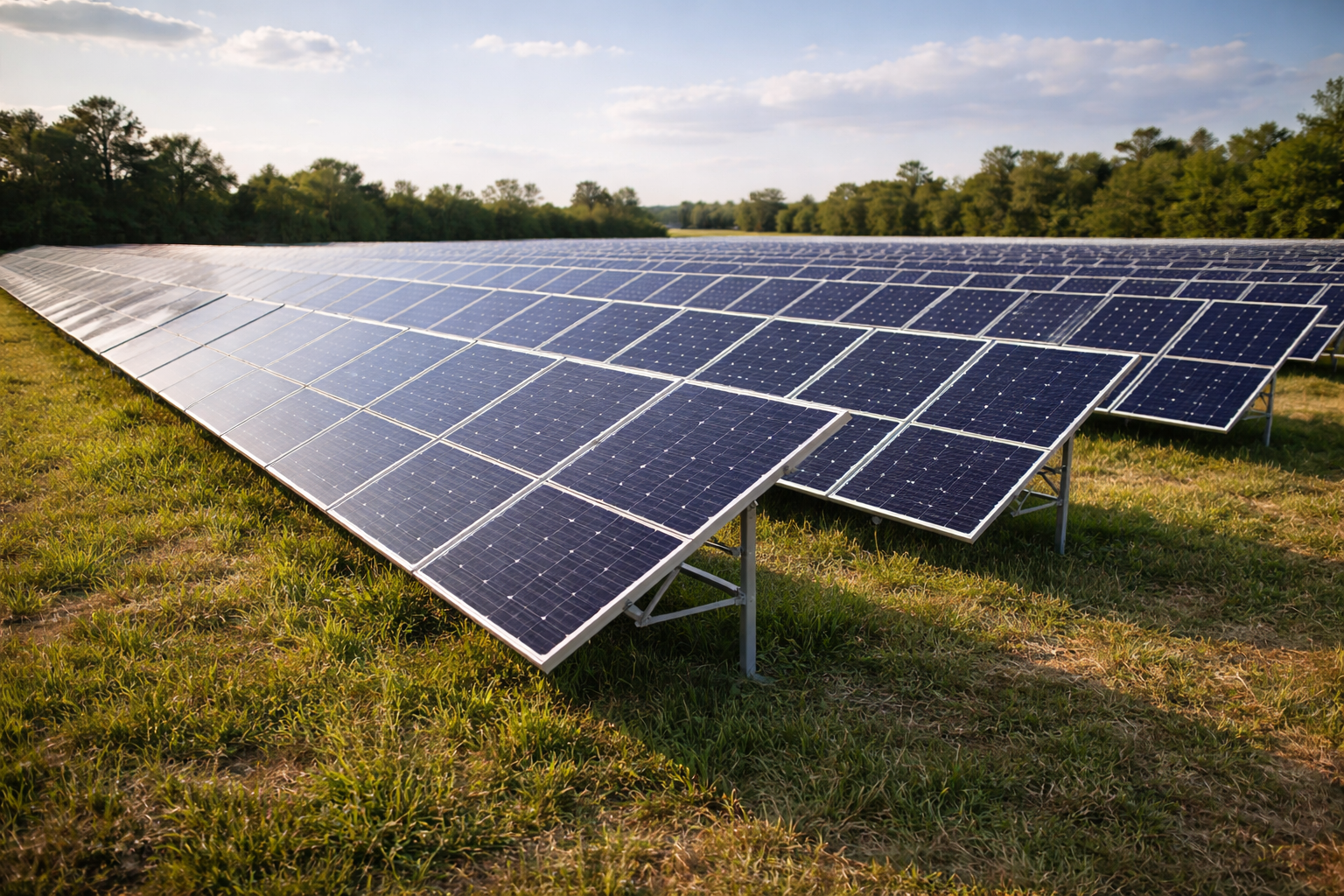
India’s ambition to expand its footprint in the US solar market has run into fresh trade barriers.
Washington has moved to impose steep countervailing duties on solar cells and panels shipped from key Asian manufacturing hubs.
The decision follows a US Commerce Department review into alleged state support for producers in India.
For Indian manufacturers that have leaned heavily on American demand, the development lands at a sensitive time.
New Delhi has been actively courting global solar investment and positioning itself as a manufacturing alternative to China in clean energy supply chains.
Commerce ruling
The US Commerce Department said on Tuesday that manufacturers operating in India, Indonesia, and Laos benefited from broad state support.
It added that this assistance distorted competition in one of the world’s most lucrative renewable energy markets.
A department fact sheet showed subsidy rates of 125.87% for India, 104.38% for Indonesia, and 80.67% for Laos.
The action follows a petition filed last year by a group of US solar manufacturers seeking relief from what they say are unfairly traded imports.
Trade data indicate shipments from the three countries were worth about $4.5 billion last year, representing roughly two-thirds of total US solar imports in 2025.
The move significantly raises the cost of Indian solar cells and modules entering the American market.
Market reaction
Indian solar stocks fell sharply on Wednesday following the announcement.
Shares of Waaree Energies declined 11.28%, while Premier Energies dropped 6.7% and Vikram Solar slipped 5.92%.
The scale of the duties and the dependence on US buyers have amplified investor concerns.
Experts say the American market accounts for the overwhelming share of India’s solar module exports, making it a critical revenue source for domestic manufacturers.
Industry observers described the preliminary duties as a significant setback for companies that built export strategies around access to the US clean energy market.
Capacity pressure
India has rapidly expanded its solar module manufacturing base in recent years.
Installed capacity exceeded 160 gigawatt as of January 2026, with further additions planned.
However, domestic demand in the near term is expected to remain in the range of 40 to 45 gigawatt annually, according to EUPD Research.
The mismatch between production capacity and local consumption raises the risk of excess supply.
Experts warn that if export routes narrow, manufacturers may redirect unsold modules into the domestic market.
That could intensify competition at home and put pressure on prices.
Further probe
The current ruling addresses countervailing duties linked to alleged state support.
A separate decision is due next month to determine whether exporters from India, Indonesia, and Laos sold solar products below production cost.
If US authorities conclude that dumping occurred, an additional round of anti-dumping penalties could follow.
That would compound the financial strain on exporters already facing elevated tariffs.
For India, the trade action complicates efforts to scale up its solar manufacturing ecosystem while reducing reliance on Chinese supply chains.
With US demand now under threat, the sector faces uncertainty over market access and capacity utilisation in the months ahead.
The post India solar exports hit by US countervailing duties appeared first on Invezz
В этой новости
Фонды

Поделиться:
В этой новости
Фонды
Поделиться:
Читать больше

The Trade Desk shares slump 15% on weak outlook: should investors buy the dip?

Trade Desk falls 17% on weak outlook: Should you buy the dip?
India solar exports hit by US countervailing duties
Поделиться:
The US has imposed heavy countervailing duties on solar cells and panels from India, Indonesia, and Laos, citing unfair state support. Indian solar stocks fell sharply after the announcement, highlighting the critical dependence on US exports, representing two-thirds of total US solar imports. The ruling raises costs for Indian manufacturers and may lead to increased domestic competition and price pressure due to potential excess supply.
India’s ambition to expand its footprint in the US solar market has run into fresh trade barriers.
Washington has moved to impose steep countervailing duties on solar cells and panels shipped from key Asian manufacturing hubs.
The decision follows a US Commerce Department review into alleged state support for producers in India.
For Indian manufacturers that have leaned heavily on American demand, the development lands at a sensitive time.
New Delhi has been actively courting global solar investment and positioning itself as a manufacturing alternative to China in clean energy supply chains.
Commerce ruling
The US Commerce Department said on Tuesday that manufacturers operating in India, Indonesia, and Laos benefited from broad state support.
It added that this assistance distorted competition in one of the world’s most lucrative renewable energy markets.
A department fact sheet showed subsidy rates of 125.87% for India, 104.38% for Indonesia, and 80.67% for Laos.
The action follows a petition filed last year by a group of US solar manufacturers seeking relief from what they say are unfairly traded imports.
Trade data indicate shipments from the three countries were worth about $4.5 billion last year, representing roughly two-thirds of total US solar imports in 2025.
The move significantly raises the cost of Indian solar cells and modules entering the American market.
Market reaction
Indian solar stocks fell sharply on Wednesday following the announcement.
Shares of Waaree Energies declined 11.28%, while Premier Energies dropped 6.7% and Vikram Solar slipped 5.92%.
The scale of the duties and the dependence on US buyers have amplified investor concerns.
Experts say the American market accounts for the overwhelming share of India’s solar module exports, making it a critical revenue source for domestic manufacturers.
Industry observers described the preliminary duties as a significant setback for companies that built export strategies around access to the US clean energy market.
Capacity pressure
India has rapidly expanded its solar module manufacturing base in recent years.
Installed capacity exceeded 160 gigawatt as of January 2026, with further additions planned.
However, domestic demand in the near term is expected to remain in the range of 40 to 45 gigawatt annually, according to EUPD Research.
The mismatch between production capacity and local consumption raises the risk of excess supply.
Experts warn that if export routes narrow, manufacturers may redirect unsold modules into the domestic market.
That could intensify competition at home and put pressure on prices.
Further probe
The current ruling addresses countervailing duties linked to alleged state support.
A separate decision is due next month to determine whether exporters from India, Indonesia, and Laos sold solar products below production cost.
If US authorities conclude that dumping occurred, an additional round of anti-dumping penalties could follow.
That would compound the financial strain on exporters already facing elevated tariffs.
For India, the trade action complicates efforts to scale up its solar manufacturing ecosystem while reducing reliance on Chinese supply chains.
With US demand now under threat, the sector faces uncertainty over market access and capacity utilisation in the months ahead.
The post India solar exports hit by US countervailing duties appeared first on Invezz
В этой новости
Фонды
Поделиться:
В этой новости
Фонды
Поделиться:
Читать больше
The Trade Desk shares slump 15% on weak outlook: should investors buy the dip?