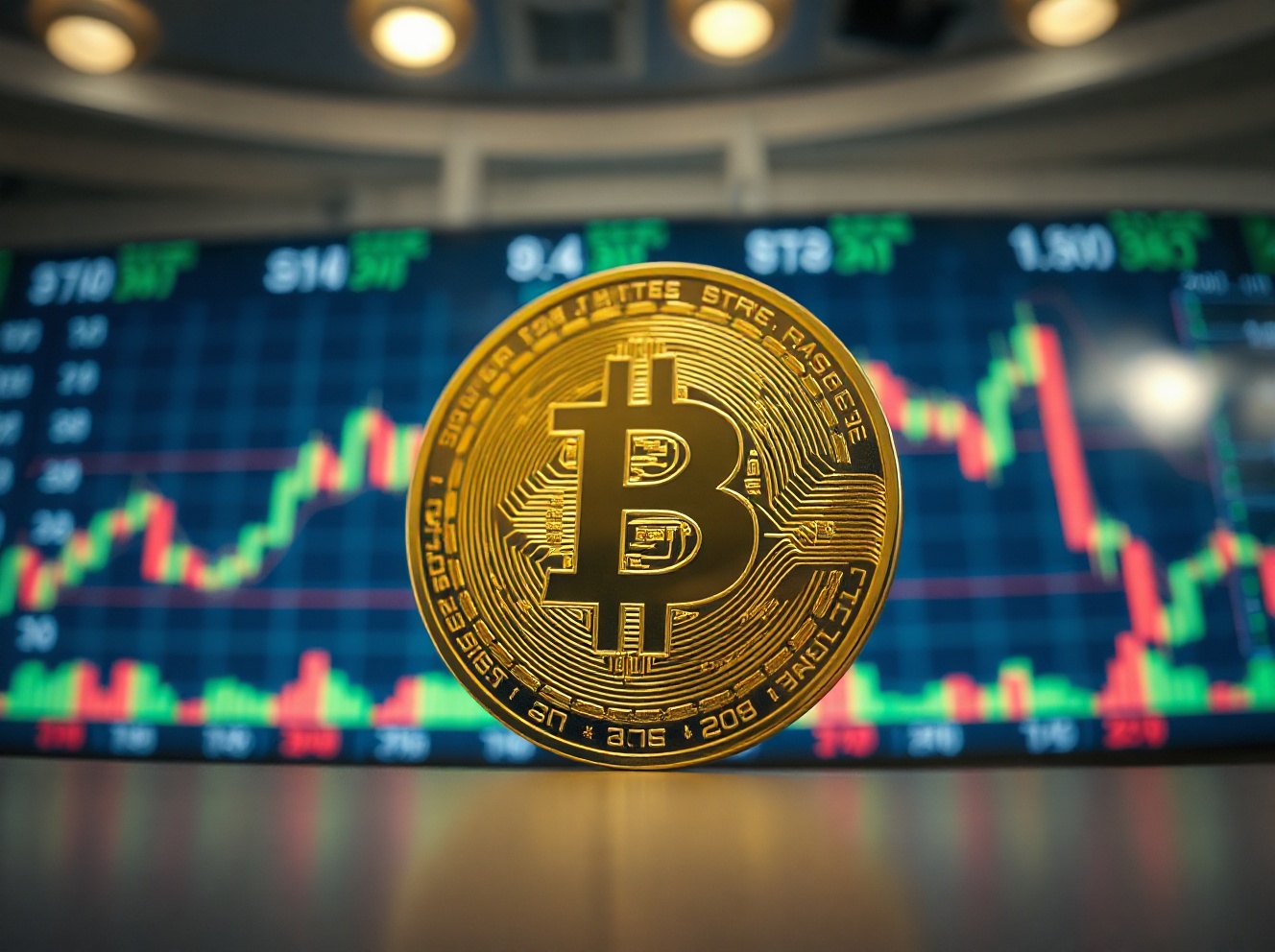
Bitcoin Ownership Shifts: Institutions Return Coins to Retail Investors

Поделиться:
On-chain data from Glassnode and CryptoQuant shows retail wallets (holding <1 BTC) have net-accumulated about 25,000 BTC per month since early 2025 while institutional wallets (≥1,000 BTC) have reduced holdings by a similar magnitude, a trend linked to exchange flow shifts and post-spot ETF rebalancing after January 2024. Bitcoin trades around $67,000 in late 2025 and the redistribution signals stronger grassroots crypto adoption and more dispersed ownership that could reduce whale-driven price influence. However, rising retail participation may increase short-term, sentiment-driven volatility across CEX and DEX markets.
Рынки предсказаний
Что в фокусе у трейдеров?

BitcoinWorld
Bitcoin Ownership Shifts: Institutions Return Coins to Retail Investors
In a notable reversal of the 2020-2021 trend, Bitcoin accumulation is increasingly shifting back to retail investors, as on-chain data reveals that institutional wallets have been distributing coins to smaller holders throughout 2025. This movement marks a significant change in market dynamics, potentially signaling a new phase of decentralized ownership and retail-driven price support.
What the Data Shows
Blockchain analytics firms, including Glassnode and CryptoQuant, have tracked wallet sizes and exchange flows to identify this trend. As of late 2025, wallets classified as “retail” (holding less than 1 BTC) have seen a net accumulation of approximately 25,000 BTC per month, while wallets associated with institutional entities (holding 1,000 BTC or more) have reduced their holdings by a similar magnitude. This pattern, which began in early 2025, contrasts sharply with the previous cycle where institutional buying dominated headlines.
The shift is partly attributed to the maturation of the market: spot Bitcoin ETFs, launched in January 2024, initially attracted institutional capital, but recent quarterly filings show that some large holders are rebalancing portfolios. Meanwhile, retail participation has been bolstered by user-friendly platforms and a growing cultural acceptance of Bitcoin as a long-term savings technology.
Why This Matters
The return of Bitcoin to retail investors has several implications. First, it may reduce the influence of large holders, or “whales,” on price volatility, as ownership becomes more dispersed. Second, it could strengthen the network’s resilience by distributing supply across a broader base. However, retail investors are often considered more sentiment-driven, which could increase short-term price swings in response to news events.
Market Impact and Expert Views
Market analysts are divided on the long-term significance. Some see this as a healthy correction toward Bitcoin’s original vision of peer-to-peer electronic cash, while others caution that retail accumulation is often a contrarian indicator. “Historically, when retail participation spikes, it has sometimes marked local tops,” notes crypto analyst Maria Santos, “but the current trend is gradual and appears to be driven by genuine adoption, not speculative frenzy.”
As of this report, Bitcoin trades around $67,000, reflecting a stable range despite the ownership shift. The trend is expected to continue as more institutional players, such as pension funds, enter through regulated products, while direct retail ownership remains a key metric of grassroots adoption.
Conclusion
The ongoing redistribution of Bitcoin from institutional to retail hands represents a pivotal moment in the asset’s history. It underscores the evolving nature of cryptocurrency markets, where retail investors are reclaiming a central role. Whether this leads to greater stability or new volatility remains to be seen, but the data clearly shows that the era of institutional dominance is giving way to a more balanced ecosystem.
FAQs
Q1: What does “Bitcoin returning to retail investors” mean?
It refers to on-chain data showing that wallets associated with retail investors (holding less than 1 BTC) are accumulating Bitcoin, while institutional-sized wallets (holding 1,000 BTC or more) are reducing their holdings. This shift indicates a transfer of ownership from large entities to smaller, individual holders.
Q2: Why are institutions selling Bitcoin?
Institutions may be rebalancing their portfolios, taking profits after significant gains, or responding to regulatory pressures. Some are also shifting exposure to regulated products like ETFs, which does not necessarily reduce their indirect Bitcoin holdings.
Q3: Is retail accumulation bullish or bearish for Bitcoin?
Opinions vary. Some analysts view retail accumulation as a sign of grassroots adoption and long-term strength, while others caution that retail investors are often late to trends. The current gradual accumulation suggests a more mature market, but volatility remains possible.
This post Bitcoin Ownership Shifts: Institutions Return Coins to Retail Investors first appeared on BitcoinWorld.
В этой новости
Монеты

$ 63.74K
-1.35%
$ 0.00165
Рынки предсказаний
Что в фокусе у трейдеров?
Поделиться:
В этой новости
Монеты
$ 63.74K
-1.35%$ 0.00165
Рынки предсказаний
Что в фокусе у трейдеров?
Поделиться:
Читать больше

Crypto Today: Bitcoin and Ethereum Consolidate, XRP Dips as US-Iran Deal Optimism Fades